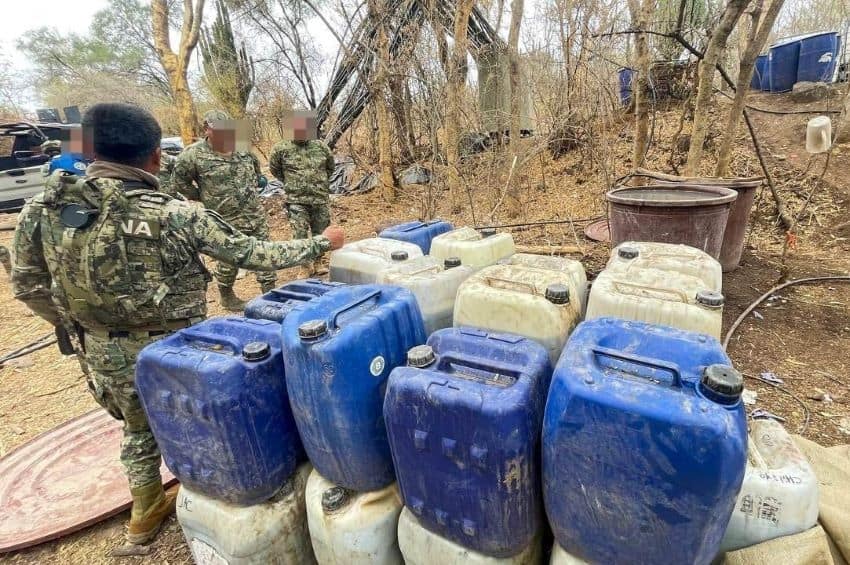
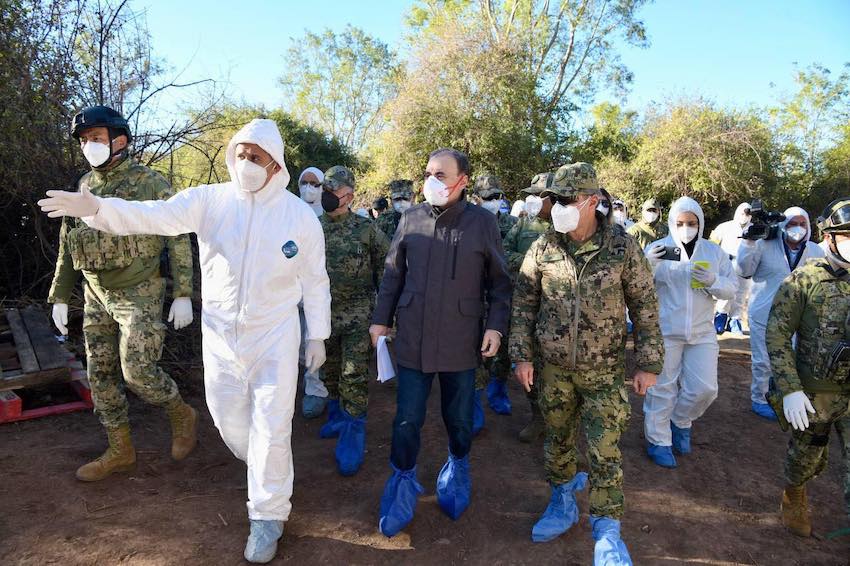
A massive drug lab hidden in the mountains of Sonora was uncovered last week by the Mexican Navy (Semar) and dismantled over the weekend.
According to reports, the lab is the largest seized during the administration of President Andrés Manuel López Obrador, who took office Dec. 1, 2018.
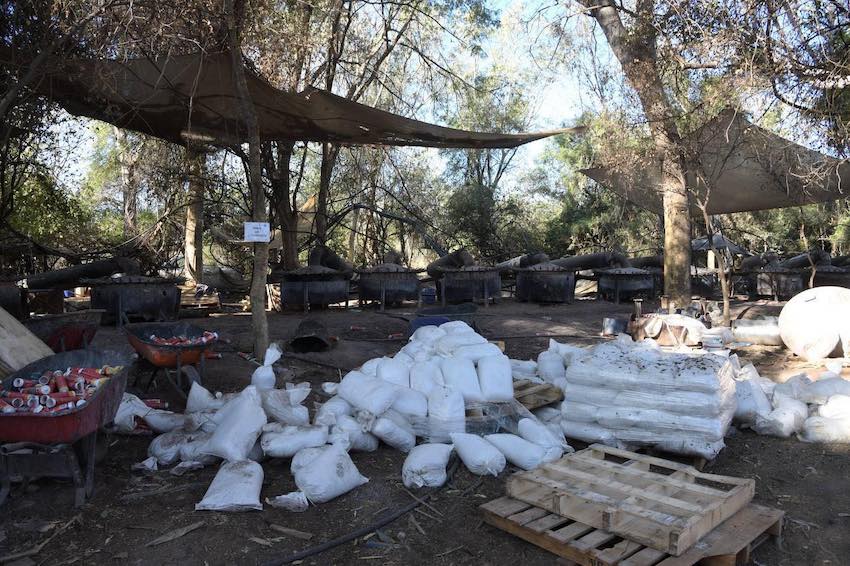
In announcing the bust on Sunday, officials said they had seized just over 35 tonnes of methamphetamines (crystal meth) ready for sale, plus chemicals that could be used to produce an additional 41 tonnes of illegal drugs.
Combined, the potential street value of everything seized was more than US $600 million, according to Semar.
The “megalaboratory” was found in the municipality of Quiriego in southern Sonora, about 425 kilometers south of the state’s border with Arizona at Nogales.
The raid was a joint effort among elements of the Navy, the Attorney General’s Office (FGR) and state officials.
To put the bust in perspective, Sonora Governor Alfonso Durazo said the largest illegal drug laboratory previously recorded in Sinaloa last year, had 13 reactors, although reports at the time put the number at 23.

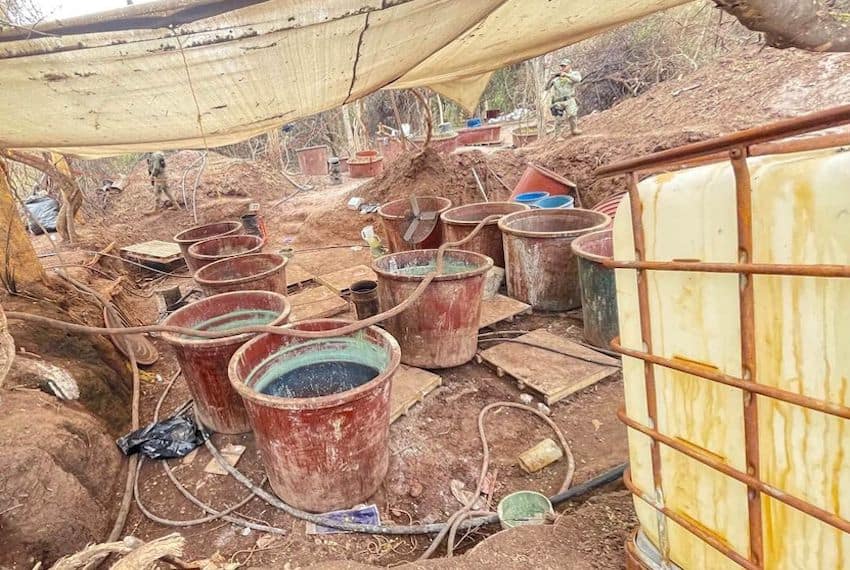
The newly located Sonora lab had 72 reactors, 102 condensers and 32 centrifuges.
Vehicles, motorcycles, trailers and various materials related to the production of synthetic drugs were also found at the site, but authorities said they did not arrest any suspects, nor did they find any weapons or cash.
José Rafael Ojeda Durán, the head of the Mexican Navy, said the operation prevented more than 1 billion pills from reaching the United States, Canada, Australia, China, Spain, Japan and various European countries.
The lab was located in a mountainous region near the tri-border point of Sonora, Chihuahua and Sinaloa, an area where factions loyal to the Sinaloa Cartel – and run by sons of imprisoned cartel leader Joaquín “El Chapo” Guzmán Loera – are known to operate.
“Indeed, we believe it is run by the Sinaloa Cartel,” Ojeda said of the lab.
The discovery comes on the heels of a meeting last Thursday in Mexico City led by the White House Homeland Security Advisor Liz Sherwood-Randall and attended by representatives from Mexico, the U.S. and Canada.
A White House transcript of the fourth meeting of the Trilateral Fentanyl Committee noted that the three countries reaffirmed their commitment to reducing the movement of illicit synthetic drugs (especially fentanyl) and firearms, and to fighting human trafficking.
One of the primary actions agreed upon was “increasing collaboration on the control of precursor chemicals and equipment related to illicit drug production.”
The seizure of the Sonora lab came one week after two armed attacks were reported in the area. The attacks, one on a family and the other on a group of day laborers, resulted in seven deaths and the arrest of three alleged gang members. It is unclear whether there is a connection between the arrests and the raid.
With reports from Aristegui Noticias, Milenio and Infobae