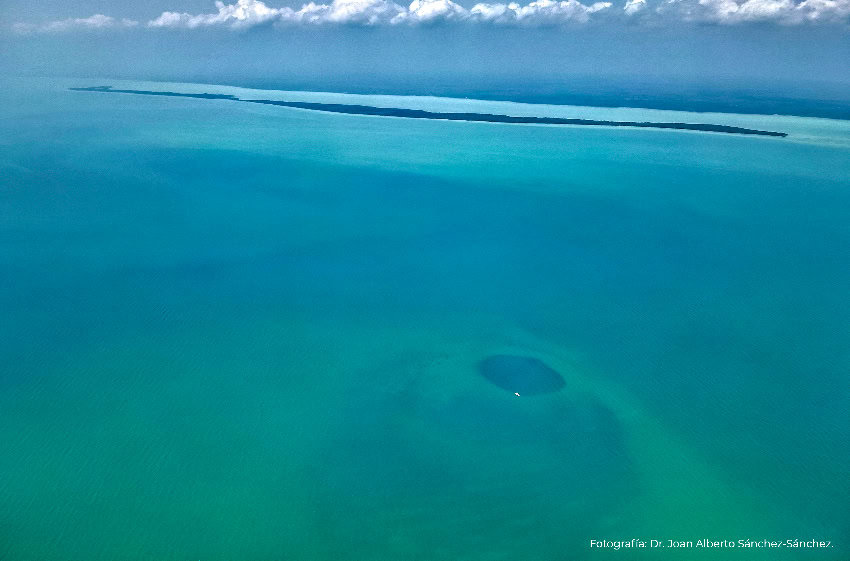
An underwater sinkhole off the southeast coast of the Yucatán Peninsula has been confirmed as the deepest in the world — and researchers haven’t even reached its bottom yet.
The Taam ja’ Blue Hole in Chetumal Bay extends at least 420 meters below sea level, according to a statement by researchers from the National Council of Science and Technology’s (Conahcyt) Investigadores por México program and the College of the Southern Border (Ecosur) who this week published their findings in the periodical Frontiers in Marine Science.
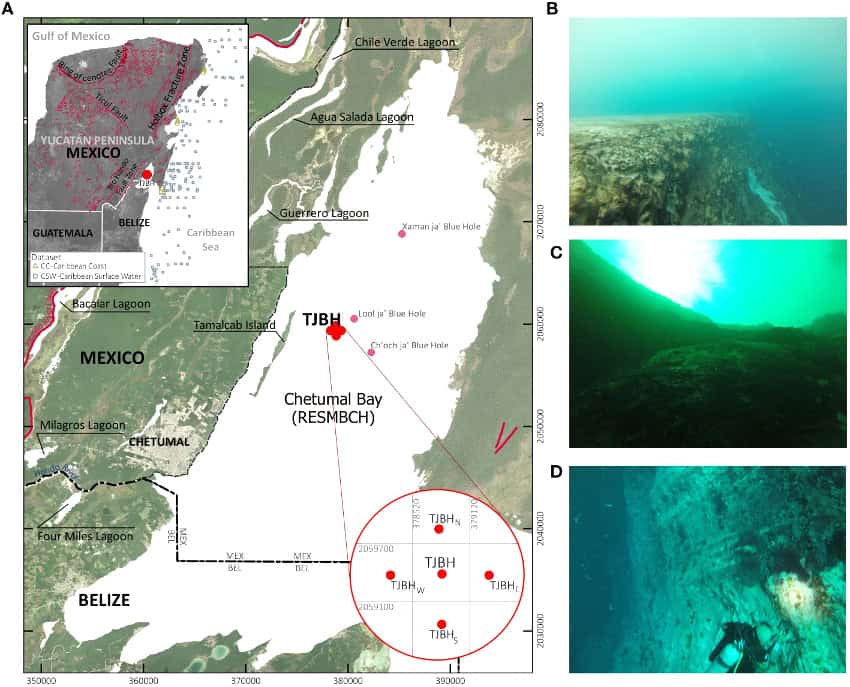
Blue holes are generally circular, steep-walled depressions, and get their name from the dramatic contrast between the dark blue, deep waters of their depths and the lighter blue of the shallows around them.
The Taam ja’ Blue Hole had been named the second-deepest in the world in research conducted in March of last year via bathymetric mapping employing echo sounder technology.
In December 2023, the Conahcyt-Ecosur team utilized a CTD Profiler to measure the water depths within the blue hole and found it “surpassed 420 [meters below sea level] with no bottom yet reached.”
A CTD (conductivity, temperature and depth) profiler is a device with a set of probes that read and transmit water properties to the surface in real time via a cable.
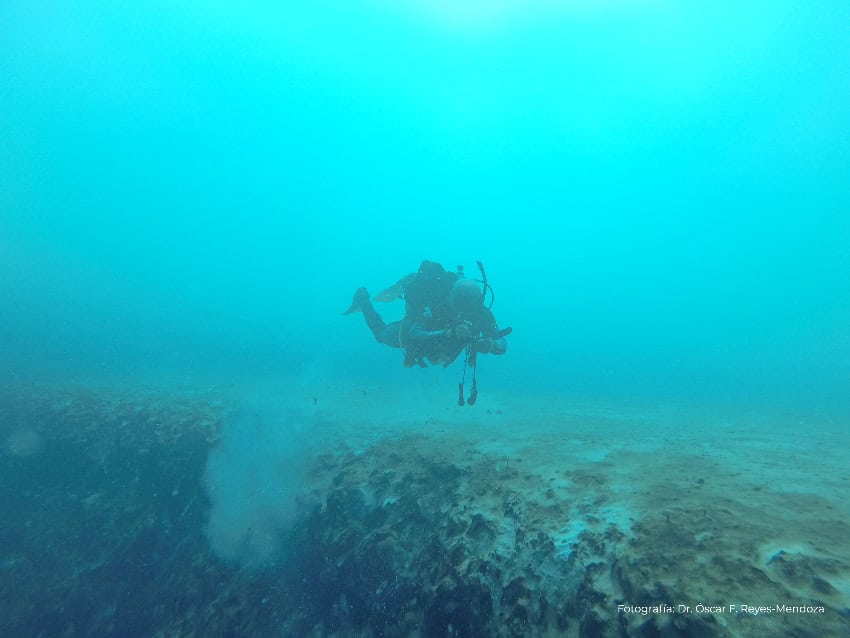
The latest research indicates Taam ja’ is significantly deeper than the former No. 1, China’s 301-meter-deep (990 feet) Sansha Yongle Blue Hole, also known as the Dragon Hole, in the South China Sea.

A temperature-salinity diagram was also devised to identify a potential relationship between the waters of the blue hole and those in coastal and open-sea waters in the Caribbean.
The researchers noted different layers of water within Taam ja’, including a layer below 400 meters where the temperature and salinity conditions resembled those of the Caribbean and nearby coastal reef lagoons, reported the website Live Science.
This means that Chetumal Bay and the Caribbean could be connected via a hidden network of tunnels and caves.
“In this regard, the CTD measurements hint at potential undiscovered connections with the seawater of either the coastal reef lagoons or deeper coastal zones of the Mesoamerican Barrier Reef System,” the Conahcyt-Ecosur team wrote in their research report.
The report recommends further exploration to compare the Taam ja’ Blue Hole’s relationship with regional water bodies, hydraulic connections and water quality dynamics, while suggesting exploration of the biodiversity found within the blue hole.
With reports from La Jornada Maya