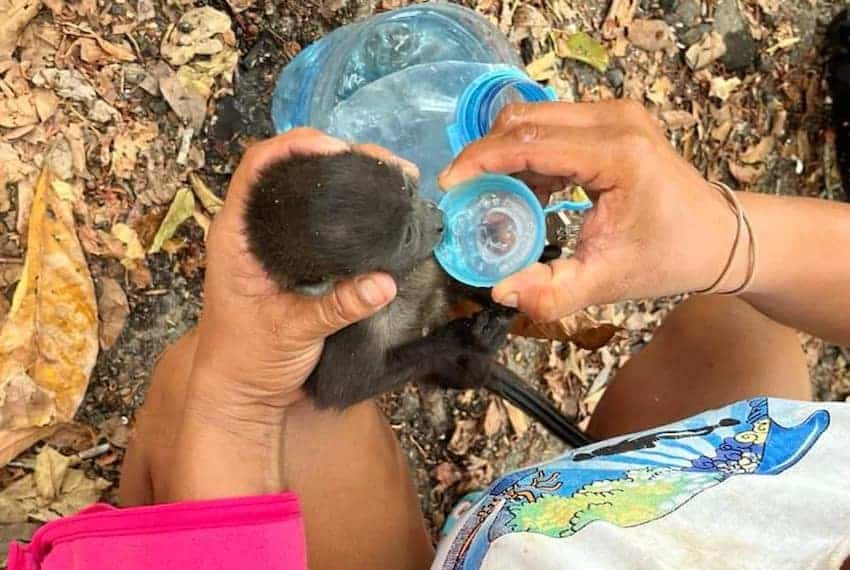
Monkeys are reportedly falling dead from trees in Mexico’s tropical forests, and authorities are investigating whether the extreme heat sweeping the south is to blame.
Conservation and animal welfare groups in the state of Tabasco have reported that as many as 100 howler and spider monkeys have been found dead in the forests since the onset of the season’s second heat wave.
On Monday, the Environment Ministry (Semarnat) issued a press bulletin detailing the activities and investigations being carried out by its wildlife directorate and its Tabasco and Chiapas field offices.
“At this time, several hypotheses are being considered with regard to the reported deaths. They include heat stroke, dehydration, malnutrition and fumigation of crops with agrotoxins. Studies are ongoing.”
Even as federal, state and municipal officials are working in tandem with scientists and zoos to find an answer, conservation groups criticized federal and state authorities for being slow to address the situation.
The criticism grew louder after Tabasco officials — who did not begin investigating the situation until 15 days after the initial reports, according to the news magazine Proceso — insisted over the weekend that only four monkey deaths had been recorded. The Tabasco-based wildlife organization Cobius responded by saying its people had confirmed at least 85 monkey deaths since May 4.
Temperatures of 45 C have been recorded in Chiapas and Tabasco in recent weeks, and another heat wave is forecast for the coming days.

The Mexican Association of Zoos, Hatcheries and Aquariums (AZCARM) insists soaring temperatures are the primary cause of the rising death toll, while the government-led investigation hopes to eliminate viruses or disease from the panorama.
According to CBS News, Cobius recently made an appeal to the public: “If you see monkeys that are weak and apparently suffering from heat or dehydration, please try to hoist a bucket of water by rope for them to drink.”
Cobius also said extreme heat is likely causing the monkeys to die, but that it is important to rule out other causes.
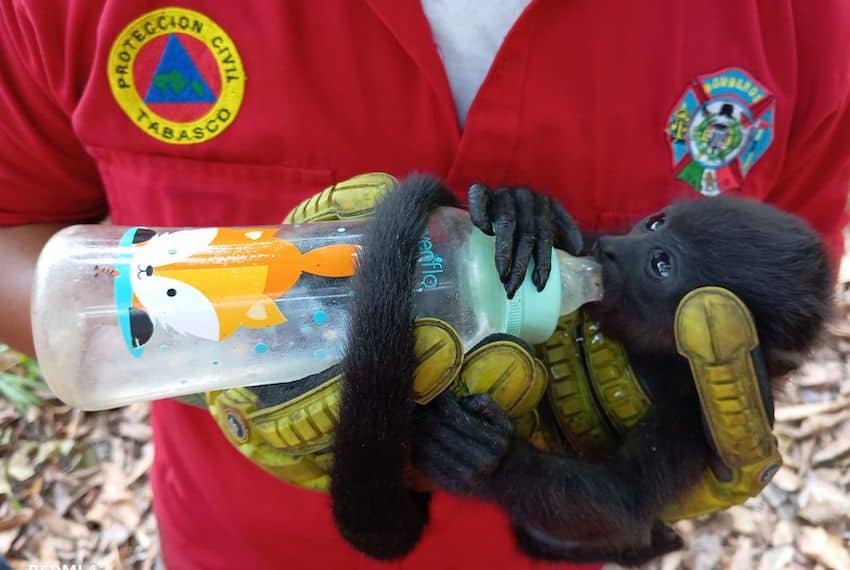
Authorities and activists have been patrolling the forests to provide water and food to the monkeys. Tabasco’s Civil Protection Institute recruited biologists and veterinarians over the weekend to check in on the monkey troops, while also providing them fruit and water.
Semarnat also urged the public to immediately report sightings of dead monkeys and animals in distress to the proper authorities.
There are an estimated 1,200 wild primates living in Tabasco jungles alone. In addition to the heat, they are threatened by illegal poaching and habitat encroachment due to changes in zoning laws.
With reports from CBS News, La Jornada, Milenio and Proceso