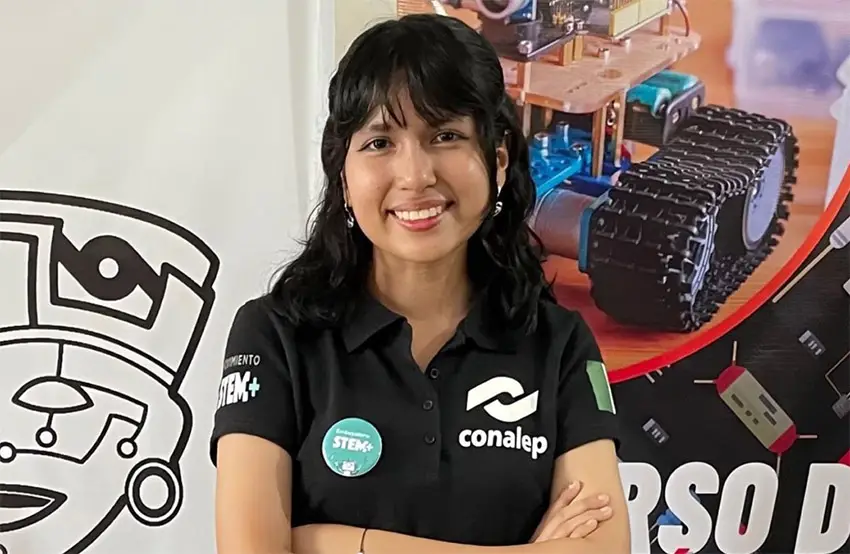
A 17-year-old Mexican student from Veracruz who created a program that diagnoses diseases using artificial intelligence is the winner of this year’s Global Student Prize from Chegg.org.
Ángela Elena Olazarán Laureano, who hails from Papantla de Olarte, Veracruz, was presented the award in New York this week during the United Nations’ General Assembly. The US $100,000 prize recognizes exceptional students who have made significant contributions to their communities, education and society.
Among the more than 11,000 applications and nominations received from 176 countries around the world, the list was narrowed down to a top 50. After that was further pared down to the top 10 finalists, Olazarán was selected by the judges as the winner.
Her project is called Ixtlilton, a virtual medical assistant that can currently diagnose 21 diseases through a series of questions.
Named after a healing deity from Aztec mythology, Ixtlilton is designed for use in Indigenous communities, as it supports both Spanish and the native Tutunakú language.
This makes it accessible to people in remote regions of Veracruz, where marginalized communities have struggled with a shortage of doctors and accessible medical facilities — a common problem throughout rural Mexico.
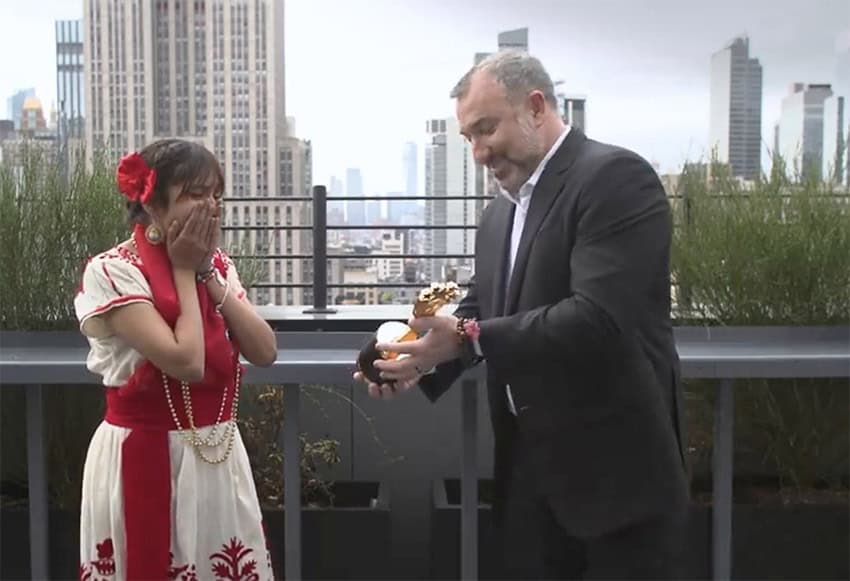
From Olazarán’s home municipality of Papantla, for example, “certain communities must travel over an hour to reach the closest medical facility,” she said.

But Ixtlilton can help people determine whether they need medical attention without being forced to travel a long distance.
In addition, Ixtlilton can function without an internet connection once downloaded. That’s a crucial feature in a country where only 56% of the rural population has access to the internet, according to the newspaper El Universal.
A student of Information Technology Engineering and Digital Business at Anáhuac University in Veracruz, Olazarán developed the program with doctors during the COVID-19 pandemic.
Olazarán reportedly plans to use her US $100,000 award to create and install a STEM classroom in Veracruz.
This initiative aligns with her ongoing efforts to advocate for the inclusion of science, technology, engineering and mathematics (STEM) education in her home state and beyond — including a “compelling speech” she delivered at the United Nations this week “addressing the lack of equal opportunities for women in #STEM,” Chegg.org wrote. “She emphasized that women’s voices and contributions must be heard if we’re going to tackle today’s challenges.”
In the past, she has spoken before the Mexican Senate and participated in a NASA conference on AI and space education.
🗣️ “Investment must be made in education, not only in learning but also in equity.” https://t.co/ye4pu1XVAA #GlobalStudentPrize 2024 winner Ángela Elena Olazarán Laureano delivered a compelling speech at the #UN yesterday, addressing the lack of equal opportunities for… pic.twitter.com/z72o7yp2u7
— Chegg.org (@cheggdotorg) September 26, 2024
“Across Latin America, she’s inspiring young changemakers — especially women — to break barriers and lead in science and tech,” Chegg.org wrote on the social media site X.
Even before winning this award, Olazarán was making marks as an outstanding student.
In 2022, she won the STEM Talent Award at the National Student Awards, beating out more than 1,400 high school and college students from all over Mexico. A year later, she earned two silver medals at the RoboRAVE World Championships, which included students from around the globe.
“Students like Ángela are leading the way in solving some of the world’s most pressing challenges,” said Nathan Schultz, CEO of Chegg. “Her commitment to innovation and her efforts to make a difference are truly remarkable.”
The Global Student Prize was launched in 2021 by Chegg.org, in partnership with the Varkey Foundation, as a sister award to the Global Teacher Prize. Chegg.org is a branch of Chegg, a for-profit educational technology company.
A month ago, Shanni Valeria Mora, 16, and Rosa Mendoza Sosa, 17, of Oaxaca also won a prominent international award, the Stockholm Junior Water Prize’s diploma of excellence.
During a huge water conference in Sweden, they were acknowledged for creating a filtration system that turned wastewater from textile dyeing into water for irrigation in their community of Teotitlán del Valle, Oaxaca.
With reports from El Universal, Imagen de Veracruz and Latinus