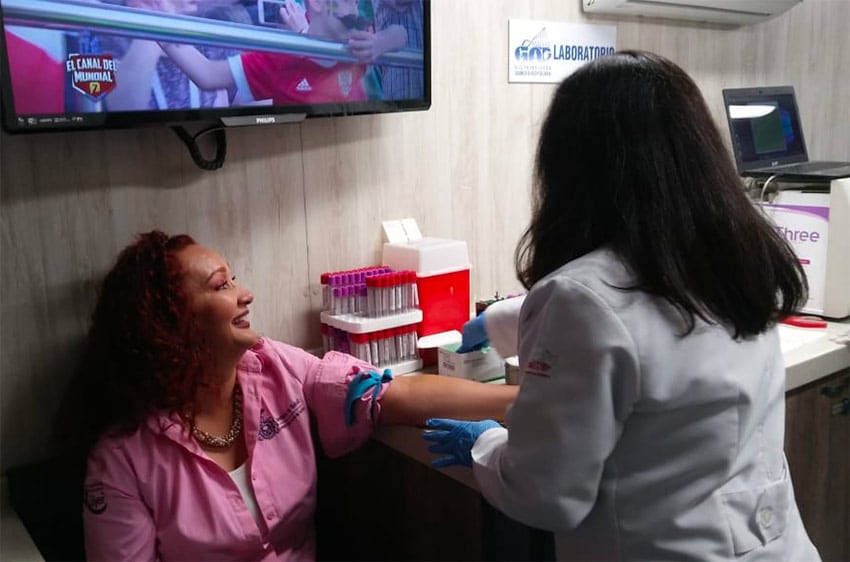
The Jalisco Heath Secretariat is attempting to collect more than 4,000 units of blood through its year-long blood drive.
The blood donated by volunteers will help treat more than 12,000 patients as a single unit of blood can benefit up to three people, said the director of the state center for blood transfusion (CETS).
As the first half of the year draws to an end the goal is on track for being achieved. María Guadalupe Becerra Leyva explained that so far they have reached 60% of the total.
The blood drive has been promoted by the government and several businesses but Becerra believes that voluntary donors are behind the success of the blood donation campaign. She called the donors “true anonymous heroes.”
She said most have been young people, and that more men donate than women.
“It’s not that women don’t [donate]. It almost always has to do with our condition, we’re menstruating, or pregnant, or breastfeeding [so] we have low hemoglobin blood levels . . . they don’t have enough hemoglobin levels to donate safely,” Becerra said.
Blood donations can be made in Guadalajara at the blood banks located at the IMSS Medical Center, at the Civilian Hospitals and directly at the CETS offices, located next to the Western General Hospital (Hospital General de Occidente), in Zoquipan.

Source: Milenio (sp)