Deep waters located off the coast of Los Cabos have high geothermal energy potential that is capable of meeting the electricity needs of the twin resort cities of Cabo San Lucas and San José del Cabo, according to scientists at the National Autonomous University (UNAM).
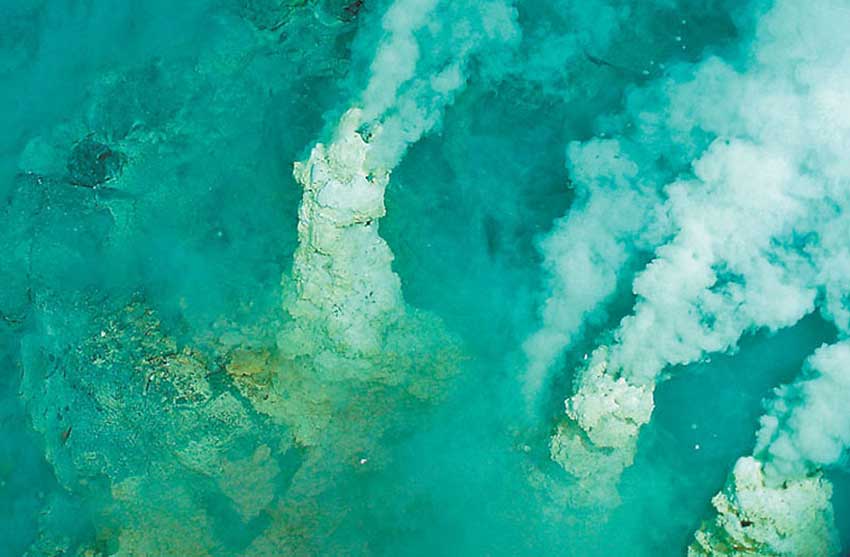
After searching for more than 10 years, a research team from the Department of Natural Resources at UNAM’s Institute of Geophysics has located a deep-sea deposit containing hydrothermal vents or “sea chimneys” off the southern coast of the Baja California peninsula.
Leading researcher Rosa María Prol said the geothermal energy potential of the team’s discovery is significantly greater than 500 megawatts, adding that there are other marine sites located up and down the 1,200-kilometer-long peninsula that could also be exploited.
She explained that while there are hydrothermal vents located in the Pacific Ocean further to the south of Mexico, it was thought that there wouldn’t be any geothermal activity in the area where the find was made because it was not known to have tectonic activity.
However, it has now become evident that there is a very deep area of the ocean where tectonic plate fractures do exist and where sea water that has been heated to very high temperatures is emitted.
Prol explained that the UNAM team first detected the presence of geothermal activity during visits to the area between 2004 and 2006.
“We found that there were wells [with water] of 90 degrees C. When we went to get samples, we calculated that the temperature of the deposit was close to 200 C, which suggested that it could produce a lot of energy,” she said.

However, it wasn’t until this year that by using the echo sounding sonar technique, the exact location of the deposit was found.
Following further deep-sea exploration, the team hopes to find water that is hot enough for turbines to convert it into electricity that could supply homes, hotels and other businesses in Los Cabos.
“This marine energy source will be permanently renewed, which doesn’t always happen on land . . . We are also planning to deliver the final results [of our research] to authorities so that they know that this resource exists and the benefits of exploiting it,” Prol said.
She added that “with what we have discovered, we believe that Los Cabos has sufficient geothermal resources to not have to depend on the energy that is supplied from La Paz.”
Source: Milenio (sp)