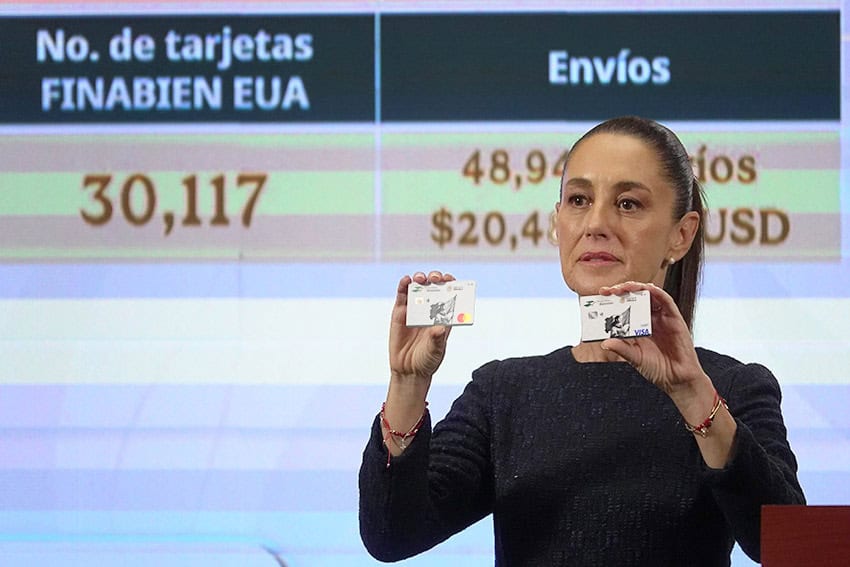
President Claudia Sheinbaum on Friday promoted a government bank card that can help Mexicans living in the United States avoid the new remittance tax.
Sheinbaum recommended the new services available with the Finabien bank card, originally created in 2024 by the federal government’s Financial Institution for Well-being (Finabien), brandishing a card for the cameras during her morning press conference.
“It’s a very simple way to send remittances electronically and avoid making cash transfers,” Sheinbaum said.
The newest service offers direct deposit operations, allowing cardholders’ wages to be sent directly to the card by employers or transferred using authorized institutions. Additionally, remittances can be made more economically and will allow cardholders to circumvent the U.S. remittance tax, the president said.
The new tax — which goes into effect on Jan. 1, 2026 — is a federal excise tax applied directly to outbound money transfers. Essentially, it is a fee charged across the board to each person who sends funds out of the U.S.
The Finabien card can be acquired at 53 consulates in the U.S., by mail or via digital application at miconsulado.sre.gob.mx. And accounts can be accessed at 1,700 sites in Mexico.
Finabien director Rocío Mejía Flores said the transaction fee has been reduced from US $3.99 to US $2.99, benefiting the 30,000 cardholders in the United States. Sending remittances only requires a destination and amount to be sent, with restrictions.

Mejía Flores said senders are limited to US $2,500 per day and no more than US $10,000 per month.
In addition to the Finabien card promotion, Foreign Relations Minister Juan Ramón de la Fuente emphasized the administration’s new approach toward consular services available to nationals residing in the U.S.
Describing consular attention as a priority, De la Fuente said his ministry (SRE) has upgraded its digital capabilities and consulates now feature:
- An online appointment platform to combat bureaucratic fraud.
- A digital one-stop shop, centralizing all procedures.
- The elimination of fees for consular procedures.
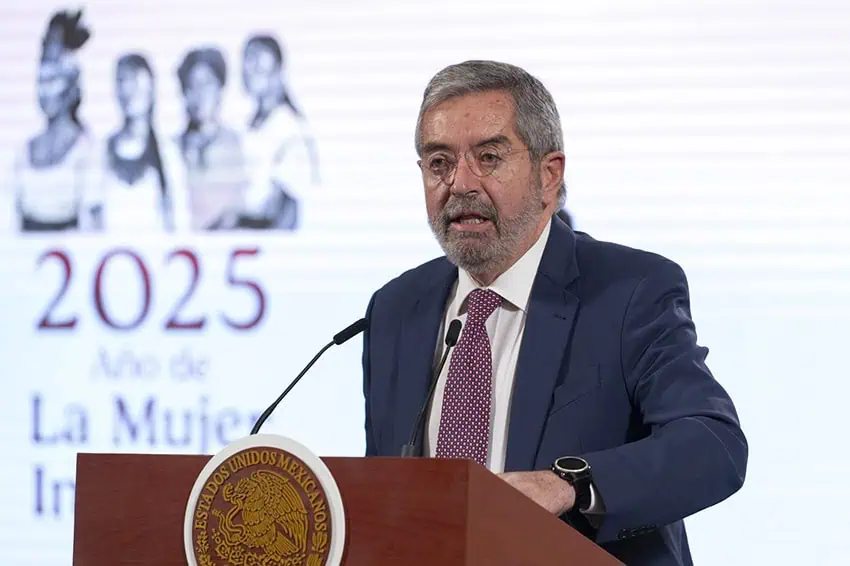
The foreign minister spoke of the emergency phone numbers designated to help nationals detained for immigration violations or subject to deportation. The SRE has two 24-hour emergency numbers from which agents will dispense legal advice and provide consular support: 520-623-7874 in the U.S. and 079 in Mexico.
De la Fuente also praised the roll-out of the new streamlined procedures to apply for a permit to send household goods home. The new digitalized application is a two-step process, whereas it used to require nine in-person procedures.
With reports from Aristegui Noticias, Forbes and El Economista