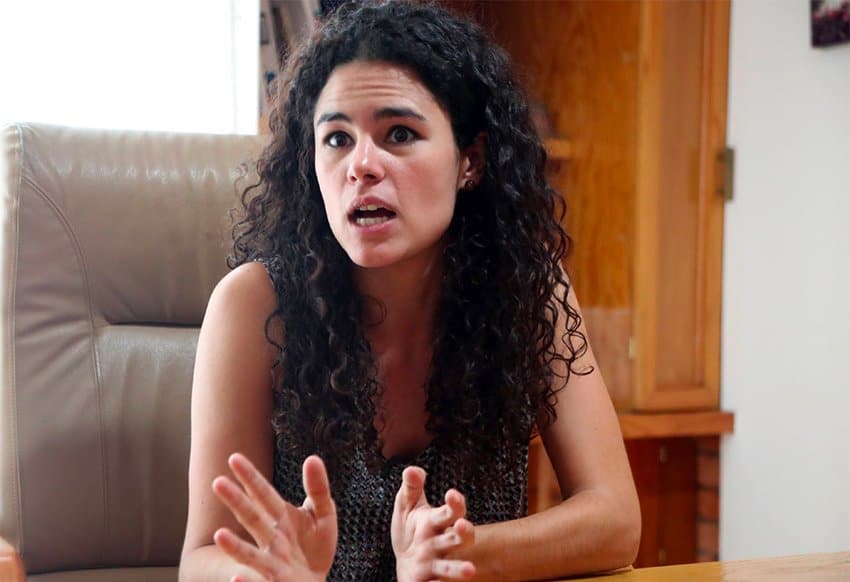
The incoming federal government faces a “titanic” task to improve the rights and conditions of Mexican workers, says the future labor secretary.
But Luisa María Alcalde, a 31-year-old lawyer who will be the youngest member of president-elect López Obrador’s cabinet, also believes that six years is enough time to “make a profound change” and “rescue the country.”
Mexicans work longer hours for less pay than citizens of any other OECD member country, according to statistics from the intergovernmental economic organization. Mexico also has high rates of forced and child labor.
“The entire situation that we are facing in the labor market and, in general, is titanic, in terms of poverty, inequality and violence that are totally linked to the labor market,” Alcalde told the news agency Reuters.
“[The task] is titanic but there are also enormous possibilities.”
As part of the new government’s plan to improve the quality of life for millions of Mexicans, Alcalde said that the soon-to-be ruling Morena party, which already has a congressional majority, will present Congress with secondary legislation that will enable the labor reform approved at the start of 2017 to be enacted.
“We hope to present it soon, in the coming weeks [in order to] guarantee that the representation of workers is authentic, so that there is true social dialogue,” she said.

The reform will prevent employers from signing so-called “protection contracts” with unions behind workers’ backs, with money often exchanging hands.
“It doesn’t matter which union, which employer or which company it is, it will be a general rule that will have to be respected,” Alcalde said.
New laws will also seek to eliminate the common union practice of appointing leaders to long-term roles via non-existent elections or opaque processes.
Members of the Mexican Petroleum Workers’ Union made history this week when they cast secret ballots to elect union leaders. But critics labeled the process a sham.
Under the new laws, workers, in theory, will be able to elect their leaders freely and democratically through a secret vote.
However, powerful unions close to the ruling Institutional Revolutionary Party (PRI) are likely to resist the change.
Alcalde also reiterated her pledge to work towards increasing the minimum wage and doubling it in the north of the country.
The current daily minimum wage is 88.36 pesos (US $4.50), seven pesos below the threshold set by the federal government for well-being.
“No man or woman . . . can live on the minimum wage and that is something that we cannot continue to support,” the future labor secretary said.
Source: Reuters (sp)