Mexico City’s new government will invest 10.2 billion pesos (US $504.5 million) next year to improve and expand public transportation, the mayor-elect announced yesterday.
Claudia Sheinbaum, who takes office on December 5, said that almost half that amount – 4.8 billion pesos (US $237.5 million) – will be used for the maintenance of trains, tracks and stations in the capital’s large subway system, the Metro.
The city’s RTP bus system will be allocated 600 million pesos (US $29.7 million) to buy new buses and upgrade those it already has while the STE system will receive 500 million pesos to complete maintenance work on the light rail tracks it operates in the south of the city and to buy new trolley buses.
The Metrobús system, which this year began operating London-style red double-decker buses on one if its seven lines, is set to get 1 billion pesos to build two additional lines.
Sheinbaum also said that 3 billion pesos will be allocated to build two new cable car transport systems, one in the north of the city between Cuautepec and the Indios Verdes subway station and another in the eastern borough of Iztapalapa between the neighborhood of Santa Marta and the Constitución de 1917 subway station.
According to the incoming government’s strategic transportation plan, the objective is to “increase accessibility for citizens, reduce travel times [and] improve traveling conditions.”
The incoming mayor, who will govern for president-elect López Obrador’s leftist Morena party, explained that a single card would be introduced for the entire Mexico City public transit network and pledged that there would be no increase in fares.

Accompanied by future transportation secretary Andrés Lajous, Sheinbaum said the new government will also seek to encourage residents to travel more on bicycles and on foot.
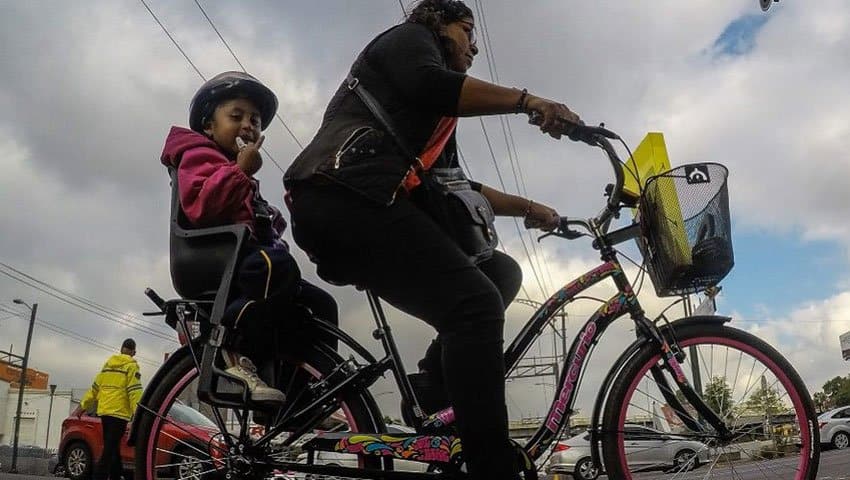
Around 100 million pesos is expected to be spent on building new bike lanes and massive bicycle parking stations, integrating the ecobici bike-sharing program into the city’s transportation department and building new pedestrian walkways at subway stations.
In addition, Sheinbaum stressed that her government would eliminate corruption in the city government’s transportation bureaucracy.
“We can’t think about improving the [transportation] system if corruption isn’t eradicated. Bribery is going to end, paying coyotes [fixers] for [vehicle] inspections, to get [public transportation] circulation permission or a license, everything associated with kickbacks [will end]. Transportation operators having to pay fees to high-ranking officials to be able to work, that’s [also] going to end,” she said.
Sheinbaum, an electrical engineer by profession, will become Mexico City’s first popularly elected female mayor.
She previously served as chief of the Mexico City borough of Tlalpan and as secretary of the environment during López Obrador’s administration of the capital between 2000 and 2005.
Source: Milenio (sp), Animal Político (sp)