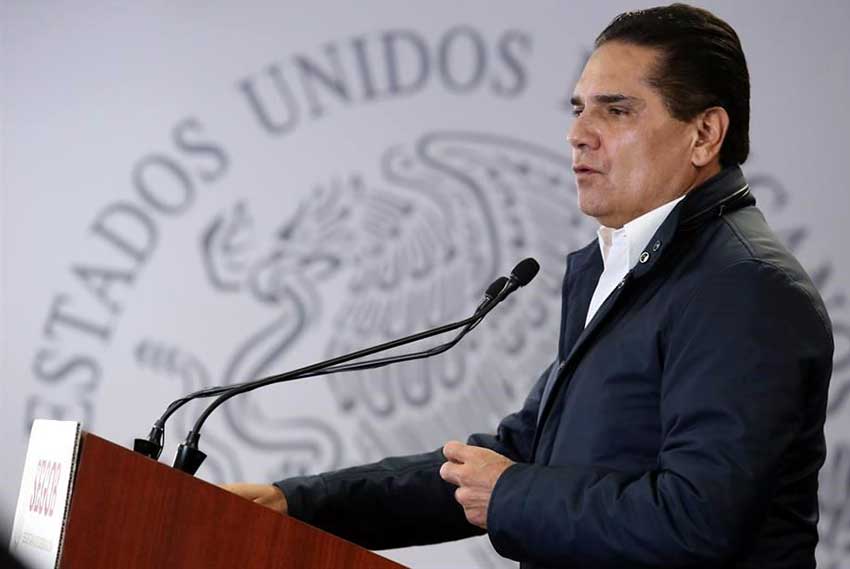
The government of Michoacán is preparing to slash budgets and sell public assets including goods and property seized from organized crime in order to pay off debts owed to teachers.
Governor Silvano Aureoles told reporters yesterday that the government still needs 3.6 billion pesos (US $187.3 million) to cover salaries and bonuses owed to teachers and thus put an end to protests and blockades in the state.
To that end, Aureoles said the government is reviewing its assets with a view to putting them up for sale.
“We’re going to put vehicles on sale, all the helicopters, land, property and assets seized from organized crime . . .” he said
Aureoles also said that government programs and departments – with the exception of the secretariats of Health and Public Security – will see their funding slashed in order to free up resources to pay teachers.
More than 8 billion pesos will be required over the course of the year to meet payroll obligations, the governor said.
Aureoles explained that the government’s plan to cut costs and sell assets would be unlikely to generate enough so he will ask the federal government for more assistance.

“We won’t be able to draw blood from stones. Let’s see where [this plan] gets us,” Aureoles said, adding that he hoped that the federal government would contribute the additional funds needed to “stabilize the teachers’ payroll issue.”
CNTE teachers’ union members blocked railway tracks in Michoacán for about a month earlier this year to demand payment of unpaid salaries and other benefits.
The protest cost the economy billions of pesos because thousands of shipping containers were left stranded in Lázaro Cárdenas and Manzanillo, Colima, and many exporters couldn’t get their goods to the port cities.
After the rail blockades ended, teachers continued protests at other locations including municipal government offices.
Aureoles said that he is determined to end teachers’ protests once and for all and improve strained relations with the CNTE.
“As a government, we’re going to make sacrifices . . . We have to use [funds allocated to government programs] to pay teachers, that’s okay, teachers will never again have to go out to the streets to protest for their salaries . . .”
Source: Reforma (sp), El Universal (sp)