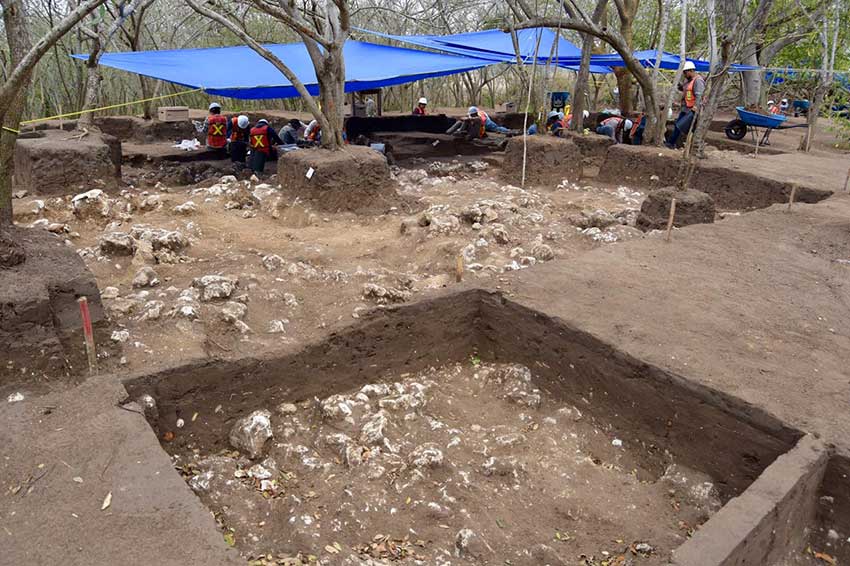
Archaeologists continue to uncover artifacts and human remains at the Chak Pet archaeological site in Tamaulipas.
The National Institute of Anthropology and History (INAH) has found human remains, pottery, arrowheads and ritual figurines dating back nearly 3,000 years in the Huasteca region near the port of Altamira.
Scientists and students from the institute accompanied local officials this week on a tour of the newly uncovered vestiges of the old Huastecan civilization.
So far, archaeologists have uncovered more than 5,000 artifacts and 532 human remains at 50 different points in the municipality of Altamira, presumably belonging to the former inhabitants of Chak Pet, who lived in the area from 900 BC to 200 AD.
The remains and artifacts will undergo radiocarbon tests to more precisely determine their age, along with other details such as diets and diseases they may have suffered.
The newspaper Hoy Tamaulipas revealed the possibility of a future collaboration between the municipal government and INAH to create a tourist route to display the region’s rich cultural history as well as a museum to house the uncovered artifacts and serve as an aid to tourists and residents alike in learning about the region’s past and peoples.
Source: Hoy Tamaulipas (sp)