More than half a million residents of Tabasco were told this week that 11 billion pesos (US $573.5 million) they owe to the Federal Electricity Commission (CFE) will be forgiven and that effective June 1 they will be charged the lowest rate in the country.
But the civil resistance movement that led to the accord is not over.
Announced Tuesday by Governor Adán Augusto López Hernández, forgiveness of the debt through an agreement between the state government and the CFE was supposed to represent a new beginning for Tabasco, where 520,000 people joined a resistance movement against the public utility that began in 1995.
But some Tabasco residents maintain that their resistance has not ended and say they will not pay future electricity bills. Others say they won’t pay them unless debt cancelation is extended to small businesses or until members of the government personally explain to them how the new electricity rate will work.
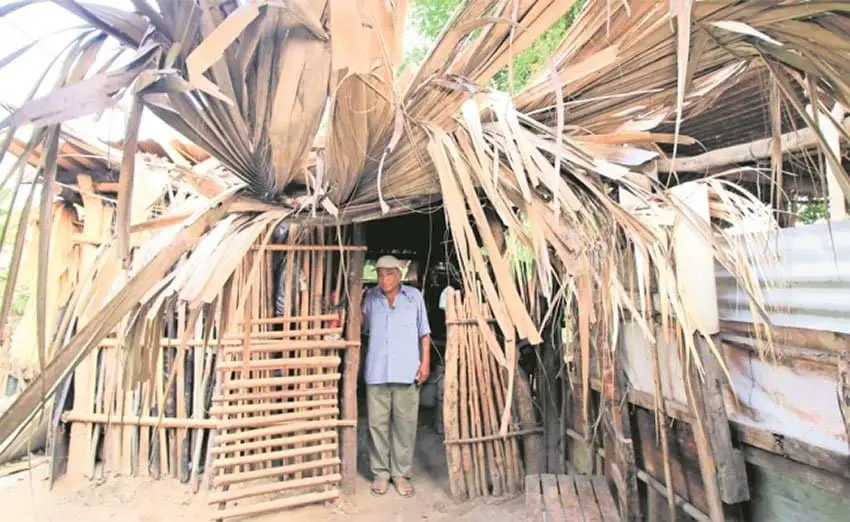
In Buena Vista, an indigenous Chontal town considered the birthplace of the resistance movement – where residents first clashed with the CFE over excessive price rises in 1990 and have even detained utility employees – residents offered reasons why they won’t pay to the newspaper El Universal.
“Take this information to [President] Andrés Manuel. He started the resistance here and we’re holding out . . . Tell him that Buena Vista and [the nearby community of] Tamulté de las Sabanas will continue to resist,” said Primitivo Hernández Hernández.
“There’s no work, where are we going to get money for food, for school for the children, where are we going to get money to pay for electricity, the people here won’t enter [into the new agreement],” he added.

Another resident, José Cruz Hernández, said: “[They have to] explain how this preferential rate deal is going to work. Until a government committee comes and explains . . . everything . . . we won’t enter into it.”
In Tamulté de las Sabanas, a small town around 40 kilometers from the state capital Villahermosa, Ramiro Hernández Valencia said it was unfair that small businesses were excluded from the deal struck between the governor and the CFE.
“. . . I’m not happy, I’m not convinced, resistance will continue here if they don’t give a clean slate and a [cheaper] electricity rate to everyone,” he said.
Local official Saturnino Hernández Hernández said that people are waiting anxiously for the new electricity rate to take effect, adding that López Obrador should visit Tabasco to meet with residents and explain to them exactly how it will work.
People currently receive bimonthly electricity bills of as much as 2,000 pesos (US $104) but many residents, most of whom earn their living from farming or fishing, can’t afford to pay them, he said.
López Obrador arrived in Tabasco today, where he called on residents to be “good citizens” and pay their
CFE bills. The utility, he said, belongs to the people and needs resources to continue providing service.
“. . . it’s not like before when the governors robbed all the money, now there is no corruption . . . [whereas] before those at the top helped themselves with the big spoon, dedicating themselves only to obtaining privileges of all kinds, they didn’t even pay taxes.”
Electricity charges should be seen as “contributions” to the development of the country, he said, rather than “taxes.”
Source: El Universal (sp)