Some time ago, on my radio program Good Morning Guatemala, I interviewed agents from NAS, the United States Narcotics Affairs Section, and the DEA, the better known Drug Enforcement Administration.
They likened the frustration of their anti-drug smuggling efforts to “squeezing a balloon” in that a long balloon, if squeezed, doesn’t deflate but just pops out in a different place.
To see if this analogy fit the current people smuggling scenario, I took a day trip from Comitán de Domínguez, in far southern Mexico, to go to Carmen Xhán, the rumored latest bulge in the several hundred kilometer-long “balloon” of the Mexico-Guatemala border.
Why in the world would anyone but me want to go to remote, almost-unheard-of Carmen Xhán, in the most remote corner of Mexico’s southernmost state of Chiapas? The chicken has timelessly known the answer: “To get to the other side.”
In this case the other side from Guatemala is Mexico, target or at least interim destination for thousands of Central Americans, Cubans, Africans, Asians, West Indians, Middle Easterners and anybody else interested in joining the stream of refugees headed to Mexico’s northern border with the United States.
With the newly formed Mexican National Guard shutting down the most heavily traveled route for refugees headed to the U.S. border, I wanted to cross the road to confirm rumors that the Mexican border hamlet — just plain Xhán to all locals — was the new bulge in the balloon, the unguarded gateway.
I did, and it is.

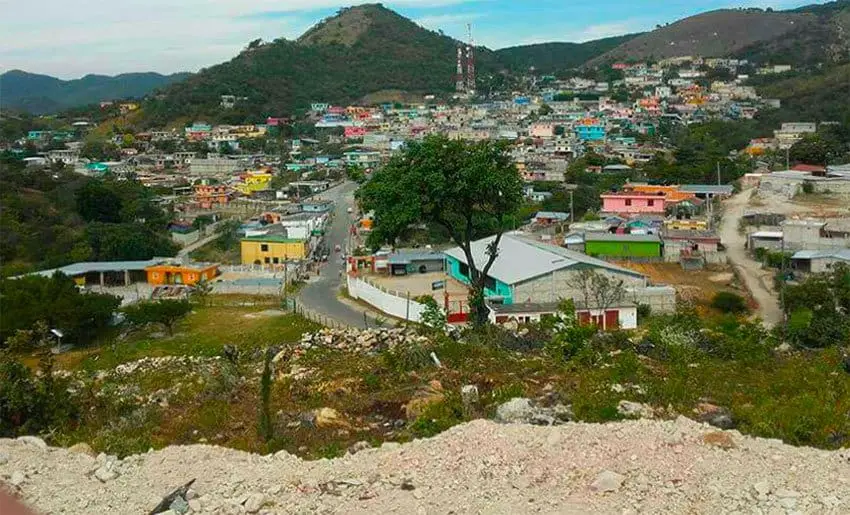
Xhán (“Shan”) is a small village like thousands of others in Mexico. Unlike most others in recession-staggered Mexico, it is in the middle of a construction boom. Packing sheds for tomatoes and showy gated residences for humans are at the heart of the construction frenzy.
But I suspect that it’s not tomatoes paying for all the materials. Mototaxi divers, municipal police and gas station pump jockeys all confirmed that a steady stream of non-locals passes through daily, headed north.
Some very large trucks from as far away as the Mexican state of Coahuila, possibly not just coincidentally bordering the U.S., were parked and at the ready. Ready to drive about 50 kilometers to the main highway, unguarded on the day of my trip, but being widened and repaved.
The border crossing itself looked like something right out of Butch Cassidy and the Sundance Kid. It was unmanned and unguarded save by insignificant speed bumps on either side, and I could and did illegally drive unnoticed into the Guatemalan border town of Gracias a Dios before turning around and taking the more-traveled route back north.
If this were a humorous piece, I would have to note that the word Xhán could be useful if there were an Aztec-rules Scrabble game. If I had been there on May 19 I could have joined the Santa Rita festivities. Santa Rita of Cascia is the patron saint of lost and impossible causes.
But this is not meant to be a humorous commentary.
The writer is a Guatemala-based journalist.