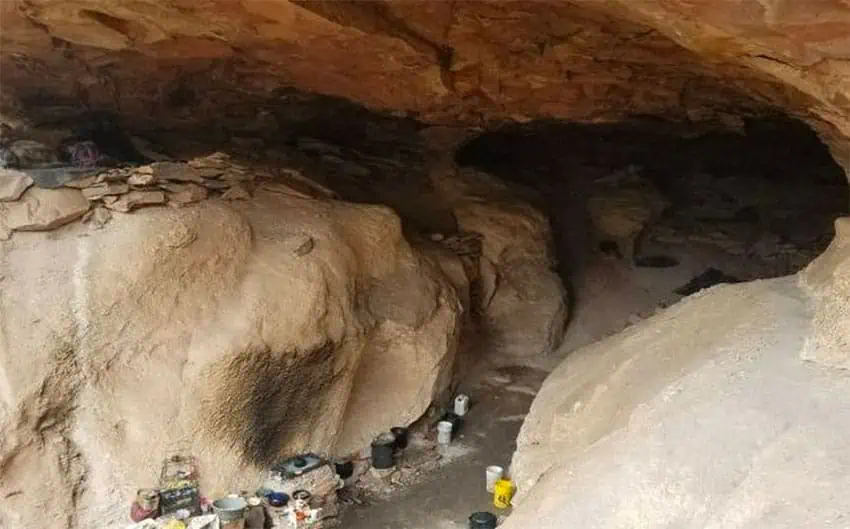
The Sinaloa Cartel was behind the enslavement of 21 men who were held in caves and forced to work on marijuana and poppy fields, the Chihuahua attorney general said.
“We have identified the criminal group that operates in the region, which is presumably the same one that deprived these people of their freedom,” César Augusto Peniche said, referring to the Sinaloa Cartel.
The men were rescued by more than 50 state police officers in the municipality of Ocampo last Thursday. The attorney general said that authorities received their key break in the case when an escaped captive gave police the location of the caves.
“We were able to establish contact with a person who told us that he had been deprived of his liberty to work in these [marijuana and poppy] fields. He himself gave us details that allowed us to pinpoint the location of where [the 21 captives] could be found.”
However, it was not the first attempt to rescue the men. Police first began receiving anonymous tips that a crime gang was forcing people to work in the Sierra Tarahumara along with reports by family members of some of the men’s disappearances over a year ago.
Some of the 21, several of whom are indigenous and nearly all of whom are from Chihuahua, were reportedly lured into captivity by promises of high-paying agricultural work. But the men worked all day and were given only flour, water and beans for food.
Some of the men said they had been forced to work for as long as two years.

Augusto Peniche said the investigation had been complicated by the vast territory and uneven terrain in the region. He added that the state was currently attempting to locate the victims’ families.
None of the men’s captors was present at the time of the rescue and no arrests have been made.
Source: Milenio (sp)