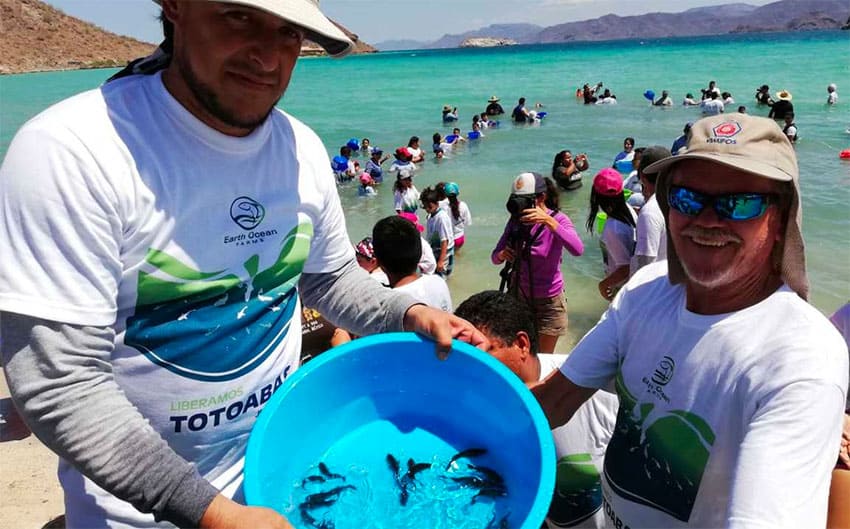
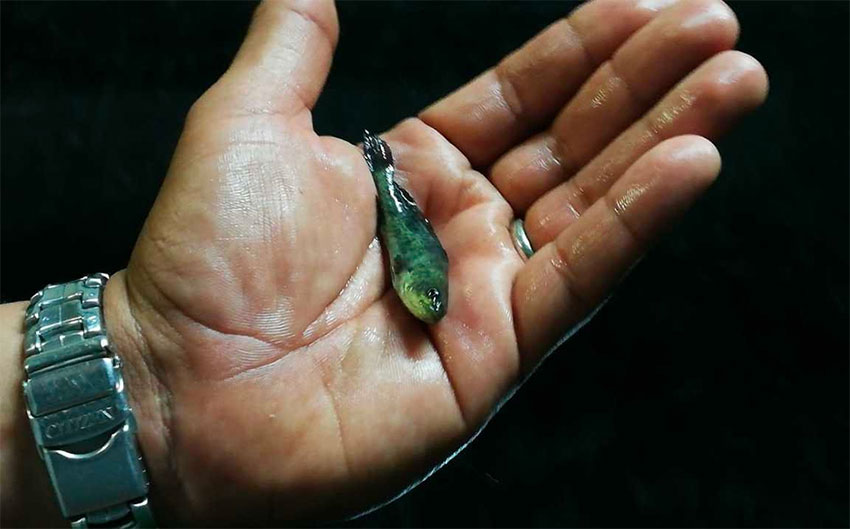
An aquaculture company released 40,000 young totoaba into the ocean in Baja California Sur on the weekend, declaring the fish would never become extinct.
Earth Ocean Farms released the young fish into Bahía Concepción in Mulegé, where director Pablo Konietzko told the newspaper Milenio that with the release of the juvenile fish, which were grown in a laboratory in La Paz, the survival of the species is “guaranteed.”
“I can guarantee that the totoaba will never go extinct, because we can grow them in captivity, unlike the vaquita marina,” he said. “That makes us very happy, it’s a contribution to aquaculture and the preservation of species.”
The company began growing totoaba in captivity in 2012, using fish held by the Autonomous University of Baja California. In 2014, it received permission from the Secretariat of the Environment (Semarnat) to capture 60 totoaba for breeding. The following year, the first 15,000 juvenile totoaba were released. Counting the 40,000 released last weekend, 110,000 totoaba have been released to date.
The totoaba has been endangered for several decades because of overfishing. The fish is prized for its swim bladder, which is considered a delicacy in certain parts of Asia and can fetch prices of around US $500 per kilo in Mexico and $10,000 per kilo on the international market.
Illegal totoaba fishing has also led to the near extinction of the vaquita marina, a marine mammal endemic to the Gulf of California. Vaquitas often die when they are trapped in nets used by totoaba fishermen. Earlier this year, a conservation group estimated that only 10 vaquitas remain in the wild.
Earth Ocean Farms also produces farmed totoaba for the domestic market, selling the fish to restaurants in Mexico. A kilo of totoaba meat costs about 280 pesos (US $15), and the company produces 250 tonnes a year.

Konietzko noted that his company only farms totoaba and does not fish for them.
“We have nothing to do with illegal or extractive fishing,” he said. “We don’t get any totoaba from the sea, our whole cycle is closed. The fishing of that species, and the problems it creates for the vaquita marina, has nothing to do with us.”
Source: Milenio (sp)