Residents and authorities have battened down the hatches as Hurricane Lorena approaches the southern tip of the Baja California peninsula.
The Category 1 hurricane was 55 kilometers east of Cabo San Lucas, Baja California Sur, at 1:00pm CDT on Friday and was forecast to pass near or over the southern portion of the Baja peninsula later in the day, the United States National Hurricane Center (NHC) said.
A hurricane warning is in effect between La Paz and Puerto Cortés and a hurricane watch is in effect for the east coast of the peninsula between La Paz and San Evaristo. A tropical storm warning is in effect for Puerto Cortés to Cabo San Lázaro.
Lorena was downgraded to a tropical storm soon after it made landfall as a Category 1 hurricane in Jalisco on Thursday morning but regained strength after it moved offshore.
The NHC upgraded the storm to a Category 1 hurricane early on Friday. Maximum sustained winds are near 120 kilometers per hour with higher gusts and some additional strengthening is possible as the storm slowly moves towards land.
With forecasters predicting damaging winds, flash flooding and life-threatening surf conditions along the Pacific coast of Baja California, residents prepared as best as they could on Thursday.
In the Los Cabos area, boat owners pulled their vessels from the water and shopkeepers covered windows with plywood, the Associated Press reported.

“If we don’t get the yacht out, the waves can damage it,” said Juan Hernández, who rents his boat to foreign visitors. It’s “a preventative measure for when a cyclone threatens.”
Baja California Sur authorities suspended classes for Friday so that schools can be used as shelters if necessary. Governor Carlos Mendoza Davis said on Twitter this morning that 790 people had already decided to leave their homes and take refuge in shelters in Los Cabos.
A total of 177 properties across all five Baja California Sur municipalities were available to be used as shelters.
State government secretary general Álvaro de la Peña said that the government has taken “preventative measures” to prepare for the hurricane’s arrival. “Rations, gasoline, all supplies are guaranteed. There is no need for panic buying,” he said.
“Lorena is going to dump a lot of water,” said Carlos Alfredo Godínez, deputy secretary for Civil Protection in the state. Heavy rain is already falling in Los Cabos, Mendoza Davis said on Friday morning.
The NHC said that Lorena is expected to produce rainfall of 7-15 centimeters across far southern Baja California Sur with maximum amounts of 20cm.
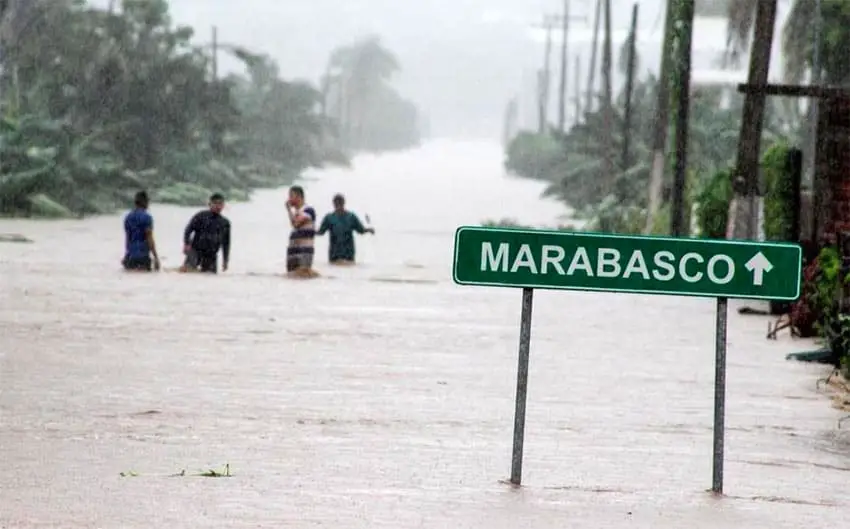
The hurricane caused flooding and minor landslides in parts of Jalisco and across Colima on Thursday. All 10 municipalities in the latter state were affected, AP reported. Roads were flooded, dozens of trees came down in the strong winds and some areas lost power.
However, Colima Governor José Ignacio Peralta said there were no deaths or significant damage to infrastructure.
The NHC said that Lorena will gradually move away from the west coast of the Baja California peninsula tonight and Saturday, and then will degenerate into a remnant low or be absorbed in a couple of days by Tropical Storm Mario, which was 555 kilometers south of the southern tip of the Baja California peninsula at 10:00am CDT.
Source: Associated Press (en)