There is growing opposition to the federal government’s Isthmus of Tehuantepec trade corridor project, which includes modernization of the railroad between Salina Cruz, Oaxaca, and Coatzacoalcos, Veracruz.
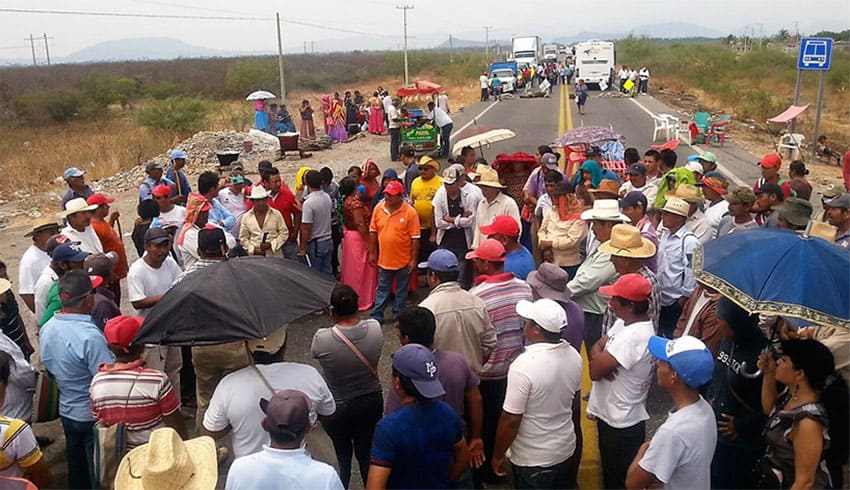
The indigenous group El Istmo es Nuestro (The Isthmus is Ours) and Maoist organization Sol Rojo (Red Sun), reported to have a strong presence in the region, have indicated they will support local communities in their opposition to the project.
In addition to upgrading the rail link between the Pacific and Atlantic coasts, the government intends to modernize the ports in both Salina Cruz and Coatzacoalcos as well as improve the region’s roads and airports.
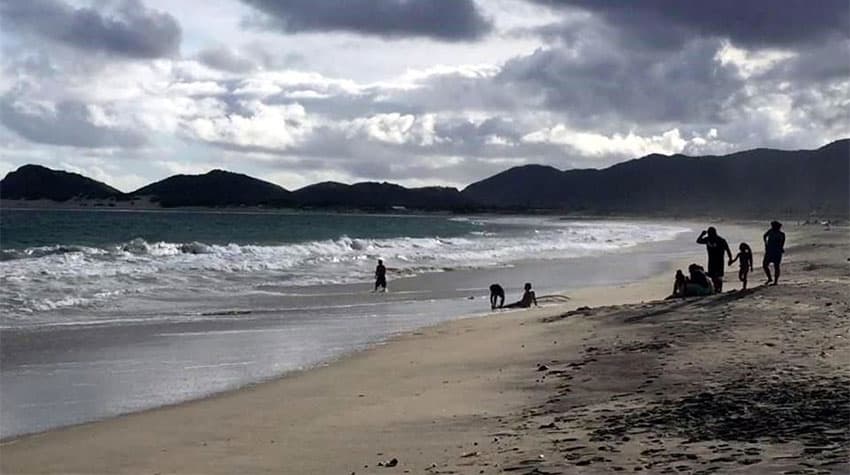
Some of the staunchest opposition to the project can be found in Playa Brasil, a small beach town near Salina Cruz.
Although federal authorities haven’t told residents about the impact that the project will have on their community, they have reason to believe that they will be adversely affected.
Locals told the newspaper Reforma that they have observed drones flying over the area as well as engineers measuring the beach. In addition, they obtained leaked photographs of a government map that shows that Playa Brasil will be absorbed by a new industrial port.
According to information included on the map, 17.7 billion pesos (US $922 million) of public and private money will be spent to build a range of port infrastructure in the town including container and industrial terminals.

Speaking at a community meeting, Sandra Velázquez López, a local resident and member of El Istmo es Nuestro, said that her biggest concern about the plans is that Playa Brasil’s natural amenities will be destroyed.
“I don’t agree with it because they’re going to uproot people who have roots in this place and mainly because they’ll destroy nature,” she said.
Sol Rojo member Javier Aluz said the trans-isthmus trade corridor may have a different name to past projects – similar plans have been proposed for years in order to create an alternative to the Panama Canal – but claimed that it pushed “the same agenda of imperialism.”
In turn, the region’s people will continue their “agenda of resistance,” the San Blas Atempa resident said at a meeting with international organizations hosted by a Oaxaca civil society group.
Benjamin Cokelet, founder of the watchdog group PODER, said the trans-isthmus project would affect people who live close to the railroad and warned of the potential of environmental damage in the case of rail accidents. He also said that improved infrastructure in the region could promote drug trafficking.
The Mexican Shipping Agents Association said in April that any notion that a rail project across the Isthmus of Tehuantepec can compete with the Panama Canal is a “pipe dream,” but the state-owned Isthmus of Tehuantepec rail company said in July that modernization of the railroad could increase cargo capacity between the two ports by more than 11 times.
Source: Reforma (sp)