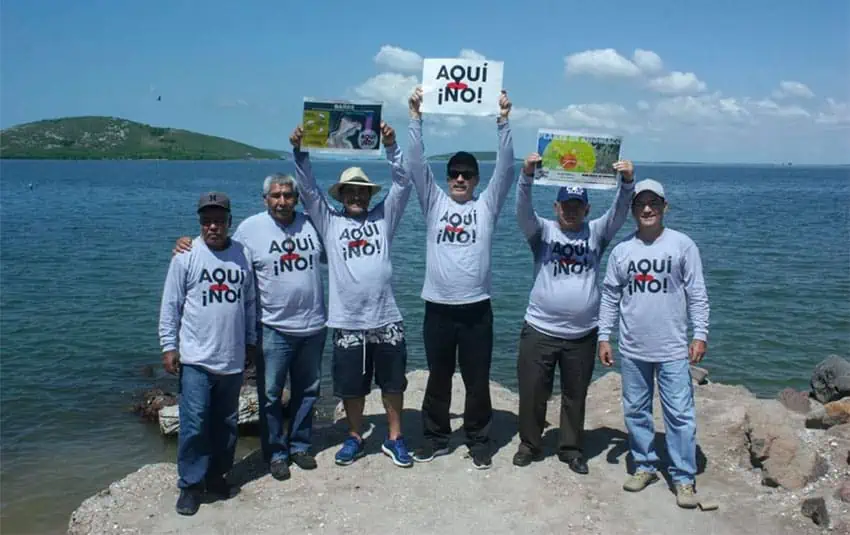
A proposal to construct a fertilizer plant is dividing residents of Topolobampo, Sinaloa, and other communities in the municipality of Ahome.
The plant was one of 147 projects presented Tuesday as part of the public-private National Infrastructure Plan (PNI), although President López Obrador told opponents of the project in June that they would be the ones to decide if it should go ahead.
Gas y Petroquímica de Occidente (GPO), a Mexican subsidiary of the Swiss-German group Proman AG, said the government’s announcement provides certainty for it to go ahead with the construction and operation of the US $1.25-billion plant, which will have the capacity to produce 2,200 tonnes of ammonia per day.
However, some Ahome residents remained determined to stop it.
Many fishermen say the plant will cause irreparable damage to the Santa María, Topolobampo and Ohuira lagoons and restrict the area in which they can work.
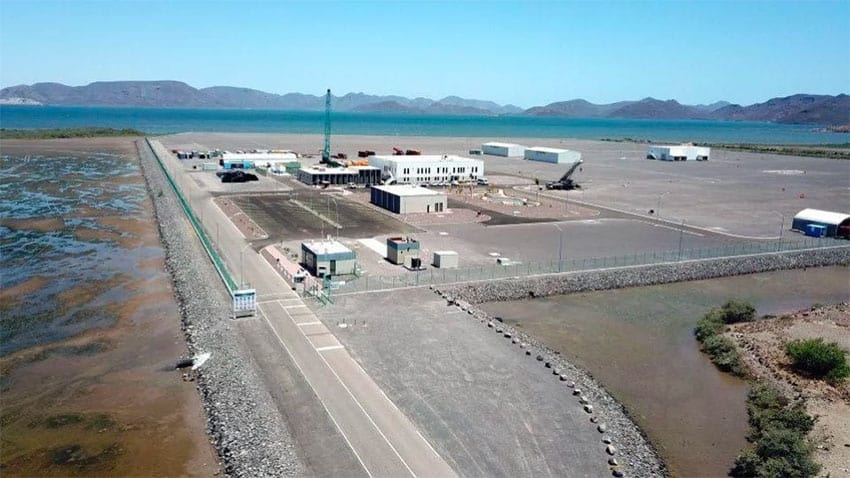
“I’m a fisherman 100%, it’s my means of support and the plant is [in the area] where I fish, about two kilometers away,” Milton Armenta told the newspaper Milenio.
“[Its operation] is going to take this whole work area from us, and besides they’ll contaminate the bay,” he added.

Diana Escobedo Díaz, an environmental researcher at the National Polytechnic Institute, said the lagoons near the plant are home to shrimp larvae as well as feeding areas for turtles and a “critical habitat” for bottlenose dolphins.
“. . Therefore, no additional impact is recommended . . . [The area] is already affected by the thermal power station, which is already drawing water . . . for cooling,” she said.
Some residents are also concerned that a gas leak at the plant could pose a risk to their lives.
The Aquí No (Not Here) Collective has been granted six injunctions that have stalled the project, and they reject López Obrador’s proposal to hold a public consultation about its future. The collective is demanding that he cancel it instead.
The head of the Natural Protected Areas Commission has also expressed opposition to the proposal. Roberto Aviña says that having an ammonia plant so close to lagoons that are protected by the Ramsar Convention on Wetlands of International Importance “is not possible.”
For its part, the company building the plant rejects the charge that it will have an adverse effect on the environment and says the probability of a major gas leak is practically zero due to the security systems that will be installed.
The company has the backing of other Ahome residents who have formed their own collective, called Aquí Sí.
Guadalupe Rivera, a resident of Lázaro Cardenas, a town across Ohuira bay from Topolobampo, told Milenio that she and other locals support construction of the plant because of the economic and social benefits it will bring. The company has already provided financial support for needy residents, she said.
“We agree with it being built . . . [GPO] has provided for the community, for both children and senior citizensc. . . A lot of people have needed [to pay] surgeries, hospitalization and funeral expenses. A lot of support has come to the community that the other group [Aquí No] hasn’t wanted to accept.”
Source: Milenio (sp)