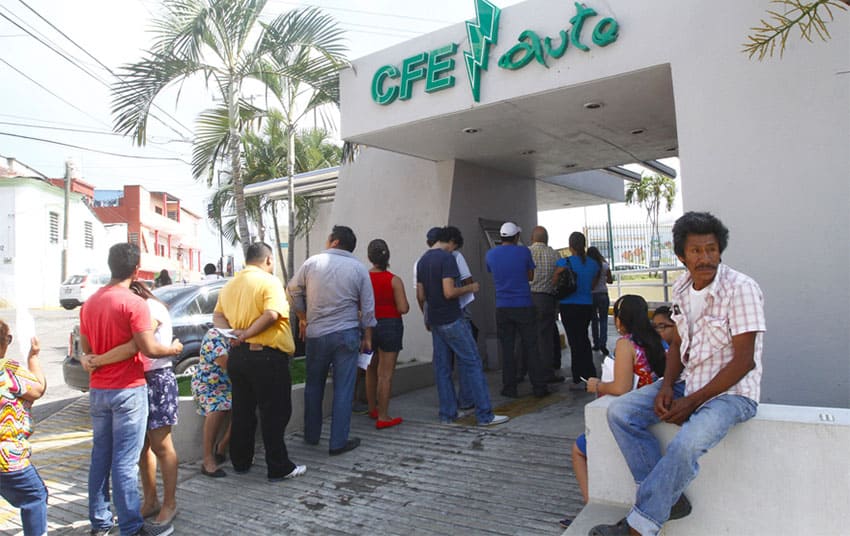
Electricity customers in Tabasco whose 25-year-old debts were forgiven thanks to an agreement supported by President López Obrador continue to refuse to pay their bills.
Governor Adán Augusto López Hernández announced in May that his government had reached an agreement with the Federal Electricity Commission (CFE) for a “clean slate” to apply from June 1 for customers who had joined a civil resistance movement against the utility.
That movement was initiated by López Obrador after his defeat in the 1994 election for governor of Tabasco, allegedly due to electoral fraud.
The agreement, which the governor said wouldn’t have been possible without the president’s support, stipulated that in order to have their debts waived, customers must sign a contract to commit to paying for their electricity use, although they would get the cheapest rate offered by the CFE.
The customers, who collectively owed the CFE 11 billion pesos (US $562.5 million), were given a 180-day period within which to sign an Adiós a tu Deuda (Goodbye to your Debt) contract.
However, only 170,000 customers signed the contract during the period that ended Thursday, Energy Development Secretary José Antonio de la Vega told the Tabasco Congress.
As a result, the governor made an agreement with CFE chief Manuel Bartlett to extend the period by an additional six months, he said.

Juan Manuel Fócil Pérez, a federal senator for Tabasco, said many people have refused to sign a contract because the cost of electricity is still too high.
He said the Democratic Revolution Party, which López Obrador represented at the 1994 election, will encourage Tabasco residents to continue with their civil resistance. The state leader of the Institutional Revolutionary Party, Pedro Gutiérrez, said the same.
De la Vega explained in Congress that 34,000 customers who did sign the contract have once again fallen behind in the payment of their bills.
The secretary said the CFE could seek to recover debts by obtaining court orders that authorize the seizure of indebted customers’ assets such as cars and televisions.
Source: El Universal (sp)