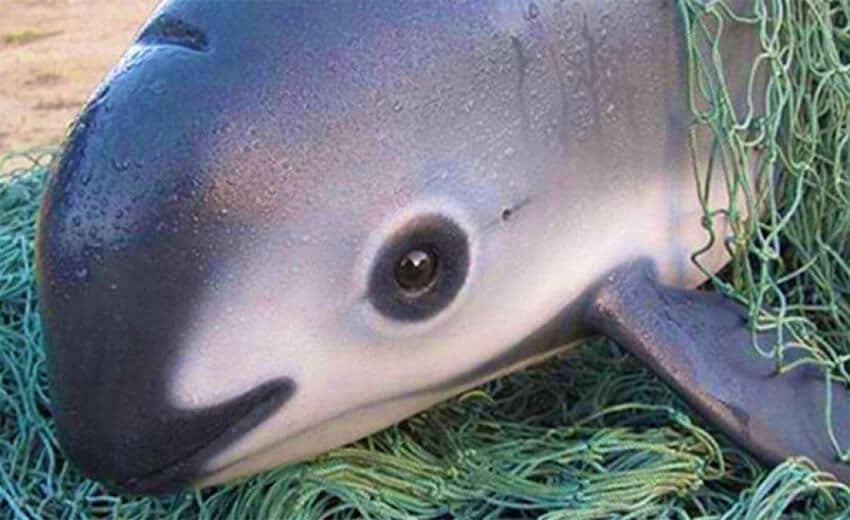
The Mexican government’s erratic approach to saving the vaquita marina porpoise in Gulf of California has only furthered the critical threat illegal fishing poses for the species.
After years of collaboration with the Sea Shepherd Conservation Society to combat illegal fishing, the Mexican government announced the birth of two vaquitas in early April. Both the nongovernmental organization and the Mexican navy credit their thorough patrols of the area for the small sign of recovery.
Last fall, a group of experts convened by the organization the International Union for Conservation of Nature used a technique called expert elicitation to analyze the results of a survey of the vaquita’s Gulf of California habitat over 17 days in 2021 and estimated that only between seven and eight vaquitas remained, with at most two of them being calves.
So the news of the births came as a surprise, especially given that in July 2021, the Mexican government officially scrapped the zero-tolerance area (ZTA), where fishing had been previously banned inside the Vaquita Protection Refuge. While fishing with gillnets — long wall-like structures that are dragged along the ocean floor — remains banned, the government has replaced the zero-tolerance approach with a sliding scale of sanctions based on the number of fishing vessels in the area.
The Mexican government’s move was widely lampooned by experts.
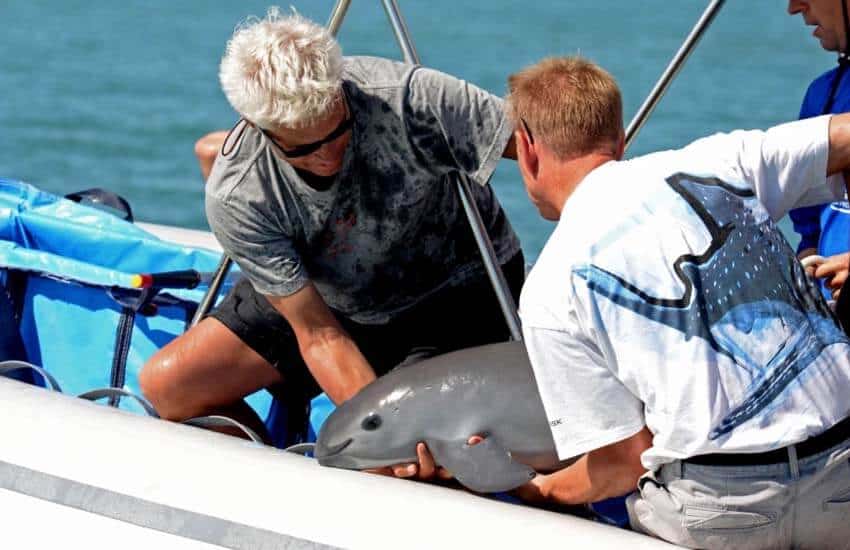
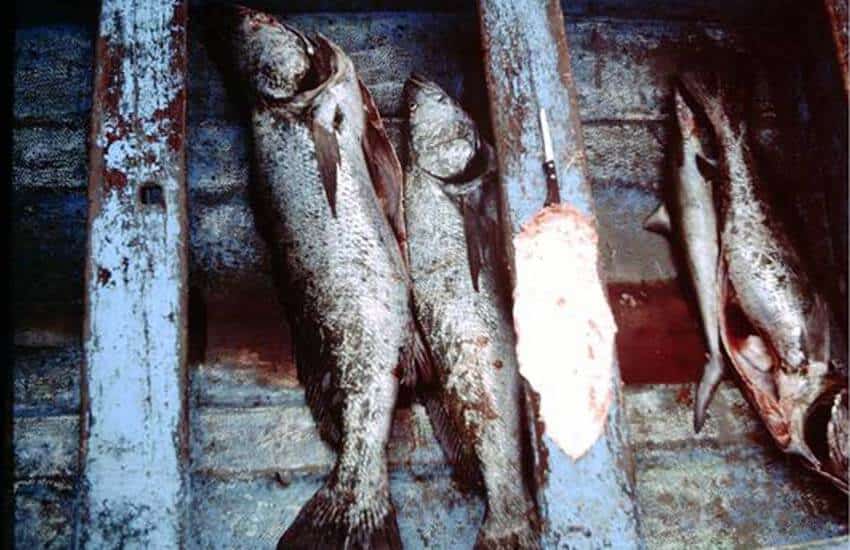
Adding to the pressure on the vaquita marina, the Convention on International Trade in Endangered Species of Wild Fauna and Flora (CITES) approved the trade of farm-raised totoaba fish in March 2022. The swim bladders of the totoaba are prized as a delicacy in China and fetch high prices there, which has made it a mainstay target for illegal fishing in Mexico. While the vaquitas are not the target of illegal fishing, they are often bycatch. They become entangled in gillnets used to catch totoaba, shrimp and other fish.
Until March, international trade in the totoaba, which shares waters with the vaquita marina, had been illegal.

InSight Crime Analysis
While controlling illegal fishing in the vaquita habitat would have always been a challenge, Mexico’s meandering approach to enforcement has made the situation even more difficult.
There have been some attempts at prosecuting wildlife traffickers: in February 2021, the government increased penalties for totoaba trafficking and followed this with several arrests of alleged totoaba traffickers linked to organized criminal groups.
A source working for a conservation group in Baja California who wished to remain anonymous for security concerns said that this was the first successful intelligence-led operation to take down totoaba traffickers.
The Mexican navy, however, has few options to crack down on the number of vessels fishing inside the vaquita refuge. According to the conservation source, the government’s unofficial policy towards illegal fishing in the area remains non-confrontational. “The navy’s role is to ask fishermen to move their nets out of the ZTA without forcing them to do [so],” the source explained.
While there is some level of compliance, dozens of vessels are routinely spotted inside the refuge area.
Andrea Crosta of Earth League International (ELI) told the Mongabay environmental news site that while taking down larger criminal structures will help ensure the vaquitas’ survival, the problem ultimately lies in tackling demand. Chinese traders operating in Mexico are the most critical link in the supply chain, moving the swim bladder to East Asia, according to Crosta.
Reprinted from InSight Crime. Henry Shuldiner is a writer with InSight Crime, a foundation dedicated to the study of organized crime.