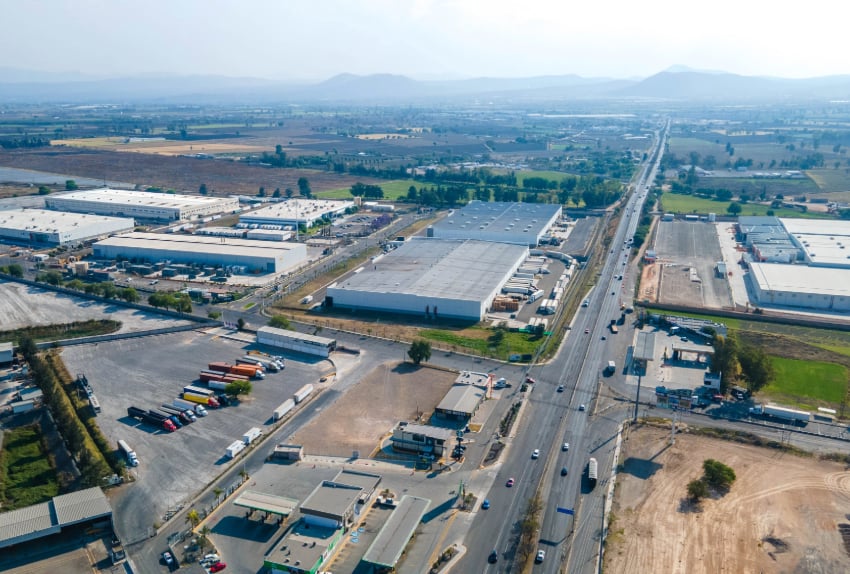
Less than two years after its launch, President Claudia Sheinbaum’s Plan México has delivered 40% of the 100 industrial parks projected in the economic and industrial strategy’s six-year blueprint.
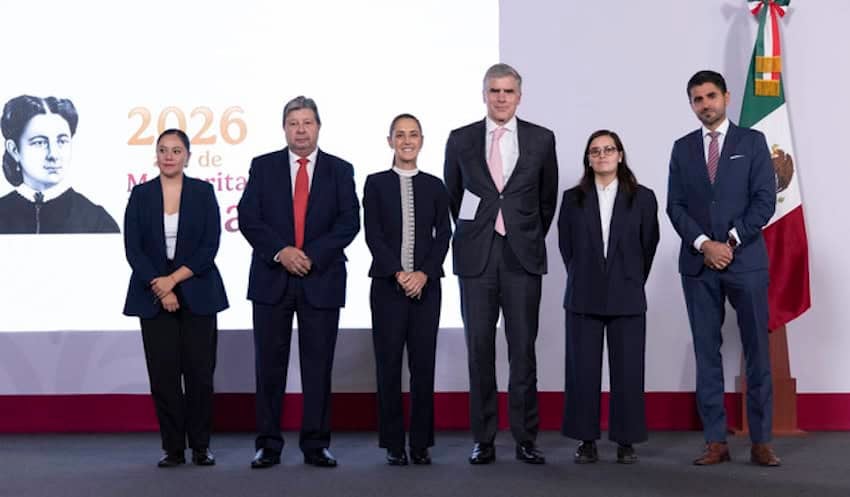
Alongside representatives of the Mexican Association of Private Industrial Parks (AMPIP) at the National Palace on Thursday, Sheinbaum announced the delivery of 20 new industrial parks, with a reported investment of between US $670 million and US $763 million.
This brings to 40 the total number of these factory districts completed since Plan México was launched in January 2025.
The new developments are located in eight federal entities (the states of Baja California, Coahuila, Nuevo León, México state, Aguascalientes, Guanajuato and Querétaro, along with Mexico City) and 17 municipalities.
The new industrial projects are distributed in four strategic corridors, with a greater concentration on the northern border and the region linked to the Felipe Ángeles International Airport located outside of Mexico City. Ten of the new properties are located in Coahuila and Nuevo León.
The new parks comprise a total surface area of 4.6 million square meters, with the capacity to house approximately 175 companies. President Sheinbaum said the new projects hold the potential of creating 32,127 jobs.
David O’Donnell, president of the AMPIP Board of Directors, said the industrial parks are a key part of the infrastructure that makes it possible to attract capital, strengthen supply chains and connect workers, suppliers, universities, communities and markets.

“Mexico’s industrial base is a great strategic asset for the country,” he said, adding that the country’s geographic location, talent and manufacturing experience allow it to participate in global value chains.
The new parks — all 20 of which already have companies installed and in operation — will house industrial activity in key markets such as electronics, medical devices, logistics and e-commerce, sectors that have been expanding in Mexico.
O’Donnell said the AMPIP and its associates will have invested US $4.6 billion this year in the development of industrial infrastructure.
The investments are expected to increase Mexico’s competitiveness, as well as boost formal employment, training, security and development opportunities for families.
“We believe that industrial growth should translate into well-being for Mexican families and opportunities for young people,” he said.
With this second delivery, AMPIP now has 40 industrial parks in operation, developed by 26 industrial real estate companies and distributed across 14 states.
Together, they represent an investment of over US $1.4 billion and more than 8.2 million square meters of industrial infrastructure.
With reports from El Economista, Obras por Expansión and Excelsior