U.S. trade policies are reshaping Mexico’s foreign investment profile, temporarily knocking the manufacturing sector off its perch as the country’s most attractive investment.
According to the news magazine Expansión, the commercial sector has displaced manufacturing as the largest target of foreign direct investment (FDI) in Mexico, with 42% of all investment announcements made during the first quarter of the year going to profit-driven stores and businesses.
Citing data from the Economy Ministry (SE), Expansión reported that the 39 investment announcements made during the first quarter of 2025 surpassed a total of US $25.8 billion, but only 24% of that targeted the manufacturing sector, which has been a priority for FDI.
Last year, an SE report described Mexico as “a specialized manufacturing center with a growing need for investment capital to develop the country’s industrial base.”
SE data revealed that during the first quarter of 2024, more than $8.5 billion of the $20.3 billion in FDI (42%) received by Mexico went to the manufacturing sector, primarily in the autoparts industry.
The next most-favored sector in 2024 was financial services (25%), followed by mining (12%), transportation (6%) and trade, which was broken down into wholesale trade (5%) and retail trade (3%).
This year, Expansión reports, uncertainty caused by U.S. tariffs has prompted foreign investors to reconsider the reliability of Mexico as an export platform.

At the same time, the 2025 Kearney FDI Confidence Index released last month showed Mexico had sunk to 25th and last in its global rankings. Investors polled cited domestic economic performance as a top priority, and analysts project stagnant growth for Mexico this year.
“The uncertainty has impacted long-term decisions, especially for companies with cross-border flows,” Expansión wrote.
In northern Mexico — home to automotive, aerospace, electronics, and heavy metal manufacturing enterprises — executives told Expansión that industrial expansion plans are being paused not due to lack of capital, but because of uncertainty.
The volatile environment has also resulted in higher logistical costs, prompting some multinationals to contemplate relocating their production chains.
This phenomenon has produced a paradox. “The country that appeared to be the principal beneficiary of nearshoring is now facing unexpected obstacles,” Expansión wrote.
Expansión cited a report by Spanish financial services company BBVA indicating that Mexico’s manufacturing remains the most important “structural recipient” of FDI, because of the viability of its products. However, the increase in investment announcements prioritizing the trade sector hints at an important evolution.
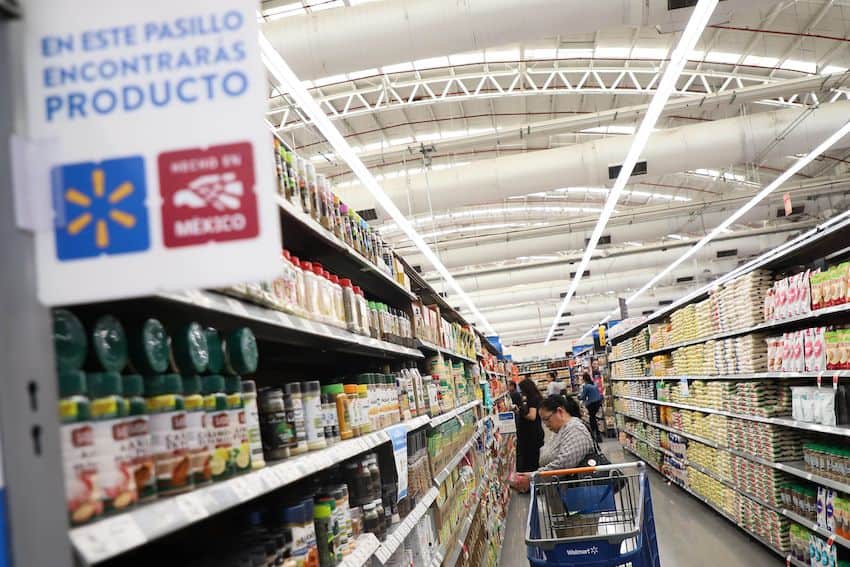
Retail trade and e-trade — with Walmart and Mercado Libre as the big players here — are gaining ground as key shelters for FDI in Mexico.
As evidence, first-quarter investment announcements in this sector surpassed $11 billion, nearly double the $6 billion recorded in the first quarter of 2024.
With reports from Expansión and La Jornada