Mexico’s much-anticipated economic windfall from hosting the FIFA 2026 World Cup could be as much as US $2.73 billion in added value across the country, according to a February report from the consulting firm Deloitte.
Such an economic contribution would be the equivalent of around 0.14% of Mexico’s GDP, according to Deloitte Spanish Latin America’s Chief Economist Daniel Zaga. The World Cup is also expected to create 92,700 temporary jobs countrywide, which equates to around 0.19% of Mexico’s total employment.
The positive economic effects in Mexico will mostly go to the three World Cup host cities, with Mexico City expected to enjoy an economic boost of $847 million, as well as the generation of 33,280 jobs. Jalisco will get $385 million in revenue and 15,100 jobs, and Nuevo León $350 million and 13,870 jobs.
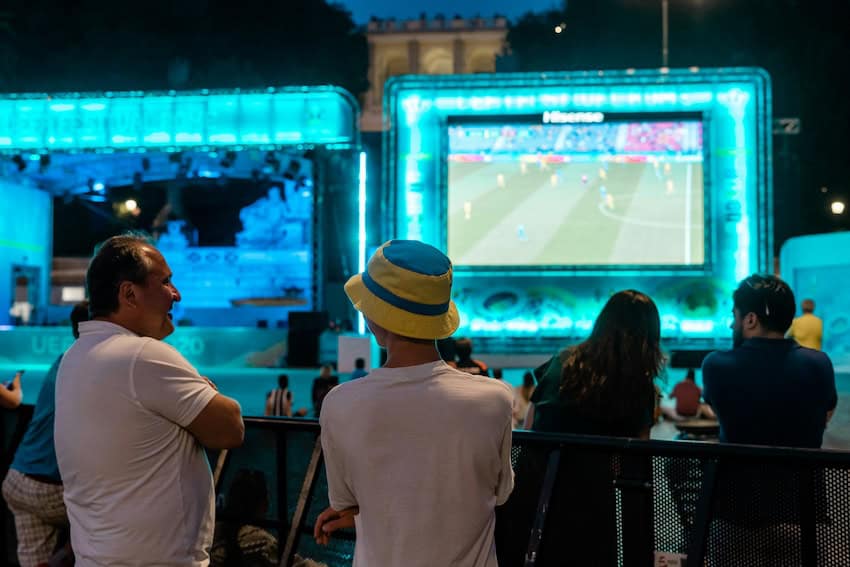
However, the rest of the country will likely share in the spillover effects, as friends, family and international visitors gather in bars, restaurants and fan fests to watch the sports event, particularly in tourist destinations. The World Cup is expected to have an economic impact of around $668 million in non-host states and support the creation of 31,200 jobs.
In Mexico’s western Jalisco state, where four World Cup matches will be played in Guadalajara, the sports event is expected to add 0.37 percentage points to the state’s projected economic growth for 2026, according to the managing partner of the Guadalajara Cluster at Deloitte Spanish Latin America, Javier Kuan.
The direct economic impact of the World Cup in Jalisco is expected to amount to 4 billion pesos (US $229 million), with an indirect economic impact of 1.6 billion pesos ($91.6 million).
“The direct impact is the direct investment in infrastructure; the indirect impact is that generated by the commercial chain; and the induced impact is that generated through events and investments, both now and in the future,” Kuan said.

Sectors such as food and hospitality, as well as urban mobility, are expected to see the greatest economic return from the event, followed by the retail and entertainment sectors.
The Deloitte report suggests that long-term planning, facilitating the visitor experience around the event and preparing for higher levels of consumer demand could help drive even better economic results for Mexico.
With reports from El Economista and Informador