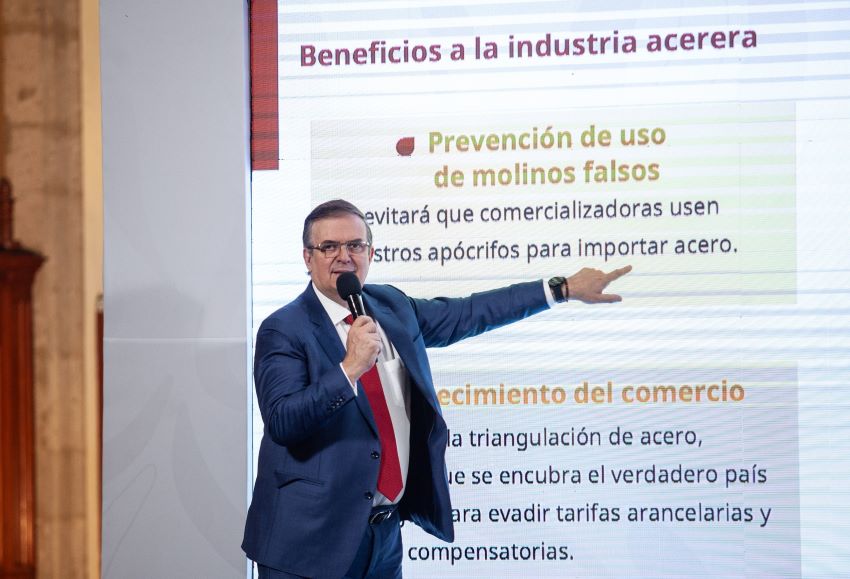
Mexican officials announced a crackdown on unauthorized steel and textile imports and stated new plans to spur economic growth on Monday.
During President Claudia Sheinbaum’s Monday press conference, Finance Minister Edgar Amador announced plans to increase the national content of government purchases by 10% and trade out 10% of its manufacturing imports.
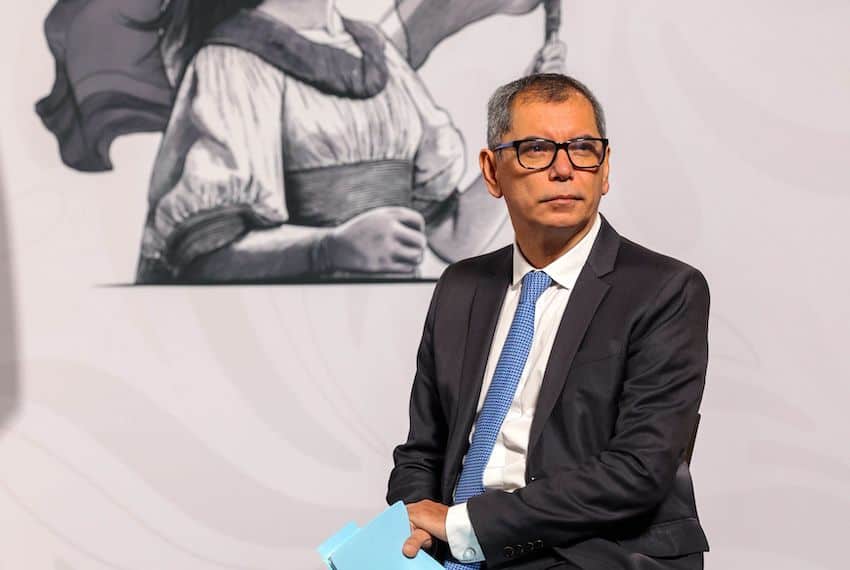
The plan could support an annual GDP increase of 0.7 percentage points and help create 700,000 jobs, said Amador.
The move follows United States President Donald Trump’s introduction of 25% tariffs on all steel and aluminium imports to the U.S. on March 12, including from countries party to a free trade agreement.
In the first quarter of 2025, the Mexican economy grew by 0.2% compared to the last three months of 2024, reversing a 0.6% contraction in the final quarter and avoiding a technical recession.
Mexico cracks down on unauthorized steel and textile imports
Officials reviewed a list of 2,233 steel mills approved to import products into Mexico and canceled the registration of 1,062 of them (48%) due to irregularities and inconsistencies.
“Right now, we have personnel in approximately six countries around the world, the furthest away being Malaysia, conducting inspections,” Economy Minister Marcelo Ebrard said.

All steel mills seeking to export goods to Mexico must register with the Economy Ministry for assessment and approval.
Additionally, the federal Manufacturing, Maquiladora and Export Services Industry (IMMEX) program, which allows companies to temporarily import products to Mexico that will be immediately exported to foreign markets, found eight textile companies — five textile and three footwear — that were using the initiative to illegally import products without exporting them, as they claimed, said Ebrard.
“They never exported anything; they were deceiving the government, so action has been taken,” said Ebrard.
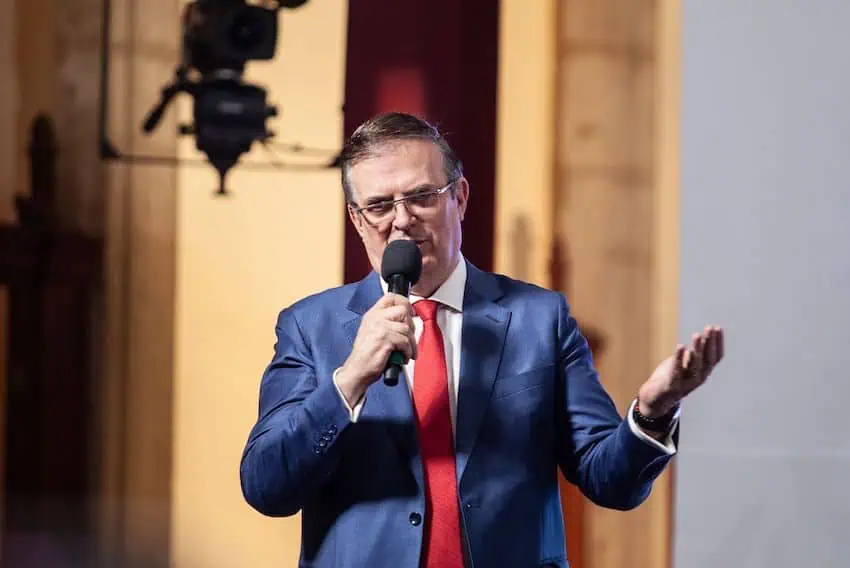
“There will be consequences, including canceling the customs agencies, of which there are five. They are currently in the process of canceling them and freezing the accounts of those involved,” he stated.
The companies are now under investigation for transactions totalling 24 billion pesos (US $1.2 billion).
Ebrard announced a meeting between the textile and apparel industry chambers, as well as national and foreign companies, on May 14 to address the issue.
The government also plans to implement price reference points for imports of furniture, toys, sports equipment, paper and cardboard, Ebrard said.
“Many times, (importers) give us a price that’s below market value,” stated Ebrard. “That’s why we’re rolling out reference prices, so you can’t declare a price below.”
With reports from Reuters, Animal Político and El Economista