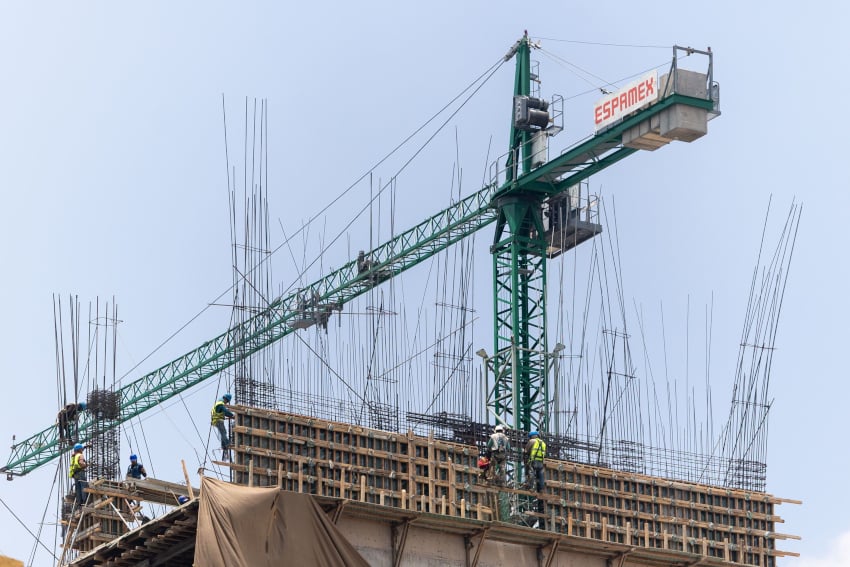
Industrial activity in June grew 0.2% month-on-month, barely recovering a fraction of the ground lost in May, when it fell 0.7%, according to Mexico’s national statistics agency INEGI.
On a positive note, INEGI’s Monthly Indicator of Industrial Activity (IMAI) expanded by 0.8% year-on-year, improving on a 0.2% annual increase in May. Furthermore, the latest data marked three consecutive months of annualized growth after experiencing frequent declines since March 2025.
(Dominik Vanyl / Unsplash)
Additionally, industrial activity rose on a quarterly basis by 1.5%, driven specifically by 2.1% monthly growth in April and buoyant activity in the building subsector.
Even so, El Economista newspaper offered a mildly gloomy description, writing that there “have only been a few glimmers in the recent past,” citing the positive April performance.
Although the overall second quarter IMAI performance was positive, there continues to be no clear upward trend. Over the past 12 months, the Mexican industry has posted negative monthly variations on six occasions.
As has been the case in the recent past, construction was the driving force for June’s upward blip, expanding by 3% compared to May, recovering much of the gap left when it contracted month-to-month by 3.7%.
Building construction work regained prominence with a 4.8% increase, while civil engineering work fell by 2.7% and specialized work decreased by 0.6%.

According to analysts, the rebound in construction is due to a combination of increased investment in infrastructure, the continuation of ongoing projects and the boost from private investment linked to the relocation of production chains. Additionally, projects related to the 2026 World Cup have yet to be completed.
On a cautionary note, economist Sergio Luna told El Financiero newspaper that the construction boom comes almost exclusively from civil works, raising doubts about sustainability, since new projects might not necessarily be undertaken.
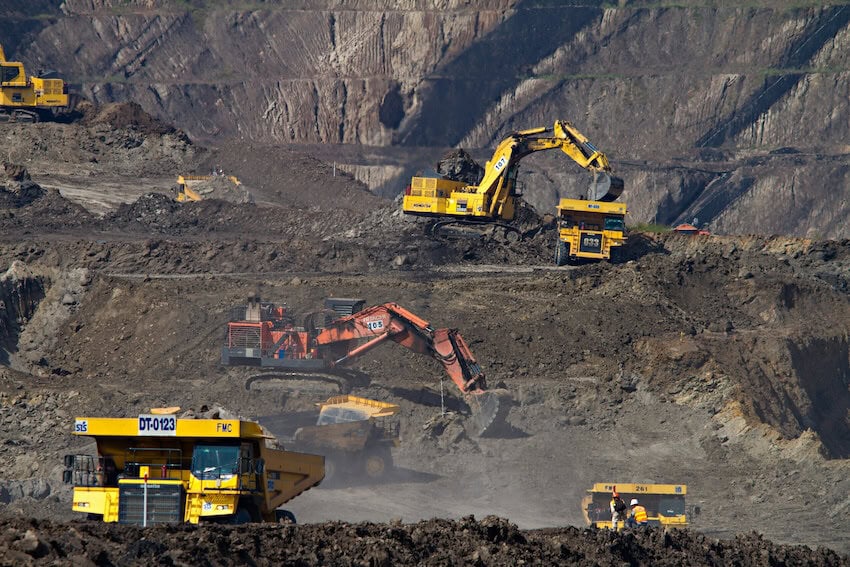
Regarding year-on-year performances, mining saw the largest increase (increasing by 7%), followed by construction (up 4.2%), while the electricity, generation, transmission and distribution sector (which includes water and gas supply) climbed just 0.7% compared to June 2025.
In mining, the progress can be attributed to operational improvements, a favorable basis for comparison and still attractive international metal prices.
In contrast, manufacturing — normally the backbone of Mexico’s industrial activity — remained stagnant, declining 1.2% year-on-year, marking 12 consecutive months of negative annual growth. It also fell by 0.6% compared to May, its second consecutive month-to-month decline, following the 0.1% drop in May.
Equally concerning, the declines were recorded in 10 of the 21 manufacturing branches measured by the IMAI, including non-metallic minerals (–5.2%), textiles (–4.6%), transportation equipment (–3.2%), clothing (–2.2%) and furniture (–1.7%).
With reports from El Financiero, El Economista and Líder Empresarial