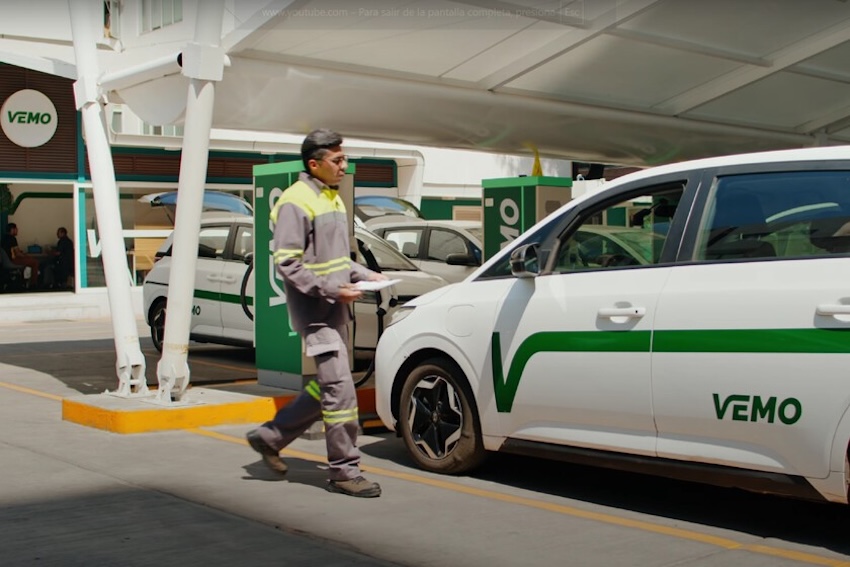
Vemo, a Mexico City-based electric taxi operator that partners with Uber, recently raised US $250 million to accelerate its expansion in a bid to support the country’s transition to electric mobility, primarily using Chinese technology.
In a statement released on Sept. 2, Vemo said it received the majority of this funding from the U.S. private equity firm Vision Ridge Partners, “a global sustainable real assets investor” based in Boulder, Colorado.
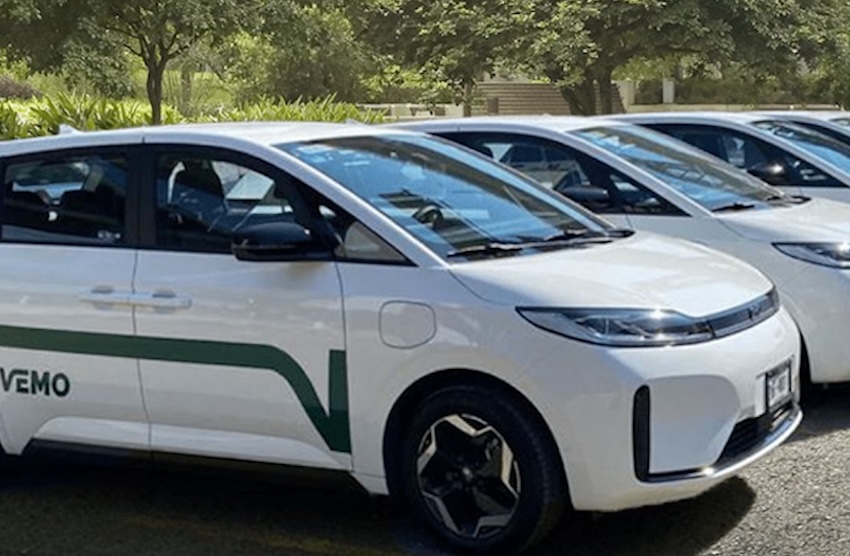
(@XakataLATAM/on X)
Vemo has raised over US $350 million in equity overall from leading international investors, including New York City-based Riverstone Holdings, which was its initial backer.
According to Roberto Rocha, co-founder and CEO of Vemo, the Mexico City-based company plans to use the new funding to expand its taxi fleet in Mexico City, Guadalajara and Monterrey. It will also expand the electric vehicle charging infrastructure in Mexico, he said.
“We decided it was the right time to raise additional capital in order to move forward and grow much faster,” Rocha told digital news service Bloomberg Línea.
Boulder, Colorado-based Vision Ridge, which manages approximately US $5.1 billion in assets, said Vemo is its first direct foray into Mexico.
“Mexico is a region with extraordinary potential for electric mobility, as evidenced by Vemo’s success to date,” Paul Luce, CEO of Vision Ridge, told Bloomberg Línea in an email.

Most of Vemo’s electric vehicles are manufactured in China, which could pose a problem as persistent pressure from the U.S. government prompted Mexico to announce last week that it is planning to raise tariffs on Chinese imports, including automobiles.
Bloomberg Línea reported that Vemo is seeking to diversify its fleet to include electric vehicles from U.S. manufacturers, but “its CEO is betting that Mexico will continue to welcome imported technology from China.”
The adoption of electric vehicles in the country “depends on Chinese technology and the integrated supply chain of companies” in Mexico, Rocha said.
But the China issue is not being ignored. Although Vemo plans to invest US $1.5 billion in Mexico over a period of five years, it could relocate its operations to other locations if Mexico imposes prohibitive trade barriers to electric vehicles made in China, according to Germán Losada, another company co-founder who serves as president.
“If conditions change drastically, we would have to re-evaluate the possibility of opening up to other geographic areas in the region,” he said.
In its statement, Vemo said it will use the new capital “to advance its deployment of public charging infrastructure and electric vehicles (EVs) across Mexico,” while also developing tech-enabled EV fleet management solutions
Vemo, often described as an integrator of clean mobility, plans to install more than 20,000 connectors in its public and private charging networks, and more than 50,000 EVs in its ride-sharing and commercial fleets.
The company serves customers who use public charging stations and leverages synergies between its various business lines — including VEMO Impulso, the first EV leasing option in Latin America in partnership with Uber and DiDi, and VEMO Conduce, with drivers especially trained in electric vehicles for the ride-hailing service
With reports from Bloomberg Línea and Cluster Industrial