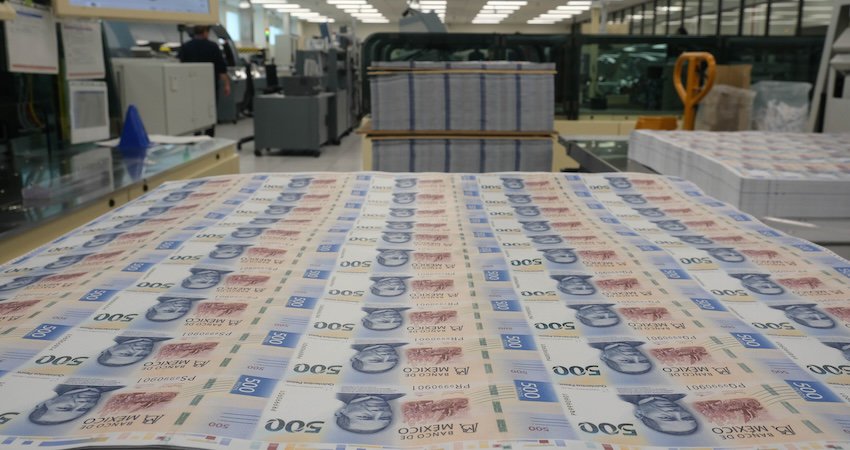
The Mexican peso appreciated to below 17 to the US dollar for the first time since August on Friday morning.
Bloomberg data showed that the USD:MXN exchange rate was 16.93 at 9:20 a.m. Mexico City time. By 10:30 a.m., the peso had weakened slightly to trade at 16.96 to the dollar.
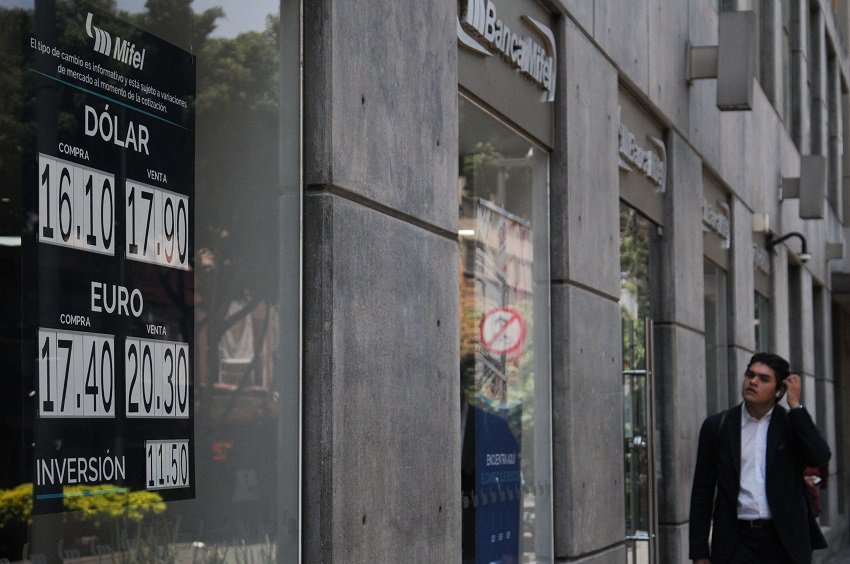
The last time the peso was stronger than 16.93 was Aug. 30, when it reached 16.74 to the greenback.
The currency has appreciated on four of five trading days this week after closing at 17.20 to the dollar last Friday.
According to the Monex financial group, the peso benefited on Friday morning from data that showed that inflation in the United States was lower than expected in November.
The personal consumption expenditures (PCE) price index, the preferred inflation gauge of the United States Federal Reserve, showed that annual headline inflation in the U.S. declined to 2.6% in November from 2.9% in October, while core inflation fell to 3.2% from 3.4%.
Reuters reported that the data boosted “financial market expectations of an interest rate cut from the Federal Reserve next March.”

The wide difference between the Bank of Mexico’s benchmark interest of 11.25% and the Fed’s 5.25%-5.5% range is one factor that has helped the peso strengthen this year after it started 2023 at around 19.5 to the dollar.
At its final monetary policy meeting of 2023, the Bank of Mexico board last week voted to keep the key rate at the record high 11.25% level, and the bank said in a statement that the board believes the reference rate “must be maintained at its current level for some time.”
Data published on Thursday showed that Mexico’s annual headline inflation rate was 4.46% in the first half of December, up from 4.32% in November, while the core rate was 5.19%, down from 5.3% in November. The central bank targets 3% inflation.
Another factor that contributed to the appreciation of the peso on Friday, according to Monex, was data that showed that the Mexican economy grew 4.2% in real terms in October compared to the same month of 2022, and 3.5% annually between January and October.
The peso also benefited from a global weakening of the dollar, the El Economista newspaper reported. The DXY index, which measures the value of the dollar against a basket of foreign currencies, was down slightly shortly after 10 a.m.
James Salazar, deputy director of economic analysis at CIBanco, told El Financiero that favorable inflation data out of the U.S. could help keep the peso below 17 to the dollar for the remainder of the year.
However, Monex’s director of analysis Janneth Quiroz told El Financiero that she expects a USD:MXN exchange rate of 17.35 at the end of 2023.
With reports from El Economista and El Financiero