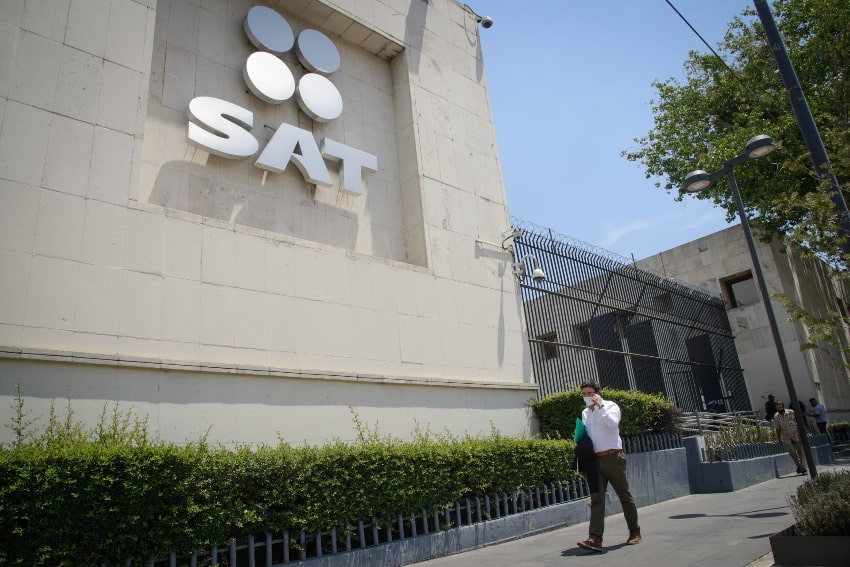
SAT extends deadline again for implementing new digital payroll invoices to April 2023

The Tax Administration Service (SAT) has postponed the mandatory issuance of the electronic payroll invoice version 4.0 to April 2023. The change was originally scheduled for Jan. 1, 2022.

Taxpayers obliged to issue payroll-type receipts, “will have the option to do so in the 3.3 version until March 31, 2023, so that during said period they can comply with all tax requirements for the issuance of the 4.0 CFDI version,” said SAT in a statement released on Nov. 1.

The tax authority also extended to the same date the period to obtain the electronic signature without it meaning a breach of tax provisions.

The extension, however, only applies to those who issue payroll receipts, since all other types of Digital Tax Receipt (CFDI), such as utility bills or lease receipts, still have Jan. 1, 2023 as a deadline for compliance.

As part of the 2022 tax reform, SAT announced in 2021 the replacement of the 3.3 (CFDI) with the latest version 4.0. The update requires new mandatory data for the recipient of the payroll-invoice, such as Federal Taxpayer Registration, RFC, full name, and postal code of the employee’s tax address. If such data is not included, the pay-roll receipt will not be tax deductible and therefore, employers will be directly affected, said the Mexican Institute of Public Accountants.

For this reason, many employees not aware of their updated tax information, have requested from SAT their Proof of Tax Status (Constancia de Situación Fiscal) to hand it over to their employers, as this document contains the identification data required for the CFDI 4.0.

The CFDI 4.0 came into force in January 2022. However, at the time, the Taxpayer Defense Attorney’s Office (Prodecon) and the National Employers Federation (Coparmex) insisted on the need to extend the CFDI 4.0’s familiarization period before making its use mandatory.

Since then, SAT has postponed the deadline four times: the first time it was extended to May. The second one, to July. The third one, to Jan. 2023, and the last and current one, to April 2023.


With reports from Reforma, Mural and La Lista.

Have something to say? Paid Subscribers get all access to make & read comments.
Manzanillo, Colima, México, 13 de marzo de 2026. La doctora Claudia Sheinbaum Pardo, presidenta Constitucional de los Estados Unidos Mexicanos en conferencia de prensa matutina, “Conferencia del Pueblo” desde Colima. La acompañan Indira Vizcaíno Silva, gobernadora Constitucional del Estado de Colima; Omar García Harfuch, secretario de Seguridad y Protección Ciudadana (SSPC); Raymundo Pedro Morales Ángeles, secretario de Marina (Semar); Bulmaro Juárez Pérez, divulgador de lenguas originarias, presentador de la sección “Suave Patria”; Ricardo Trevilla Trejo, secretario de la Defensa Nacional (Sedena); Jesús Antonio Esteva Medina, secretario de Infraestructura, Comunicaciones y Transportes; Bryant Alejandro García Ramírez, fiscal general del Estado de Colima; Fabián Ricardo Gómez Calcáneo; Rocío Bárcena Molina, subsecretaria de Desarrollo Democrático, Participación Social y Asuntos Religiosos de la Secretaría de Gobernación; Efraín Morales López, director general de la Comisión Nacional del Agua (Conagua); Marcela Figueroa Franco, secretaria ejecutiva del Sistema Nacional de Seguridad Pública (SESNSP) y Guillermo Briseño Lobera, comandante de la Guardia Nacional (GN). Foto: Saúl López / Presidencia

Mexico’s week in review: Congress deals Sheinbaum her first legislative defeat

0
The week of March 9 in Mexico was marked by standoffs between allies in Congress and adversaries at the airport. Here's what you missed.
A soldier displays seized handguns

The US and Mexico, growing together and growing apart: A perspective from our CEO

1
From a historic drop in homicides to opposite bets on electric vehicles, Mexico News Daily's CEO breaks down where the U.S. and Mexico are converging — and where they're not.
Veracruz Gov.

Veracruz governor blames private vessel for 200-kilometer Gulf Coast oil spill

1
The spill, which has spread to over 200 kilometers of Mexico's Gulf Coast beaches, has been traced to a private oil tanker off the coast of Tabasco.
BETA Version - Powered by Perplexity