At least four Silicon Valley companies plan to invest approximately US $890 million in the Bajío state of Jalisco, Mexico in 2025.
On Friday, the electronics manufacturing services company Flex announced plans to invest $86 million, the semiconductor packaging and testing services provider ASE Group intends to establish a microchips research center in Guadalajara, while Bosch confirmed expansion plans for the state. Additionally, Jabil, a manufacturing firm specializing in circuit board assembly, will invest $25 million in Jalisco.

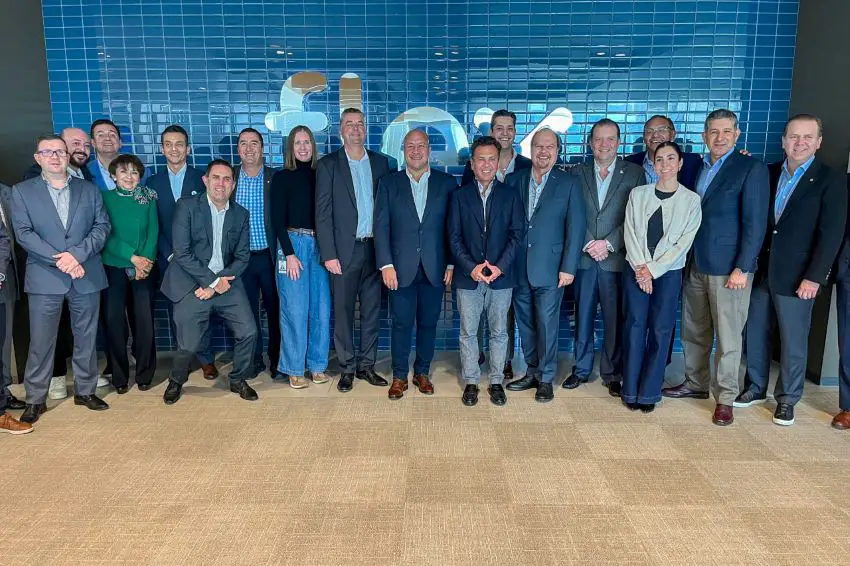
The investments are the result of a visit by Jalisco Governor Enrique Alfaro Ramírez and Governor-elect Pablo Lemus Navarro to Silicon Valley in San Jose, California last week.
In addition to Flex, ASE Group, Bosch and Jabil, the state representatives met with business leaders of Intel, Sanmina, Google and Oracle.
The specific investments by those companies have yet to be announced.
Regarding the governor’s discussions with Intel, “We are discussing not just the labor force, but rather the mind force… this is very important and will continue to be developed at Intel in Guadalajara,” Alfaro said.

The western state of Jalisco has become a major technology hub in Mexico. During his final business visit as governor, Alfaro said that during the last six years, the state government has attracted US $2.75 billion in foreign investment in tech, which has supported the creation of 40,000 jobs.

Lemus saw the recent tour with some of the leaders of Silicon Valley as a demonstration that business leaders will continue to work together with state authorities and that “Jalisco will continue being the investment oasis of Mexico,” he told Forbes México.
After analyzing several proposals, ASE Group — currently headquartered in Fremont, California — chose Guadalajara as the new location for its North American headquarters.
Alfaro also outlined the German company Bosch’s plans for expansion in Jalisco and highlighted its commitment to Mexico. “In the most difficult times, during the [COVID-19] pandemic, the company kept growing,” Alfaro told Forbes. In his government’s first three years, Bosch doubled the number of employees at its Jalisco operations, Alfaro noted.
Currently, Jalisco is home to 70% of the semiconductor companies and 23% of the software development companies in Mexico.
In recent months, several companies, including Foxconn and Bader, have announced expansion plans for the state. The combination of talent, infrastructure and favorable business policies has made Jalisco popular for nearshoring and transformed it into a vibrant tech hub.
The combined investments announced by Governor Alfaro are projected to create 11,500 jobs.
With reports from Forbes, Players of Life, Mexico Industry, El Informador and Quadratín Jalisco