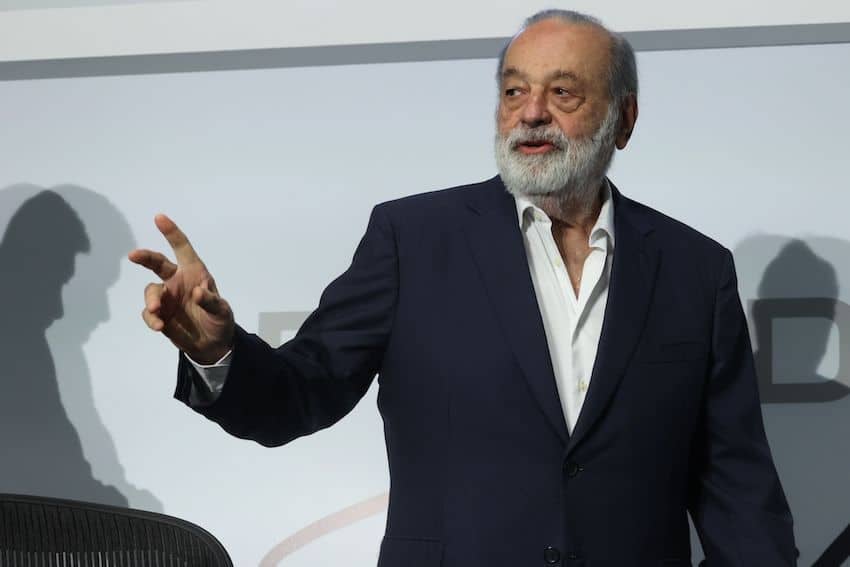
Carlos Slim Helú, Mexico’s wealthiest man and the owner of Grupo Carso, announced plans to invest US $5 billion in Mexico this year, while criticizing two major international ratings agencies for downgrading the country’s financial outlook.
During his annual press conference, Slim called out the ratings agency Moody’s for determining Mexico’s rating by looking at an isolated metric of how public debt and the deficit are growing, rather than examining how those resources are being used and invested.
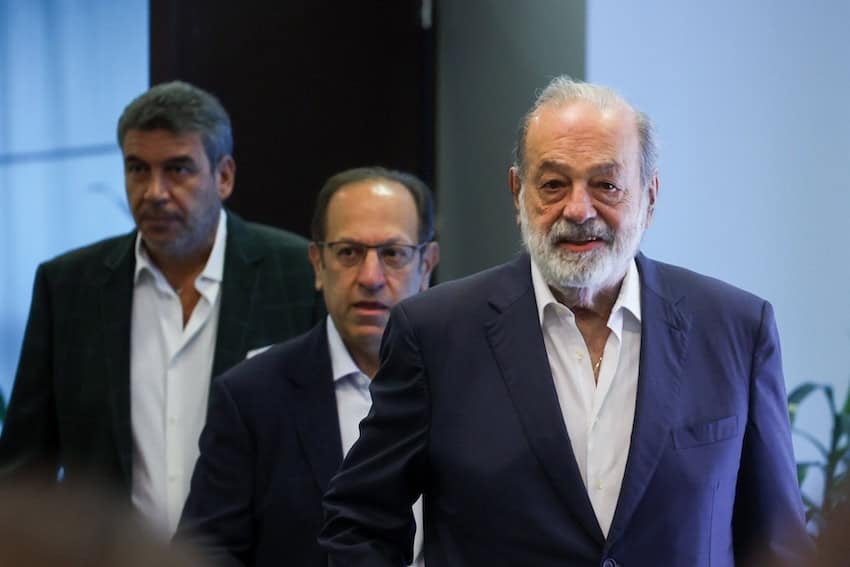
“That rating is irrational,” said Slim.
Moody’s cut Mexico’s credit score to Baa3 on Thursday, its lowest level of investment grade and just one notch above junk status. Two weeks prior, Standard & Poor’s changed Mexico’s outlook from stable to negative.
The ratings agencies expect debt as a proportion of gross domestic product to reach around 60% by the end of the year in Mexico, but Slim pointed out that that percentage is much lower than in some other economies, such as the United States and Brazil, whose debt will be around 130% and 80% of GDP, respectively.
Slim stressed that Mexico maintains conditions that make it attractive for investment, and that the productive structure has changed, supported by the strengthening of female participation in the workforce.
The billionaire also emphasized that the U.S. continues to rely heavily on Mexico.

“The U.S. government has been tough on everyone …, but at the same time, it has a great need for Mexico,” said Slim.
That dependence reflects the current situation in the U.S., as key industries, such as automaking and technology, have become less competitive there, according to Slim.
Slim believes that Mexico has several conditions in place to return to strong growth, which he says will exceed the 1.5% seen in recent years.
“We have an investment plan, and we’ve already made it more aggressive,” he said. “There’s a lot to be done, and I believe the investments will start to materialize next year.”
Slim also praised President Sheinbaum for driving greater investment in Mexico.
The creation of the National Council in December, which forms part of the government’s overarching development strategy Plan México, brings together the country’s wealthiest businesspeople.
“It is very important that the president has prioritized investment, because without investment there are no jobs, no maintenance of infrastructure, and so on,” Slim said.
He added that the meetings the council has held with cabinet ministers have allowed them to discuss aspects such as simplifying procedures and facilitating investment agreements at both the state and municipal levels.
With reports from Debate, La Jornada and Sin Embargo