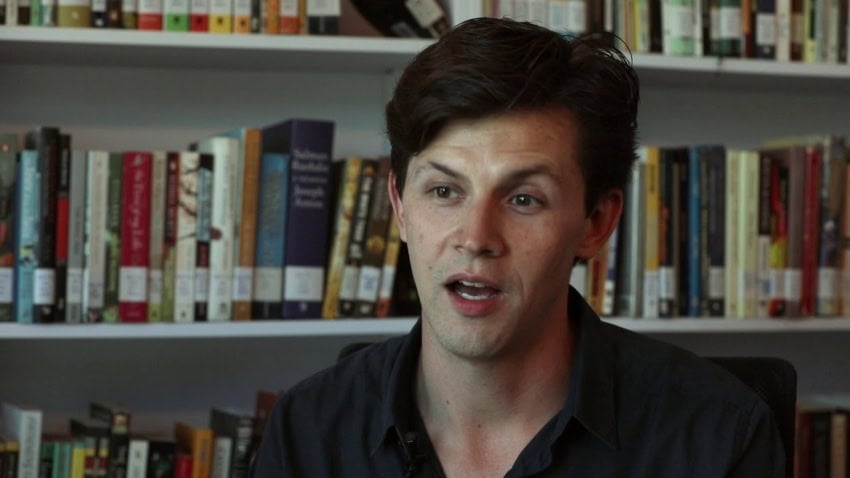
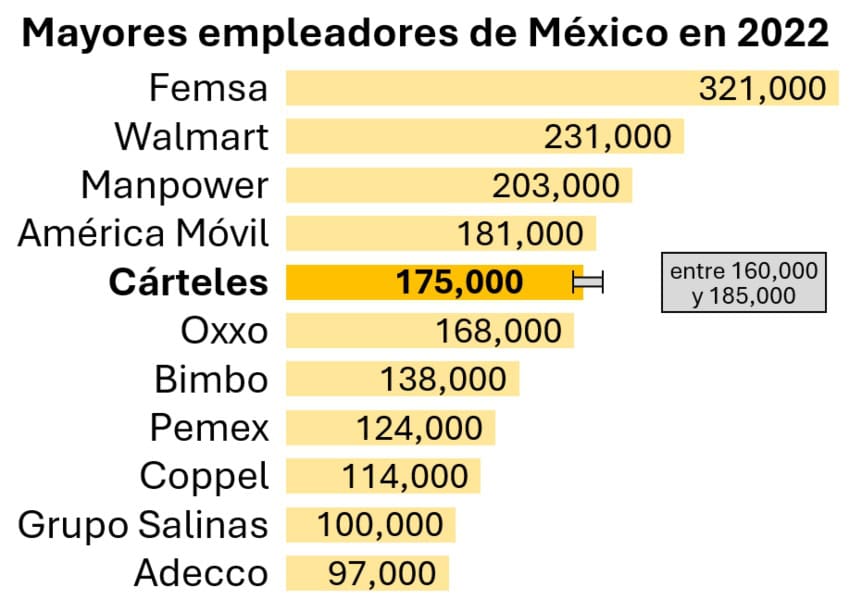
In 2023, three mathematicians conducted a modeling study on organized crime in Mexico. Cartels were treated as large-scale employers within an illegal labor market, recruits as employees. Their findings were concerning — according to their research, between 160,000 and 185,000 Mexicans worked for criminal organizations, making cartels the country’s fifth-largest employer.
The three authors concluded that in order to keep that workforce from collapsing, cartels need to hire roughly 350 to 370 new members every week, which they accomplished through TikTok campaigns, video games and sheer force. Andrés Manuel López Obrador (AMLO), the country’s president at the time, publicly refuted the report, calling the findings “false” without providing any contradictory evidence.
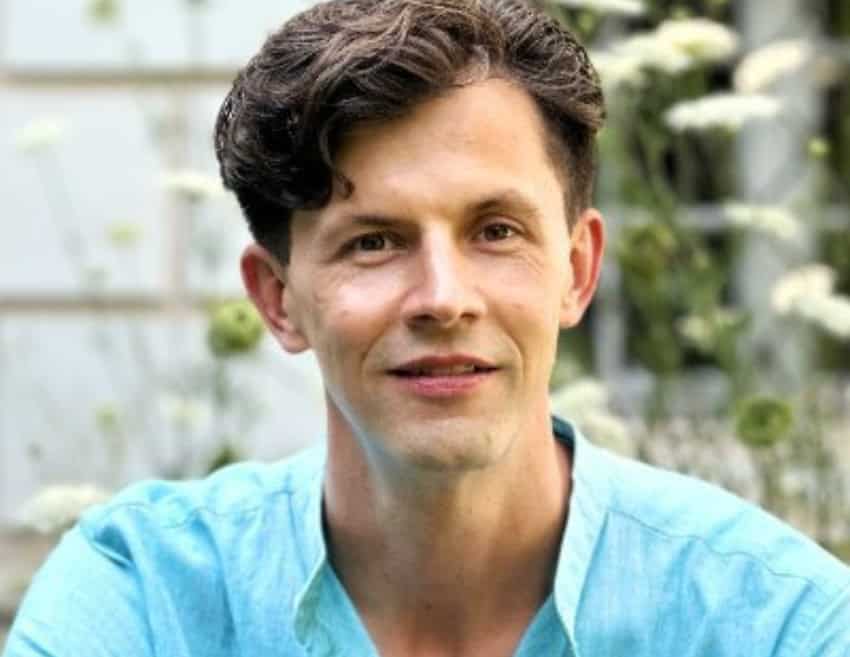
A year later, one of those mathematicians, Rafael Prieto-Curiel, won Complexity Science Hub’s Science Breakthrough of the Year award. Using quantitative research, Prieto analyzed homicides, arrests and cartel behavior to determine that arrests alone will not lead to the demise of cartel networks. Putting a stop to recruiting, however, will. He and his collaborators built a mathematical model of around 150 criminal organizations, assigning each a set of members, alliances and rivalries. They then “played out” different scenarios such as killing or arresting leaders, fragmenting groups or cutting off new recruits.
Across thousands of simulations, the only strategy that consistently shrank manpower and reduced homicides was lowering recruitment. Even imprisoning or assassinating cartel kingpins mostly led to splinter groups and new waves of violence. But who is the man behind the model — and what made a Mexican mathematician decide to take on the cartels?
From finance to fighting cartels with math
Prieto-Curiel was born in 1987 in Mexico City. After attending ITAM (Instituto Tecnológico Autónomo de México) and an unfulfilling stint in finance, he landed a job with Mexico City’s police department. At the C5 emergency command and control center, he worked his way up to Director of Strategic Analysis.
At the time, Mexico City had 8,000 security cameras to cover about 80,000 city blocks — a low number, considering it’s now the most surveilled city in the Americas with more than 80,000 cameras. But it was never the number of cameras that mattered as much as who was watching them: in 2009, just a few dozen officers were tasked with monitoring 12 different screens at the same time, missing crimes as they happened.
To solve the monitoring gap, Prieto-Curiel compiled three years of crime records and built a model to predict where crime would likely take place and when. Operators could instead concentrate on high-risk areas, anticipating criminal activity and responding efficiently. According to his former boss, Alejandro Herrera Bonilla, “at the beginning of the program, we caught one criminal every day,” but after a year of running Prieto-Curiel’s model, they were stopping about 120 suspects each day, and decreasing response time from 17–20 minutes to just four.

Despite his success, something nagged at him. The surge in arrests did not make people feel safer. To understand why, Prieto-Curiel left Mexico to pursue a PhD in Applied Mathematics at University College London, digging deeper into statistics around crime, fear of crime and urban security.
Why feeling unsafe has nothing to do with crime rates
At UCL, Prieto-Curiel and Steven Bishop, a professor of nonlinear dynamics at University College London and co‑author on the fear‑of‑crime models, built a simulated city: thousands of virtual inhabitants living across neighborhoods of varying safety, each carrying a personal fear level that rose when they were victimized, rose again when they heard a neighbor’s story and faded slowly in the absence of new incidents. He then let those agents talk to each other — at home, at work and on the street — so that fear could spread socially instead of through direct experience.
The result was counterintuitive. When the simulation’s crime rate doubled, fear levels didn’t change. Nor did it change when crime levels were reduced. He determined that less crime didn’t automatically make people feel safe — supporting exactly what he saw in Mexico, where perceived insecurity has remained stubbornly high despite fluctuations in official crime data.
Prieto-Curiel went on to complete postdoctorate work at Oxford, analyzing crime and conflict in Africa, before joining the Complexity Science Hub in Vienna in 2022, where he now leads research on human migration and organized crime, consulting the OECD and the World Bank on urban and demographic analysis. It was exactly the kind of systemic thinking he would need when he turned his attention back to Mexico and its cartels.
Why more arrests mean more violence, not less
The model’s core finding tells us that doubling arrests doesn’t reduce violence. In fact, apprehensions largely increase it, because cartels simply recruit faster to replace their losses. In Prieto-Curiel’s projections, even prosecuting twice as many cartel members would still leave Mexico with more deaths in 2027 than today. In the most optimistic scenario, eliminating recruitment entirely, it would still take roughly three years just to return to 2012’s levels of violence, which were already high. (According to the Mexico Peace Index, Mexico’s homicide and violent crime rates in 2011–2012 surged to their highest levels in at least a decade.)
In short, criminal organizations are massive and deeply integrated into Mexican society. By halving recruitment, Mexico would see a significant reduction in casualties and criminal activity. Which brings us back to AMLO’s fiery response (and subsequent failure to back up his claim with facts) — for a country that poured nearly all its security budget into military and police operations, Mexico is an awfully violent place. That same index calculates that the rate of overall peace has dropped 14% since 2015, with organized‑crime killings nearly tripling in a decade.
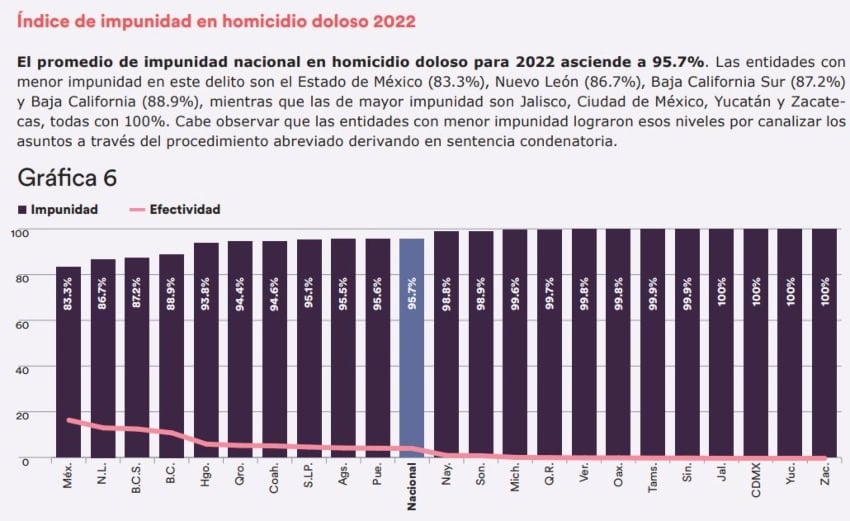
While the López Obrador and Sheinbaum administrations repeatedly tout falling homicide numbers, independent analysts and human rights groups see it differently. Mexico has racked up more than 30,000 killings a year since 2018; AMLO’s term is frequently considered the most violent on record in absolute terms. The math, as they say, is not mathing.
What happens when the cartels find out a mathematician is watching?
His mother wasn’t happy when he joined the Mexico City police, let alone when he went on to research organized crime. He kept going anyway, driven, he has said, by “the love of science and for the love of his country.” The possibility of threats from the cartels themselves looms at the back of his mind — a fear few mathematicians ever have to reckon with — but Prieto-Curiel remains determined to use his skill set to benefit society.
Here is a Mexican mathematician with an equation that could reduce violence, save lives and, in an ideal world, exterminate organized crime. What happens if Mexico finally follows the math?
Bethany Platanella is a travel planner and lifestyle writer based in Mexico City. She lives for the dopamine hit that comes directly after booking a plane ticket, exploring local markets, practicing yoga and munching on fresh tortillas. Sign up to receive her Sunday Love Letters to your inbox, peruse her blog or follow her on Instagram.