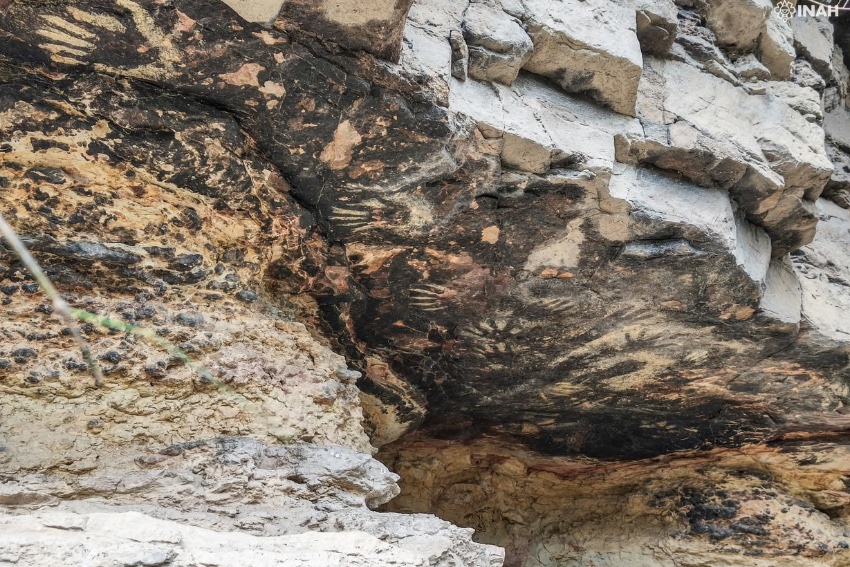
The National Institute of Anthropology and History (INAH) has confirmed the authenticity of ancient cave paintings found near the city of Santa María Coapan in the municipality of Tehuacán, Puebla.
An investigation carried out last month by INAH’s national coordinator of archaeology Dr. Francisco Mendiola found that some of the more than 1,500 cave paintings and handprints are approximately 10,000 years old.
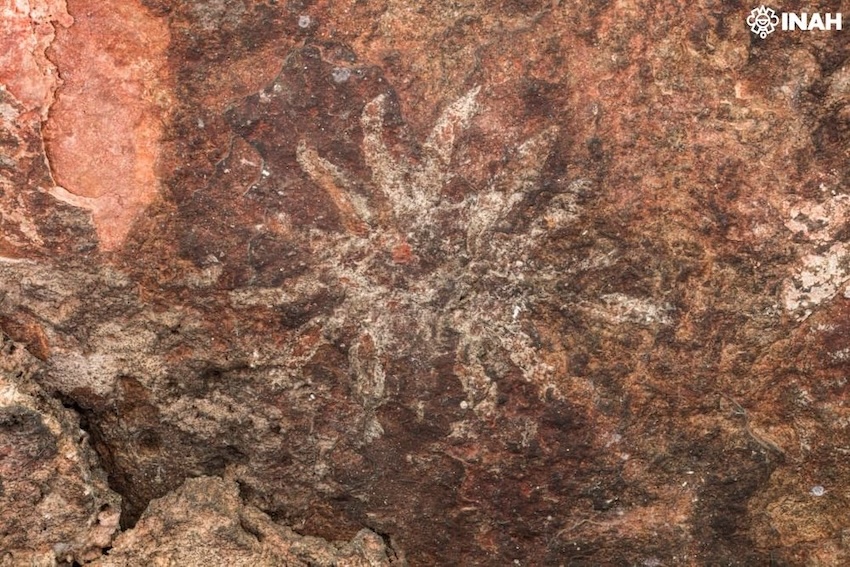
INAH investigators used DStretch software — a tool that highlights imperceptible details in cave paintings — to verify the paintings found in the Cañon de las Manitas (literally, Canyon of Little Hands). The software allows investigators to digitally enhance faint rock art, pictographs and graffiti.
According to INAH, the site consists of four archaeological units named Tinaja I, II, III and IV that extend along the wall of a small canyon.
The INAH analysis concluded that Tinajas I and II appear to have been ceremonial spaces for nomadic groups. Site I features “more than 30 representations of hands in negative and positive, made with the stencil technique in white pigment on a black background” and three similar imprints were found in Tinaja II. The initial studies indicated they are all at least 10,000 years old.
Tinajas III and IV contain a more varied and less ancient repository — anthropomorphic and zoomorphic figures and geometric motifs in red and white pigments. Initial studies suggest they are linked to the Mesoamerican Postclassic (1100-1521 A.D.). The abstract figures in these caves were made of hematite (iron oxide) and could possibly represent elements of the worldview of the region’s inhabitants.
The Cañon de las Manitas represents the third cave system in the area with rock art, positioning the site as a future archaeological and cultural landmark in Puebla. INAH is cooperating with Santa María Coapan authorities to develop a plan to preserve and protect the site.

Other sites in Puebla with cave paintings are the Cave of the Monkeys in Teotlalco and the Cave of the Musicians in San Luis Atolotitlán.
The region of the latest confirmed find is located in the Tehuacán-Cuicatlán Biosphere Reserve, which has been the scene of fundamental processes in the history of the Americas, according to INAH. In this area, humans carried out the domestication of plants and seeds and created complex cultural expressions, including ceremonial sites and pre-Hispanic monuments.
With reports from La Jornada and El Popular