As part of an exploration into Mexico’s long and rich history, Mexico News Daily has teamed up with one of the country’s top Maya experts to examine the ancient world that flourished across Mesoamerica. This is Part 3 in a series of articles on the ancient Maya. Follow the links to read Part 1 and Part 2.
Traditionally, the Classic period has been considered to end in approximately A.D. 1000, with A.D. 550 marking the beginning of the period known as the Late Classic. But it’s worth noting that academics still debate these dates.
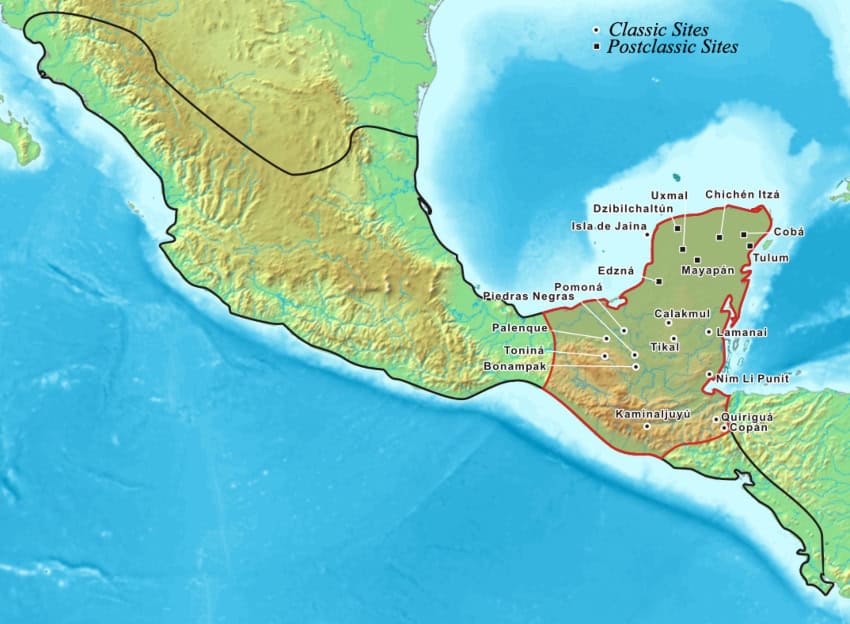
Some scholars have questioned the A.D. 550 to 909 timeframe for the Late Classic period — A.D. 909 being the last date recorded in the Long Count calendar system on monuments in cities like Toniná or Calakmul. Other scholars have proposed subperiods, designated as the Epiclassic or Terminal Classic, extending from A.D. 800 to 1000. These debates remain open.
The increasing complexity of the Maya world in the Late Classic period
No matter the academic disagreements about time, what is indisputable is that the Late Classic period is characterized by a process of increasing complexity at all levels in the Maya world.
Governmental structure was now configured around the figure of the k’uhul ajaw, the “sacred ruler” of the chiefdom. The structure under the k’uhul ajaw included various entities that accompanied and complemented the ruler’s authority. Thus, in hieroglyphic records found in various artifacts — such as ceramic vessels, stelae and murals we find references to these power groups forming a “courtly elite,” with different titles, positions and privileges.
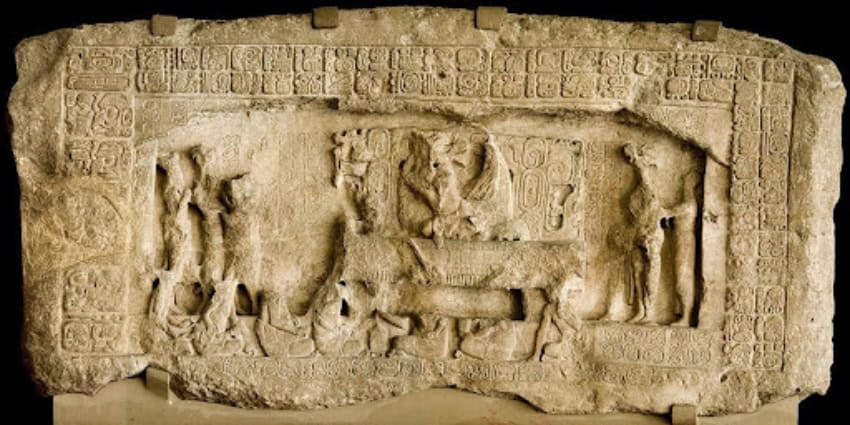
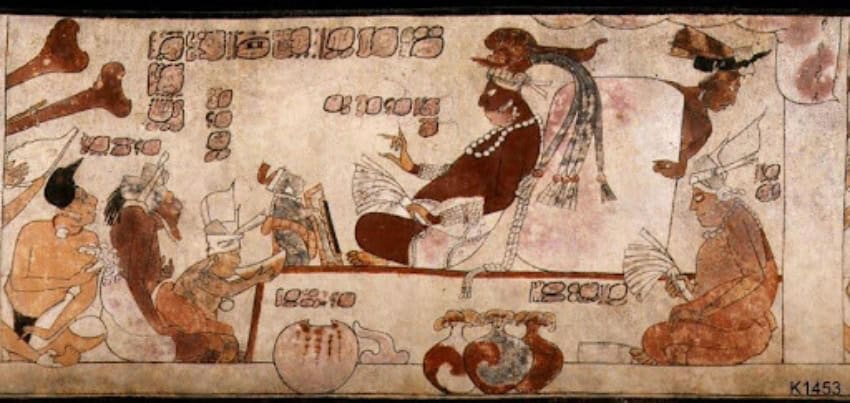
For example, Panel 3, from the city of Piedras Negras (Figure 1) in Guatemala, allows us to observe an everyday courtly scene. The ruler of the site is depicted in the center, seated on his large throne and resting on a cushion covered with jaguar skin, a symbol of authority.
Seated before the ruler, at a lower level that emphasizes their secondary status are a series of individuals whose names and titles we know thanks to the accompanying hieroglyphic inscriptions. Advances in deciphering Maya hieroglyphic writing have allowed researchers to discover the existence of priestly titles such as ajk’uhun, military titles such as yajawte’, political titles such as baahkab, administrative titles such as yebet, honorary titles such as itz’aat, and so on, demonstrating a social organization far more complex than previously assumed in 20th-century studies. Likewise, the iconographic study of various archaeological materials reveals the great diversity of professions and individuals who lived in the Classic Maya courts, highlighting the presence of artists, musicians, contortionists, people with achondroplasia and others who accompanied the k’uhul ajaw (Figure 2).

Sacred rulers and the vertical authority model
The sacred ruler and his blood relatives formed the apex of the chiefdom’s vertical authority. Indeed, the k’uhul ajaw was the earthly embodiment of the gods — patron deities and dynastic ancestors who conferred upon him the legitimacy to rule. However, the k’uhul ajaw also needed the support of various corporate entities to help him maintain power and control of the sociopolitical structure he ruled over.
Although hereditary succession from father to son was the most common practice, there are also known cases where the rule of the chiefdom fell to women who exercised their authority with an iron fist. Such is the case of the woman known as “Six Heaven,” ruler of the city of Naranjo in Guatemala in the eighth century. She was instrumental in the territorial expansion controlled by this political dynasty.
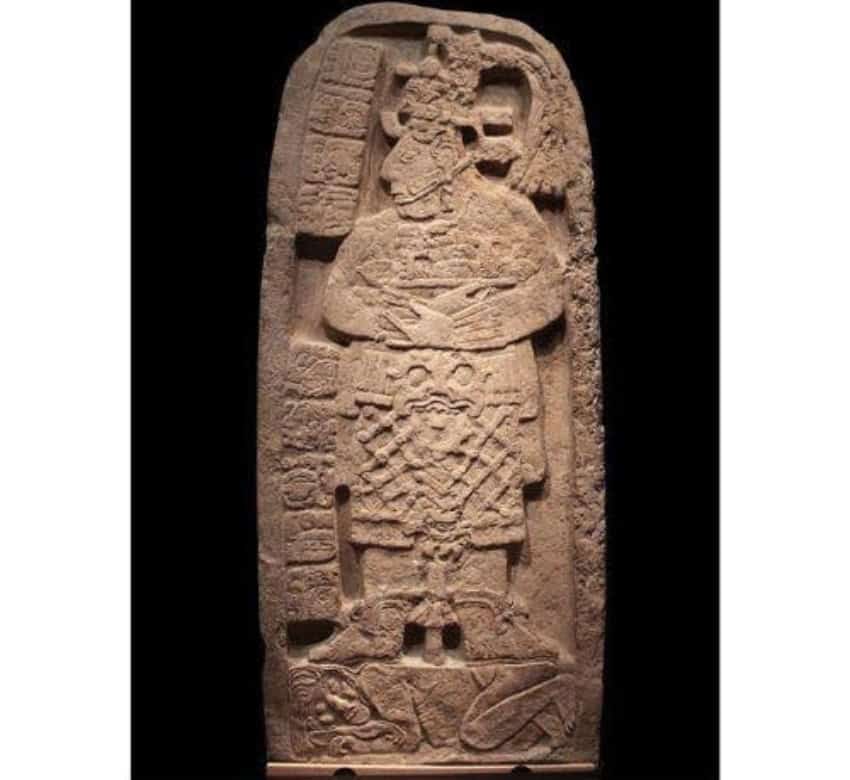
Marriage between elite members of different cities was a recurring strategy among ruling lineages to forge intricate political alliances during the Late Classic period. For example, we know that Lady Six Sky of Naranjo (Figure 3) — a city in the Peten area of Guatemala — was the daughter of B’ajlaj Chan K’awiil, the ruler of the city of Dos Pilas, also in the Peten area. Lady Six Sky’s father was allied with the rulers of the Kanu’l dynasty, based in the great city of Calakmul, approximately 200 kilometers away in what is now Campeche, Mexico.
The Kanu’l dynasty
It’s not surprising that this alliance existed. The Kanu’l dynasty dominated the geopolitical landscape of the Late Classic period. In a shrewd political move, Calakmul’s rulers pressured their allies in Dos Pilas to establish this marriage of convenience in Naranjo in order to control this important strategic enclave near their great rival city: Tikal. In this way, Naranjo and Dos Pilas would fall under the network of strategic allies of the Kanu’l dynasty, along with the Belizean city of Caracol, against the latent Tikal threat.
During this historical period, cities increased their architectural spaces to house the elite. These residential units were typically restricted spaces characterized by a large number of rooms connected by courtyards where the elite could gather, work and hold social events. Thanks to bioarchaeological studies, we can also infer the culinary preferences of these groups, in particular maize and squash, but also other protein-rich foods such as venison and fish, among others. Ceramic archaeological remains found both in these areas and in burial sites have revealed the use of plates, vessels and cups, particularly those intended for cacao and maize beverages mixed with different flavorings, which were the most sought after by these elite.
Population and construction booms
The significant population growth of this period was accompanied by an increase in cities’ urban spaces, and, consequently, in the size of the cities’ civic-ceremonial structures. For example, in the Campeche city of Calakmul’s great pyramid, also known as Structure II, the site eventually reached approximately 55 meters in height after having been renovated during seven construction stages since its initial construction in the Preclassic period.
This construction boom was accompanied by a considerable increase in the number of stone monuments, altars, stelae and so on, which bore hieroglyphic and iconographic inscriptions due to the great development, refinement and specialization of writing and art. The artists of cities like Palenque deserve special mention for the skill of their master scribes and carvers, who depicted the dynastic, mythological and political histories of their ruling lineages in spectacular works such as the polychrome ceramics known as “dynastic vessels” or panels carved and painted in vibrant colors.
Researchers have estimated that large cities like Calakmul and Tikal at their peak may have housed around 150,000 inhabitants. This intense population pressure that began at the beginning of the seventh century also meant that these cities’ agricultural systems had to be intensified to support these large populations. It also motivated the strongest political entities to expand their territory in order to dominate trade routes that facilitated their access to both essential goods and the luxury goods that the elite demanded.
Warfare and major rivalries
Not surprisingly, this resulted in increased warfare throughout the Maya world, with ruling dynasties clashing in bloody wars. Toniná, located in modern-day Chiapas, for example, engaged in protracted conflicts with the rulers of Palenque, and its victories and captives were depicted on many of the city’s stone monuments.
In the Usumacinta River basin, the cities of Yaxchilán and Piedras Negras, in Chiapas and Guatemala, respectively, engaged in a major rivalry as they vied for control of the river route and regional hegemony. In the Petexbatún region, in southwestern Petén, Guatemala, the battles surrounding control of the Pasión River were significant. This crucial river route connected the southern territories — from which many of the jade, obsidian, and quetzal feather cores originated — with the central Petén region. In this area, the major competitors included Dos Pilas, Ceibal and Tamarindito, among others, not to mention the great Early Classic power: Tikal.
The clashes between Tikal and Calakmul
Following the boost Tikal had received by the arrival of foreigners from the immense city-state of Teotihuacán in the fourth century, Tikal became the dominant power in the southern Maya Lowlands until the early seventh century, controlling the region’s main trade routes. However, in A.D. 562, the geopolitical reality of the Maya Lowlands was shaken by a crucial event.
Altar 21 from the city of Caracol in Belize — about 75 kilometers east of Tikal — allows us to understand the regional political configuration at the beginning of the sixth century, in which Tikal and Caracol were allies. A few years later, however, the alliance broke down with the start of a conflict involving a powerful group from a city located far to the north, in Quintana Roo, Mexico. This was the city of Dzibanché, ruled by the Kanu’l dynasty.
In A.D. 562, the Kanu’l dynasty — whose emblem was the serpent-head glyph — allied with Caracol and went to war together against the leaders of the city of Tikal, marking a turning point in the sociopolitical history of the Maya Lowlands.
With its defeat, Tikal entered a period of decline, and the Kanu’l rulers cemented their presence in the territory, establishing their new capital in the great city of Calakmul, becoming the dominant power and a bitter enemy of Tikal and its allies.
Pablo Mumary holds a doctorate in Mesoamerican studies from UNAM and currently works at the Center for Maya Studies at IIFL-UNAM as a full-time associate researcher. He specializes in the study of the lordships of the Maya Lowlands of the Classic period.