The remains of a Purépecha boat called a tepari and other ancient artifacts have been uncovered during a massive cleanup operation to help save Lake Pátzcuaro, in the state of Michoacán, from extinction.
The traditional canoe — which stands out for its considerable length of 14.8 meters (48.5 feet) — was found in the vicinity of the island of Janitzio, located in Lake Pátzcuaro, which has been inhabited by the Purépecha people for centuries.
The boat sank with a load of firewood, according to experts with Mexico’s National Institute of Anthropology and History (INAH), leading to speculation that Purépecha boatmen had just made a run to nearby Erongaricuaro and were returning to the island with their cargo.
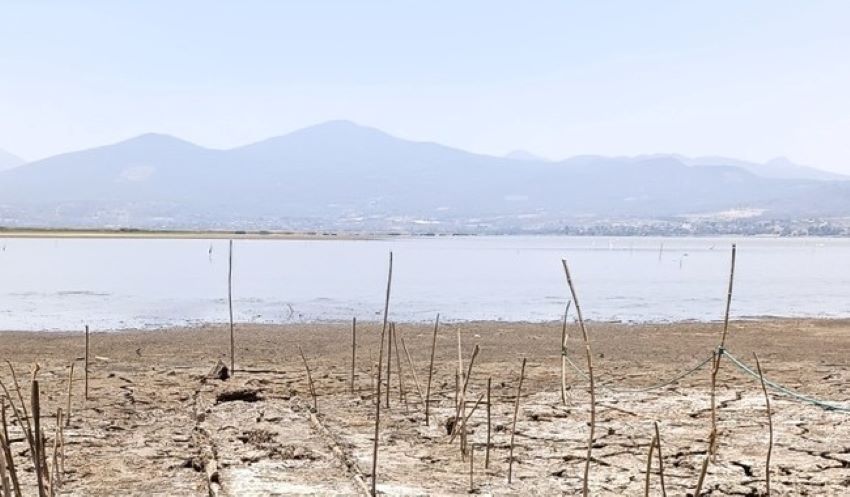
The chance discovery was recorded in early May at the drought-stricken Michoacán lake, where more than 730 men and women are working to combat deforestation, a lack of rain, water theft, historical neglect and excessive planting of avocados and other fruits — conditions that have reduced Lake Pátzcuaro’s surface by 42%.
In announcing the findings on Monday, INAH noted that it is working with the local Indigenous Purépecha community to generate conservation and research strategies for the tepari, which was found lodged in hard mud. One idea is to create a museum on Janitzio.
The significant finding sheds light on historical boating practices in the region, INAH noted. The officials didn’t release an exact time period for when the boat sank as further analysis is needed.
Michoacán’s Environment Ministry (Secma) has assigned 10 people to support archaeologists on upcoming expeditions in the area.

INAH researchers and community authorities noted that the area being dredged has yielded “a significant amount of pre-Hispanic vestiges,” in much the same way that work on the Maya Train on the Yucatán Peninsula has led to thousands of archaeological discoveries.
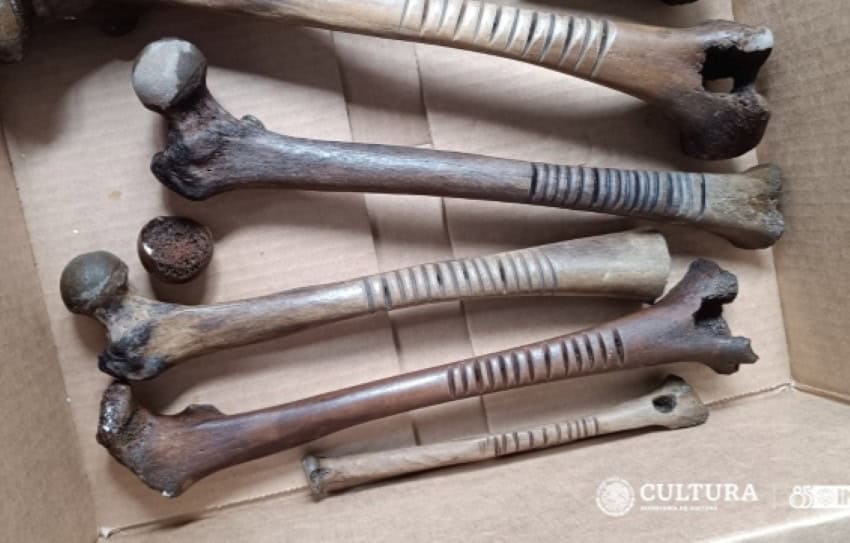
Materials recovered during the Lake Pátzcuaro work include “an important collection” of human bones, mostly femurs, that were handcrafted with grooves and are in an “excellent state of conservation,” according to INAH.
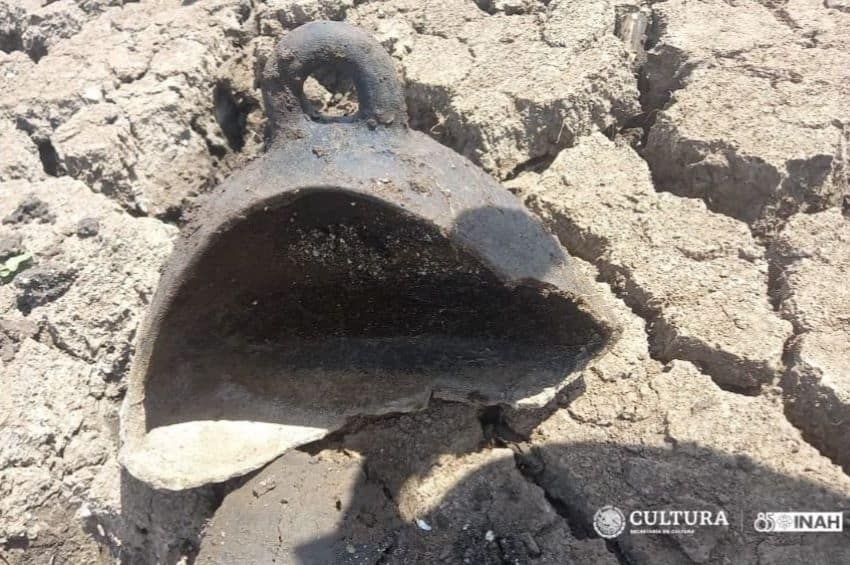
Many ceramic urns and stone objects have also been found, which INAH officials noted “were thrown into the lake in pre-Hispanic times, surely as offerings.” At least one other canoe has been found, as well.
The remains were uncovered during the restoration and desilting work that is ongoing in Lake Pátzcuaro.
One of the priority efforts has been to make sure Janitzio, a favorite destination among tourists to the Pátzcuaro area, remains an island. In recent weeks, the water level has gone so low there that an isthmus is beginning to form between Janitzio and the mainland community of Jarácuaro.
Alejandro Méndez López, Michoacán’s environment minister, said at a press conference Monday that the situation is “critical.” The southwestern part of the island is separated from the mainland by a 30-meter channel that is “less than 50 centimeters” (20 inches) deep, and getting shallower every day, Méndez said.
He also noted that Jarácuaro itself was an island about five decades ago.
With reports from La Jornada, Mi Morelia, Milenio and Pátzcuaro Noticias