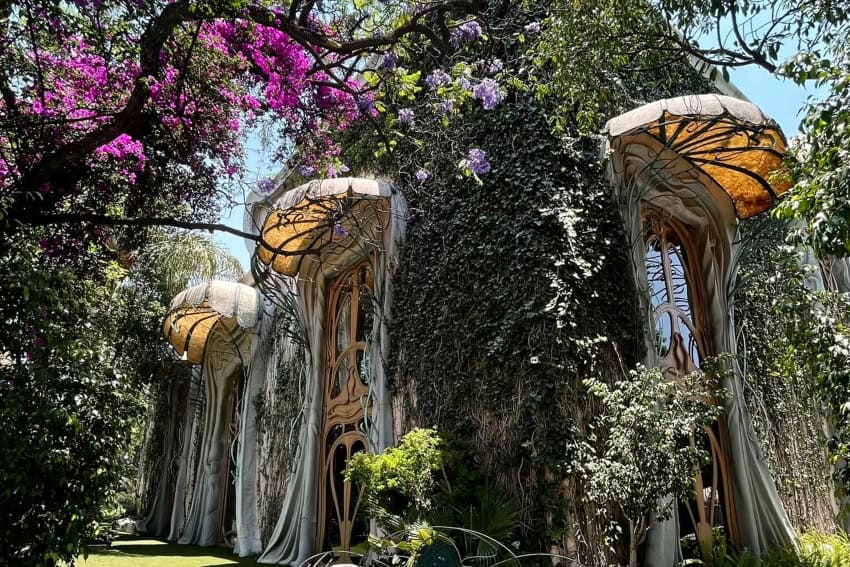
On the corner of Mexico City’s Cerrada Monte Ararat, just one block off Paseo de las Palmas in Lomas de Chapultepec, is a house — but it’s not just any house. It’s a whimsical masterpiece of Art Nouveau design, with a honey-colored facade draped in ivy and curvaceous windows rising two stories. Rounded iron gates dwarf the entrance, the sidewalk undulates and bougainvillea and palms line the approach.
The house doesn’t seem to make sense in this part of town, in this city, in this country — but somehow, it fits because Mexico is full of surprises.
How Art Nouveau came to Mexico City
Art Nouveau arrived in Mexico City at the end of the Porfiriato, a moment when the capital was reinventing itself as a modern, cosmopolitan city — a formidable rival to Paris and Brussels. The elite classes quickly embraced European-style architecture, commissioning mansions and apartment buildings designed by the finest architects of the day.
For a brief but dazzling moment, from Mexico City to Chihuahua, everything was flowing lines and floral ironwork. Mexico’s architecture had arrived on the world’s stage.
Casa Holtz: Mexico City’s most extraordinary Art Nouveau home
It would take almost 80 years for the most spectacular Art Nouveau creation of them all to come to fruition. The story begins, as many great collections do, with a single object. According to local lore, Ignacio Holtz and his wife Beatriz Mendívil — an art and antiques dealer — fell in love with an Art Nouveau vase they found at CDMX’s La Lagunilla flea market (tianguis) in the late 1960s. This would be the first of hundreds, perhaps thousands, of stylistic pieces they collected.
Two decades later, they had so much Art Nouveau paraphernalia that they needed somewhere to put it all. In 1985, they bought a corner lot in Lomas de Chapultepec and built their very own private museum.
Holtz, a Mexico City-born civil engineer who spent his career calculating seismic systems for high-rise buildings, handled the structural concept and reportedly produced more than 3,000 drawings for the house. He hired — and fired — dozens of metalworkers, carpenters and upholsterers until he found craftspeople skilled enough to execute a true Art Nouveau curve. It’s said he set up workshops in the basement so he could supervise every line himself.

If building the most magnificent home on the block was the goal, Ignacio and Beatriz certainly succeeded.
Inside Casa Holtz: A private Art Nouveau collection
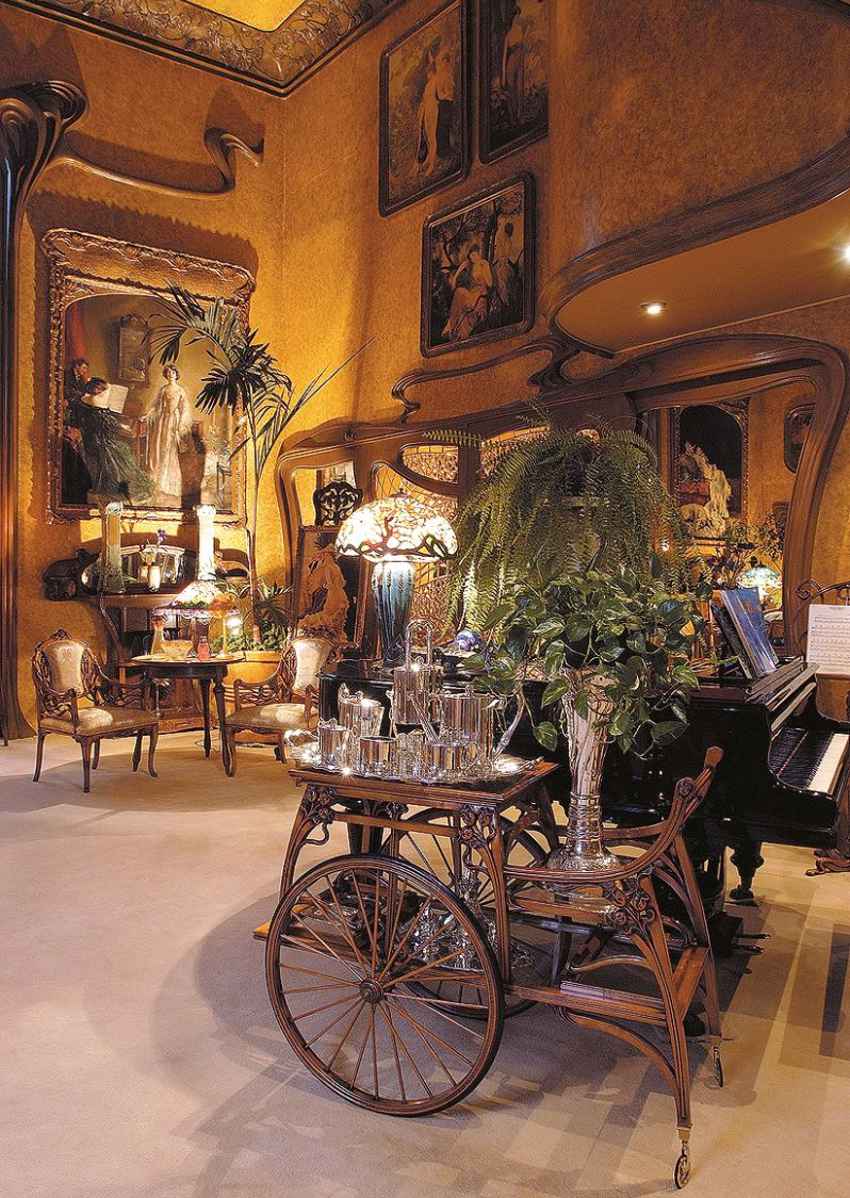
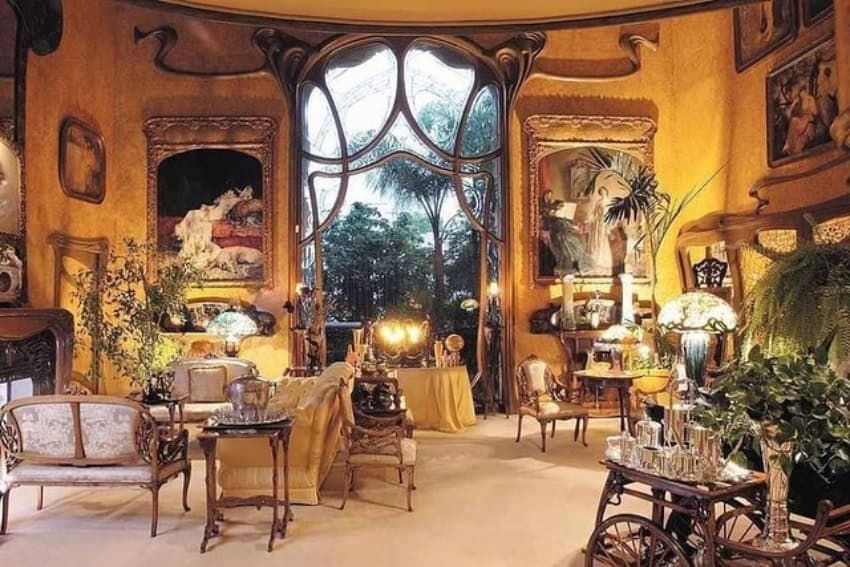
The house remains privately owned and can only be viewed from the outside. Thanks to Grandes Casas de Mexico, we have a sense of what’s inside — and it’s exactly as flamboyant as you’d expect.
Inspired by European Art Nouveau masters like Victor Pierre Horta, Henry van de Velde and Hector Guimard, rooms are filled with customized furniture, Tiffany-style table lamps, Jean Béraud canvases and pieces of Albert Mayer silver. New pieces commissioned from local craftspeople reflect the signature “whiplash line” of Art Nouveau, so every corner participates in the couple’s original vision.
Art Nouveau in Mexico City beyond Casa Holtz
Casa Holtz may be the pinnacle, but Art Nouveau left its mark across Mexico City in many other ways.
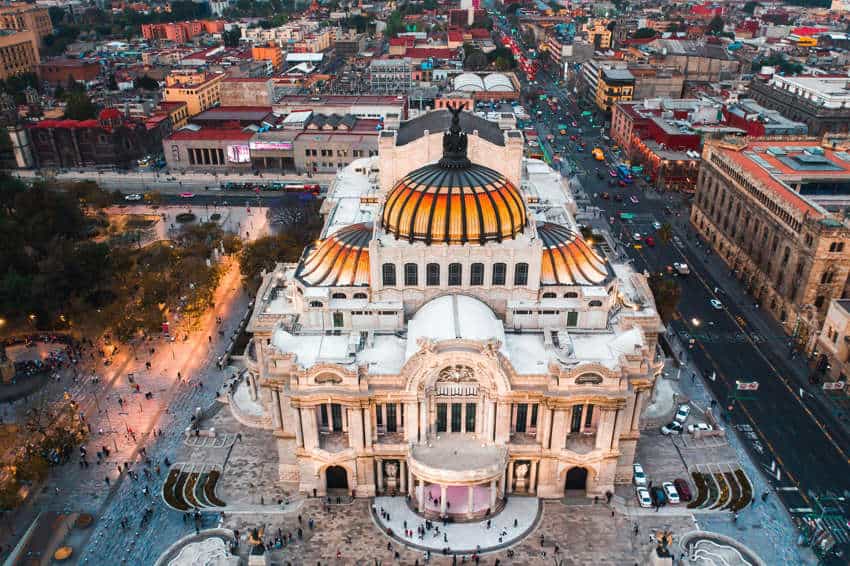
The most obvious example is Palacio de Bellas Artes, built over the course of 30 years starting in 1904.
Italian architect Adamo Boari, known for Beaux‑Arts and neo‑medieval style, incorporated Art Nouveau details by wrapping the main doors and windows in floral garlands and female figures that morph into plant forms.
The project was stalled multiple times due to the Revolution, funding shortages and a famous sinking foundation; that’s why you’ll find Art Nouveau on the exterior and Art Deco inside.
More must-see architecture
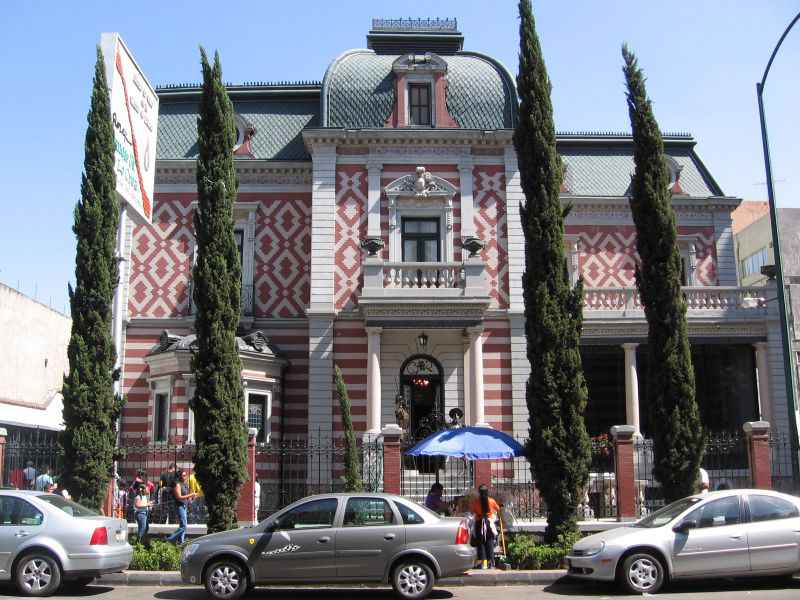
In Colonia Juárez, the building that now houses the Wax Museum is worth a stop for the architecture alone. It’s a turn-of-the-century Art Nouveau casona designed by Antonio Rivas Mercado, the same architect behind Mexico City’s Ángel de la Independencia monument.
The building nearly met its demise in the 1970s; it was slated for demolition, saved only when it was purchased and converted into a museum in 1979. Today, it’s recognized as part of the city’s historic heritage, and walking through its galleries means walking through one of the few intact residences designed by Rivas Mercado.
Head north to Santa María la Ribera and you’ll find Art Nouveau at an entirely different scale. The Museo Universitario del Chopo, known to locals as the Palacio de Cristal, is an iron-and-glass hall with twin towers designed in the German Jugendstil by architect Bruno Möhring. Prefabricated for a 1902 fair in Düsseldorf, it was later shipped to Mexico City and reassembled on Calle Dr. Enrique González Martínez, where it still stands today. In the middle of the century, the masterpiece was nearly abandoned, but it was thankfully restored in both the 1970s and 2000s by the National Autonomous University of Mexico (UNAM) and is today one of the city’s liveliest contemporary art spaces.
Visiting Casa Holtz: What you need to know
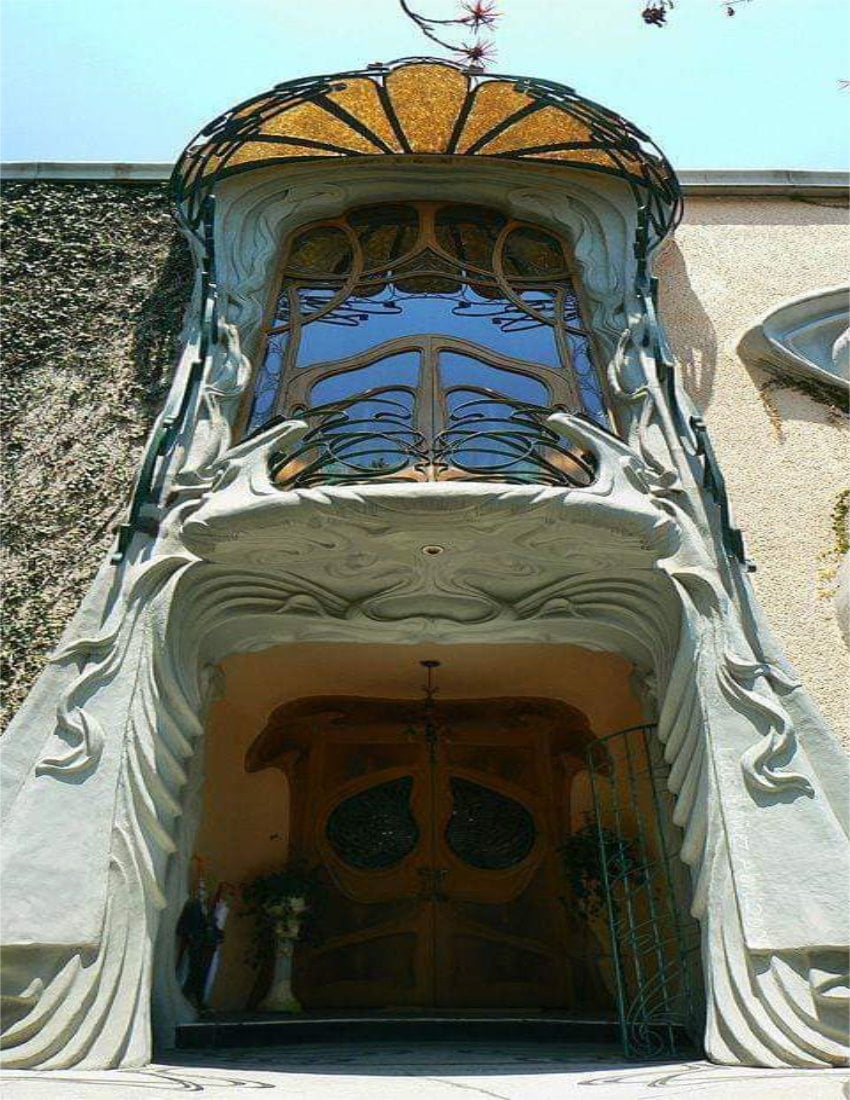
Details about Casa Holtz circulate widely on social media and in online architecture forums, but the building remains a private family residence in a quiet corner of Lomas de Chapultepec. There are no tours or visiting hours. You can glimpse the facade and ironwork from the sidewalk — and, honestly, that’s enough to make the trip worthwhile — but respect the privacy of the people who live there.
The story behind the house
The story of Casa Holtz doesn’t end there. Years after completing the house, Ignacio Holtz developed severe kidney disease. Beatriz donated one of her kidneys, allowing her husband to live a vibrant life for another 25 years.
The experience moved her to dedicate her time to kidney-transplant philanthropy, work that earned her Mexico’s Pro-Conciencia medal for helping facilitate more than 1,500 transplants.
“I always say that if God had given me more kidneys, I certainly would have given them all,” she once said in an interview with Conexión Hispanoamerica.
Holtz died in 2022 at age 86. His wife survives him.
Bethany Platanella is a travel planner and lifestyle writer based in Mexico City. She lives for the dopamine hit that comes directly after booking a plane ticket, exploring local markets, practicing yoga and munching on fresh tortillas. Sign up to receive her Sunday Love Letters to your inbox, peruse her blog or follow her on Instagram.