From 1876 to 1911, Mexico was ruled by José de la Cruz Porfirio Díaz Mori, either as president (1876–1880 and 1884–1911) or as a behind-the-scenes power broker. He remains one of the most controversial figures in Mexican history, to some an abusive dictator who ruled through authoritarian repression and whose financial policies only benefited a small elite. To others, these 35 years in which Diaz held power — known as the Porfiriato — brought industrialization and urbanization, and put Mexico on the road to becoming a modern nation. Both viewpoints have elements of truth.
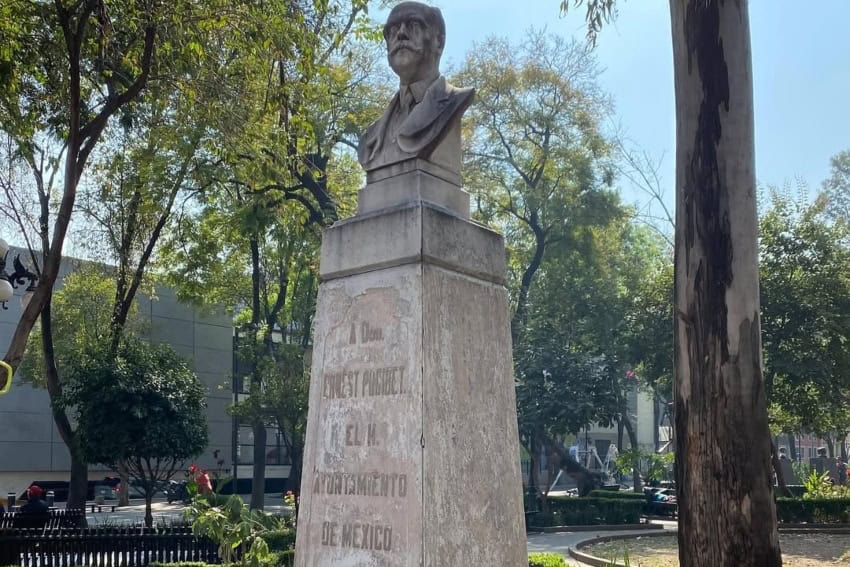
But this is not the story of Porfirio Díaz and his financial policies, but of one businessman who adapted to the new opportunities to build up a great manufacturing empire: Ernesto Pugibet, the creator of El Buen Tono.
El Buen Tono was more than just a business that dominated the Mexican tobacco industry with its cigars and “European style” cigarettes for decades; it was the great symbol of Mexico’s new industrialized future, setting the pattern and standards that others would follow.
Ernesto Pugibet and the tobacco industry in Mexico
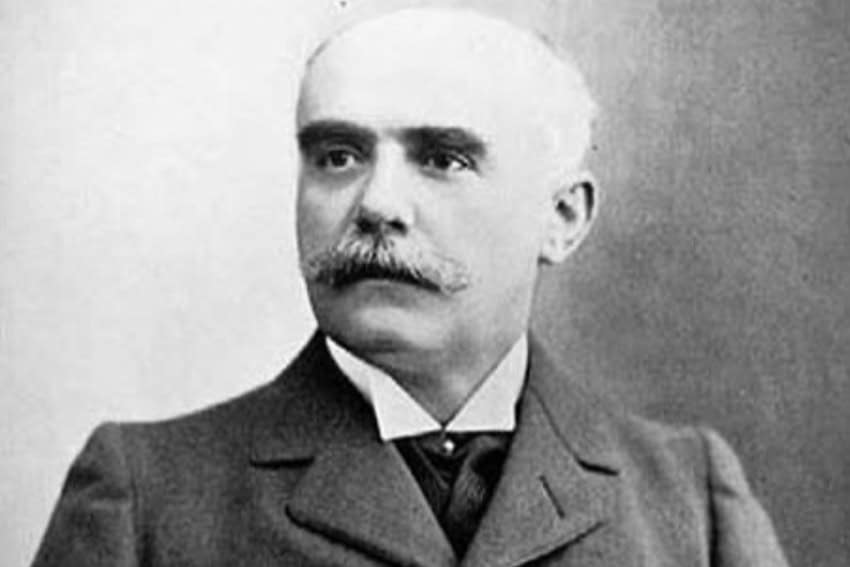
Pugibet was born in Saint-Martory, a rural area of France that sits in the shadow of the Pyrenees mountains. He left his homeland in 1875, a 22-year-old, intending to seek his fortune in the Americas.
His first stop was Cuba, where he worked in the tobacco industry. It seems likely that he intended to make the island his permanent home until political upheavals forced him to move on. He arrived in Mexico City in 1879, looking to apply his newly won knowledge.
Tobacco had long been popular in Mexico in the form of pipes, snuff and chewing tobacco. The idea of rolling a small amount of tobacco in paper and thus creating the modern cigarette is credited to one Antonio Charro, a Mexican entrepreneur who stood outside theaters to sell them to concertgoers. Others copied the idea, creating a booming cottage industry.
Hand rolling cigarettes was a tricky business, and a worker was considered skilled if they could produce four cigarettes per minute. However, in 1880, a machine capable of rolling cigarettes mechanically was invented in the U.S., and by 1884, the first such machines had been imported to Mexico by the El Modelo company.

By then, Ernesto Pugibet was finding his feet. From 1879 to 1884, he operated a small artisanal tobacco business, employing three female workers to roll cigarettes by hand, which he personally delivered to customers and local shops. An attempt to open a cigar factory on Calle Don Juan Manuel failed, but in 1884, Pugibet founded another small company, Ernesto Pugibet y Compañía.
Growing El Buen Tono
In November 1887, Pugibet married Guadalupe Portilla Garaicoechea, a woman of considerable political connections, and the marriage gave Pugibet access to investors. He imported some of the new foreign rolling machines and expanded into the cigarette business on a grander scale. His timing was perfect: People were flooding into the cities to find work in factories, and the population of Mexico City had surged to 400,000. Factory workers had a little spare cash and became consumers themselves.
Business opportunities were no longer limited to making fine furniture or carriages for the handful of truly wealthy; fortunes could now be made by selling small items to the urban masses, with beer, cigarettes and textiles the driving forces behind this consumer revolution. As modern city life picked up pace, the factory-made cigarette became a symbol of modern Mexico, and Ernesto Pugibet was there, both exploiting this new market and, with his powerful advertisements, helping to drive it. As production increased, prices came down, until a packet of cigarettes sold for as little as 5 centavos, while brands such as High Life or Jockey Club were a status symbol for the rich who happily paid 15 centavos for a better cigarette in a more elegant package.
El Buen Tono went international with a display in the Mexican Pavilion at the Exposition Universelle in Paris in 1889. This was the event for which the Eiffel Tower had been constructed, and El Buen Tono put on an impressive show in the Aztec-style Mexican Pavilion. Attendance in Paris was less about garnering international sales and more about winning political favor with the Mexican government. But it helped the firm’s reputation when they were awarded a gold medal for excellence.
El Buen Tono’s largely female workforce
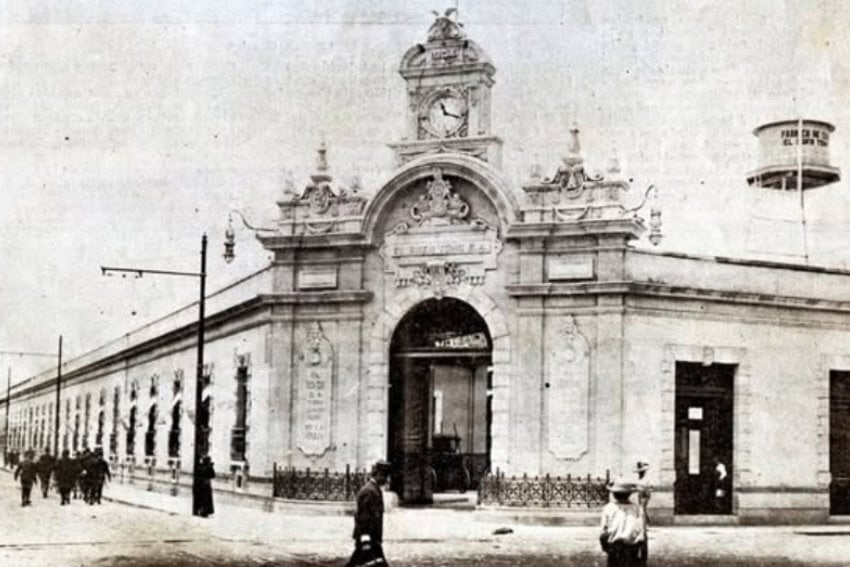
In 1890, with business booming, Pugibet moved to a larger factory near Alameda Park and the following year purchased new French cigarette-rolling machines. These had the advantage over previous models by removing the need for glue, bringing a notable improvement in the taste of cigarettes. By 1897, El Buen Tono had teams of horse carriages out every day delivering their products around Mexico City. As the train network improved and internal tariffs were removed, El Buen Tono cigarettes could be sold around the country, leading to booming sales figures. The expanding market encouraged the planting of more Mexican tobacco. New estates were opened in Oaxaca, and there was a notable improvement in both the quality and quantity of the Mexican product.
El Buen Tono was a model employer for its day, with baths being introduced at the factory and housing provided for many of their workers. However, it was still a hard job: Most of the workforce at El Buen Tono was female, with the women usually working under male supervision. Giving women the majority of jobs was not about equal rights; it was due to the fact that women could be paid lower wages.
Squeezing out smaller competitors
Similarly, by moving into the security of a company house, workers had to accept low wages and were banned from seeking any union representation. Many workers had recently arrived from the countryside, and the famous Swiss clock above the factory’s entrance was not just a symbol of modern times but was there to impose a sense of punctuality on a workforce used to the more easy-going ways of village life.
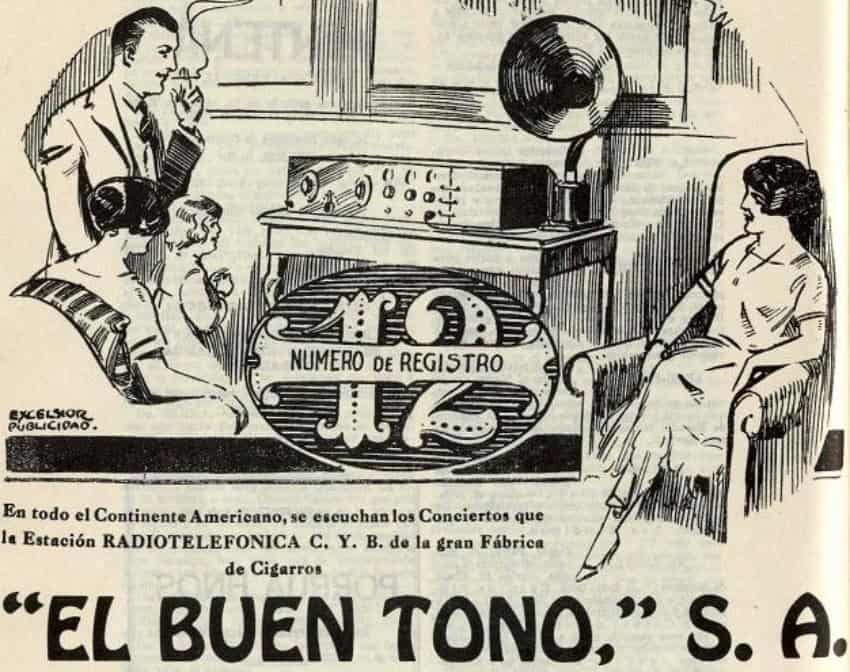
Even as cigarette consumption rose across Mexico, an ever more competitive market forced many of the smaller companies out of business, leaving the big three of El Buen Tono, La Tabacalera Mexicana and El Águila. These companies were all selling what was basically the same product, so branding and advertising were particularly important. It was here that El Buen Tono was the great master of the art.
The art of advertising
At the core of their advertising campaigns was their own in-house printers, where a dozen workers produced everything from packaging to newspaper ads to posters. These beautiful lithographically printed posters gave the city a free art show, while each year the company’s prized Christmas calendars were handed out from the factory and the main kiosk by Alameda Park. The design team became famous for their comic strip advertisements, which depicted a range of characters who benefited from smoking El Buen Tono products. The series “Aventuras Maravillosas de Ranilla” became so popular that scripts were published in book format by 1922, an event seen as the start of the Mexican comic book industry.
While there might have been three big tobacco companies operating in Mexico, they were not equals: El Buen Tono dominated, claiming a majority share of the market.
Marketing and a flair for the dramatic
Ernesto Pugibet always had an eye for the dramatic, and in 1906, he sent the El Buen Tono airship, the first such flying machine in Mexico, on a dramatic flight over the Zócalo main square in Mexico City. El Buen Tono also employed “El Hombre Luminoso,” a dandy dressed in the finest clothes who would stroll amongst the evening crowds and suddenly connect the batteries hidden in his coat to light up an advertisement on his back. Ernesto Pugibet scored another coup when the famous French opera singer Emma Calvé was treated to a guided tour of the factory. El Buen Tono produced a cigarette brand named in her honor.
Ernesto Pugibet was very much a man of the world, with properties in New York and Paris. At home, he wined and dined the politicians who determined policy, with Finance Minister José Yves Limantour becoming a close friend. Although his cigarette factory remained at the heart of his business, Pugibet invested in breweries, banks and textiles. He loved modern inventions and, in 1907, imported motorized trucks from Paris to take over deliveries around the city. The El Buen Tono policy of importing the latest technology from Europe became a model for other companies to follow.
The end of the golden age
By 1910, the factory was employing approximately 1,000 men and over 1,200 women, and its capital had grown to 10 million pesos. Events, however, were moving beyond Ernesto Pugibet’s control. An aging President Porfirio Díaz was losing his iron grip on power, and it became a period of labor unrest and strikes. In 1910, rebellions broke out across northern Mexico, and the country entered a decade-long period of violence, bringing disruptions, broken supply routes and a decline in foreign investment. El Buen Tono would come through the troubles and keep making cigarettes for another 50 years, but the golden age had come to an end.
Bob Pateman lived in Mexico for six years. He is a librarian and teacher with a Master’s Degree in History.