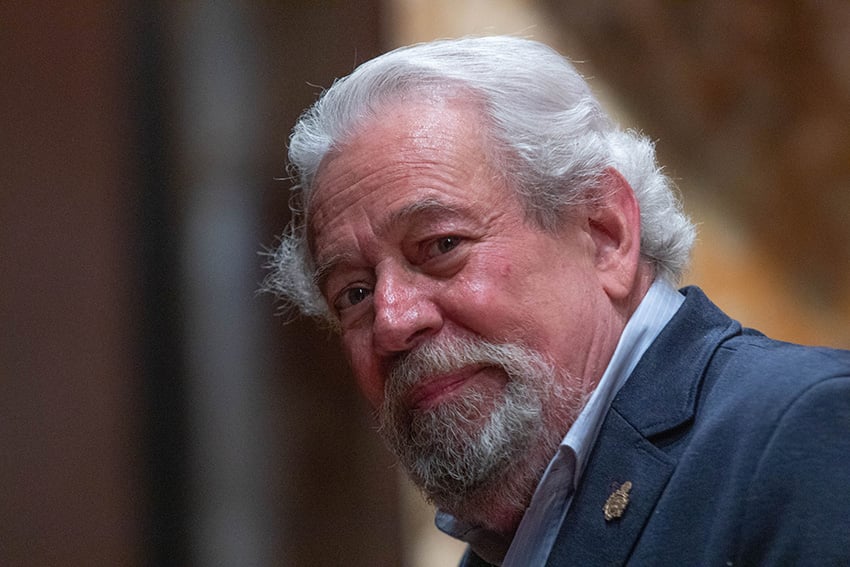
Mexican novelist and essayist Gonzalo Celorio has won the 2025 Cervantes Prize, the most prestigious award in Spanish‑language literature.
He is being honored for more than half a century of writing that blends memory, erudition and love of language.
Spain’s Minister of Culture, Ernest Urtasun, announced the decision Monday in Madrid, calling Celorio’s work “an exceptional literary and intellectual labor that has enriched the language and Hispanic culture.”
The jury praised him for “combining critical lucidity with a narrative sensibility that explores the nuances of identity, sentimental education and loss. His work is simultaneously a memoir of modern Mexico and a mirror of the human condition.”
The prize, which includes a monetary award of 125,000 euros (2.7 million pesos; US $143,570), will be presented April 23, 2026 at the University of Alcalá de Henares by the King and Queen of Spain. The date aligns with the anniversary of Miguel de Cervantes’ burial in 1616, one day after his death.
Celorio, 77, becomes the seventh Mexican to receive the Cervantes Prize — making Mexico the Latin American nation with the most laureates.
📢 ¡Gonzalo Celorio, Premio Cervantes 2025!
🏅 El jurado destaca al autor mexicano por “la excepcional obra literaria y labor intelectual con la que ha contribuido al enriquecimiento del idioma y la cultura hispánica” pic.twitter.com/up9InvFKLO
— Ministerio de Cultura (@culturagob) November 3, 2025

He follows Octavio Paz (1981), Carlos Fuentes (1987), Sergio Pitol (2005), José Emilio Pacheco (2009), Elena Poniatowska (2013) and Fernando del Paso (2015)
The award reaffirms what the writer himself calls the “immense richness” of a language shared by more than 500 million people.
“I receive it with great honor and emotion,” Celorio said. “It honors my literary vocation, my love for the Spanish language and my devotion to Cervantes.”
Born in Mexico City in 1948, Celorio studied Hispanic literature at the National Autonomous University of Mexico (UNAM), where he has spent his career as professor and dean of the Faculty of Philosophy and Letters.
Also an essayist highly regarded for both his narrative and critical work, he currently directs the Mexican Academy of Language and maintains close academic ties with Spain and Cuba.
He is known for novels such as “Amor propio” (“Self-Love”), “Y retiemble en sus centros la tierra” (“And Let the Earth Tremble to its Core”) and “Tres lindas cubanas” (“Three Beautiful Cuban Women”).
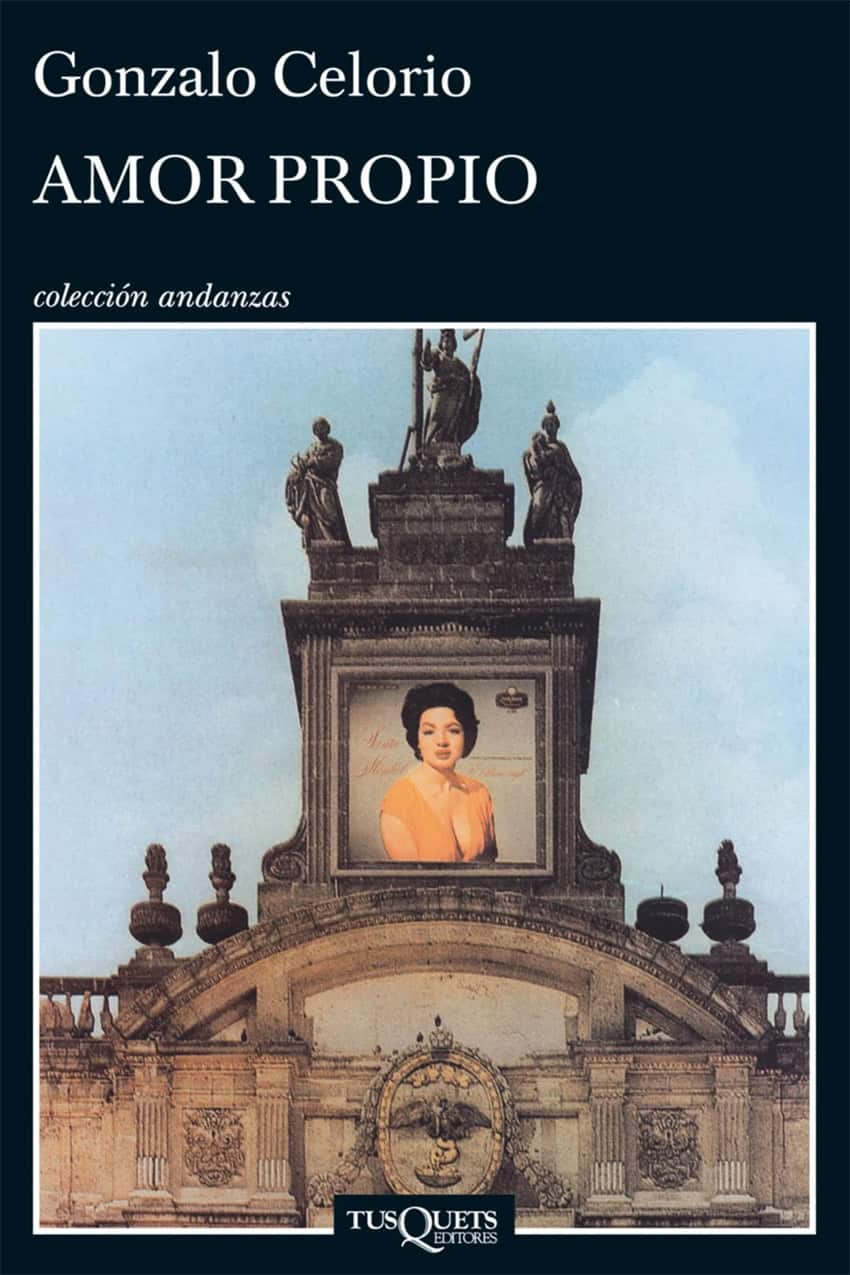
The first, published in 1992, is often cited as his breakthrough work, establishing him as a strong voice in contemporary Mexican fiction. The latter, from 2006, is an ambitious tale of family history and Cuban-Mexican cultural ties.
His most recent work, a memoir titled “Ese montón de espejos rotos” (“That Pile of Broken Mirrors”), was published just last month in Spanish only. It reflects on a lifetime of reading, teaching and writing — what he has called the “useless but wonderful luxury” of literature.
Celorio has described Mexico’s cultural connection with Spain as “umbilical.”
“We cannot renounce our Hispanic heritage regardless of what may have happened during the Conquest,” he told El Universal. “They would have to perform surgery to remove half of what we are.”
This year’s Cervantes Prize is the 50th edition of the award, the highest honor in Spanish literature and writing, especially works of fiction, poetry and essays.
The three most recent winners were Venezuela’s Rafael Cadenas in 2022, Spain’s Luis Mateo Díez in 2023 and Spain’s Álvaro Pombo in 2024.
Other prominent winners include Peruvian Nobel Prize winner Mario Vargas Llosa in 1994, Spanish Nobel Prize winner Camilo José Cela in 1995 and Argentine Jorge Luis Borges in 1979 — along with Mexican Nobel Prize winner Paz in 1981 and Fuentes in 1987.
With reports from CNN Español, El País and El Universal