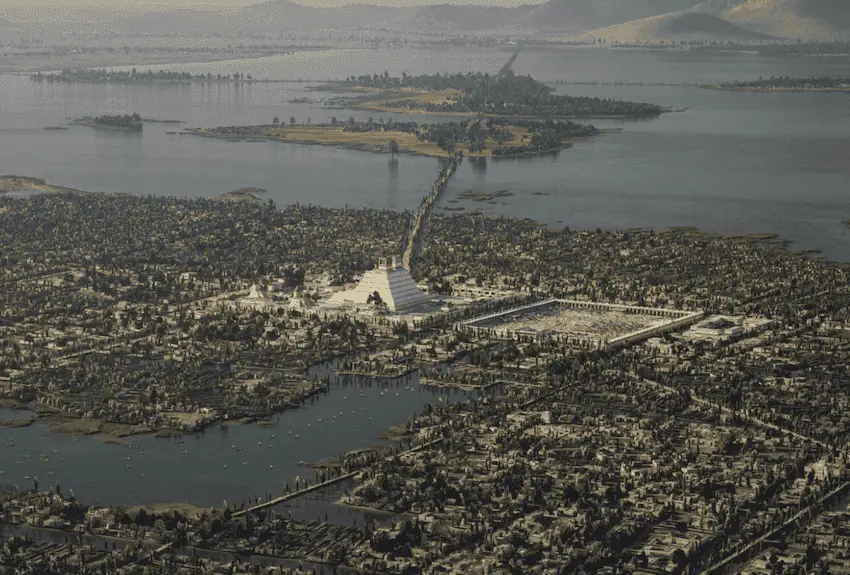
A 29-year-old man from the Netherlands who created a mesmerizing digitized representation of Tenochtitlán, the one-time capital of the Mexica Empire, has finally set foot in Mexico for the first time.
The virtual reconstruction that technical artist Thomas Kole worked on for 18 months in his apartment is “the most faithful portrait to date” of the once-thriving metropolis, says the Mexican newspaper El País.
“It was totally unexplored territory for me,” Kole told the paper. “I don’t even know how I found the topic. There is no catalyst. But I think once you read something about it, you’re hooked.”
Tenochtitlán, upon which Mexico City was built, was founded by the Mexicas, aka the Aztec people, around 1325 on an island in Lake Texcoco.
It was estimated that 200,000 to 400,000 people lived there by 1500, making it one of the most populous cities in the world at the time — four or five times as large as early 1500s London. Among its many features were three major causeways that ran from the “mainland” to the island city.
Kole attempted to recreate the city exactly as it was in 1518 — just before the Spanish conquest of the Aztec Empire, also known as the Conquest of Tenochtitlán, began in February 1519.

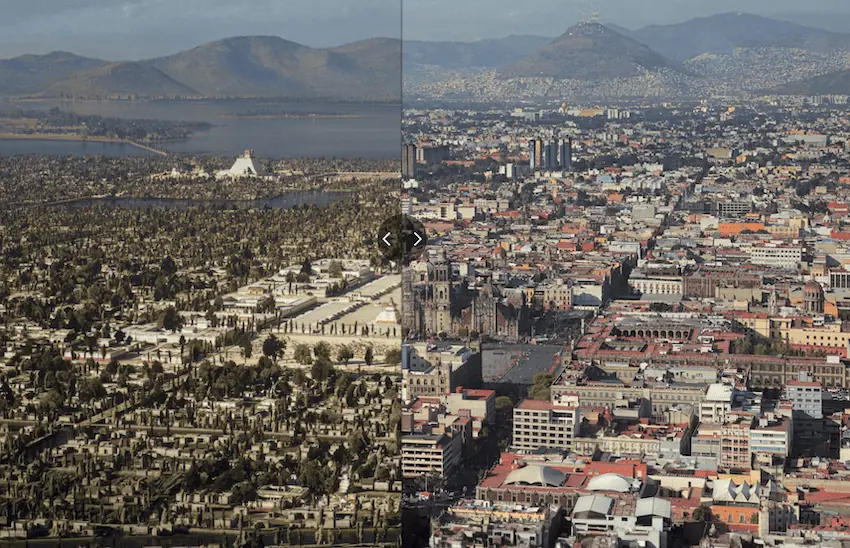
Kole, who will be giving a presentation on Friday — “I’m finally visiting Mexico City!” he posted late last week on the social media site X — said he first got interested in Tenochtitlán when walking virtually through the streets of Mexico City.

Looking at his computer, he realized that nothing he observed was telling him anything about the city buried beneath. “The idea settled in my head and it was impossible to get it out,” he said.
A history buff, he kept clicking away in an attempt to find out more about Tenochtitlán, part of which is featured on Mexico’s 50-peso note. He then turned to archaeological and historical sources, such as writings and old maps (“I soon realized that no one agrees on anything,” he lamented).
A year and half later, he finished his project — without ever crossing the Atlantic or even leaving home. His painstaking, detailed, colorful work is free for the public to view online. Prints made in Mexico are also available.
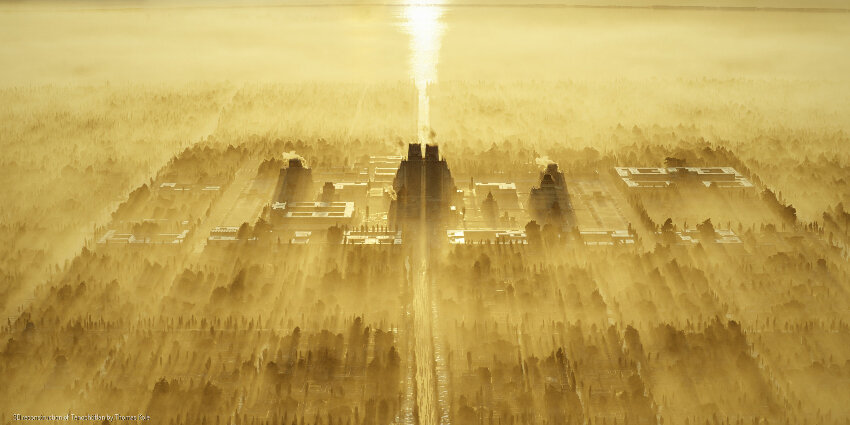
“Tenochtitlán surprised me in many aspects: its size, its organization, its structure,” he said. “Very beautiful things have been written about her. Its natural condition, on a lake and surrounded by volcanic mountains. Really summons the imagination.”
Kole is employed by a company that develops installations and interactive games for museums and other venues, but he worked on this project in his free time from his home in Amersfoort, Netherlands.
He said his work and his knowledge of video games helped keep things within manageable parameters.
“The result is an impressive journey through time,” writes El País.
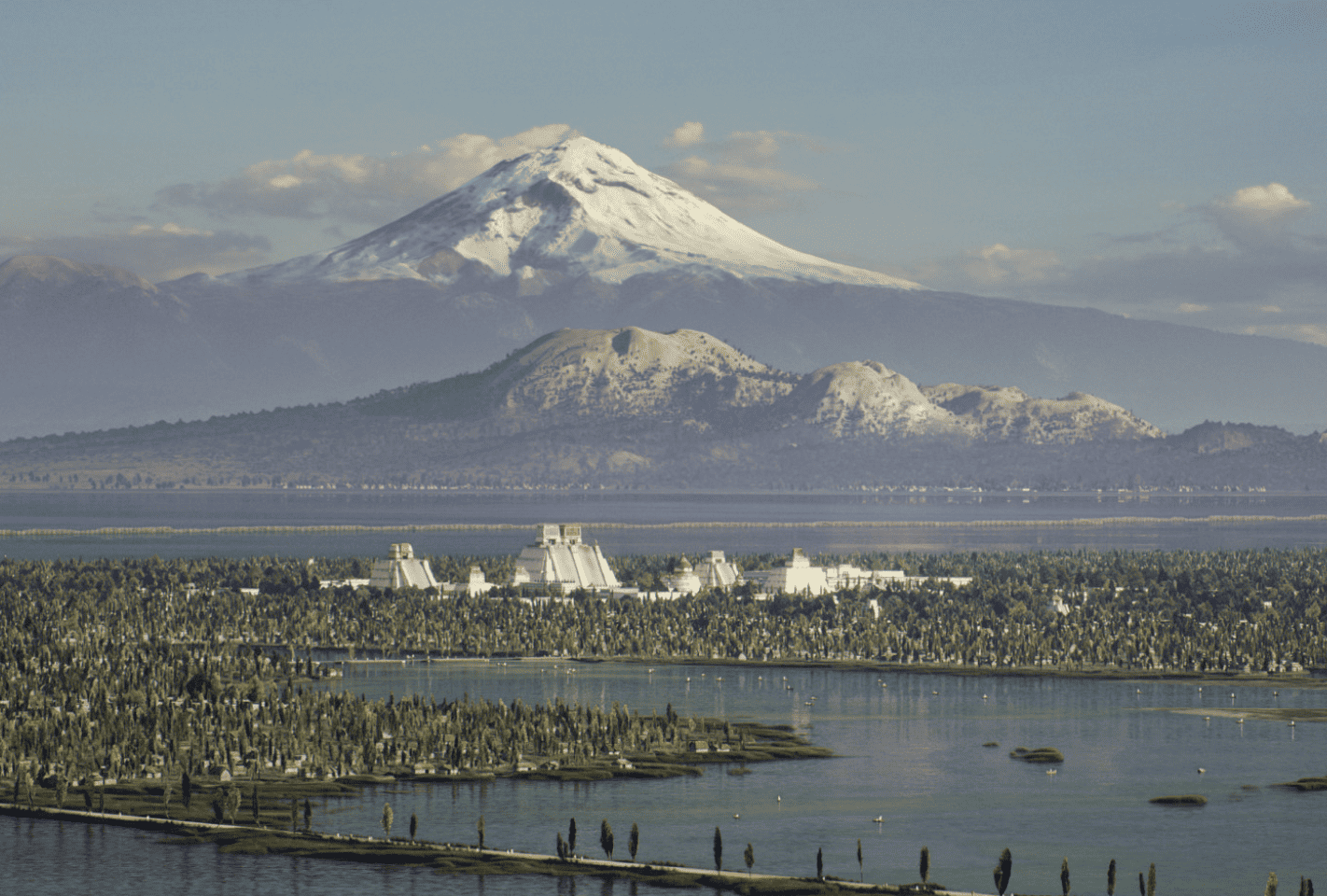
Images in “A Portrait of Tenochtitlan” include the city and neighborhoods laid out in grids, the causeways, the Sacred Precinct at the center of the city, the imposing Templo Mayor, the palace of Moctezuma, plus other temples, schools, gardens and a zoo.
The volcanoes Popocatépetl and Iztaccíhuatl can be seen clearly, as well, unobstructed by the modern scourge of pollution.
“The year is 1518. Mexico-Tenochtitlan, once an unassuming settlement in the middle of Lake Texcoco, now a bustling metropolis,” Kole writes on the website, which can be accessed in Spanish, English and Nahuatl, an Uto-Aztecan language spoken today by about 1.5 million people in Mexico. “It is the capital of an empire ruling over, and receiving tribute from, more than 5 million people.”
Kole will provide much more insight during his talk at 6 p.m. Friday in the Jaime Torres Bodet auditorium at the National Museum of Anthropology in Mexico City. Entry is free, but seating is limited to about 350.
With reports from El País