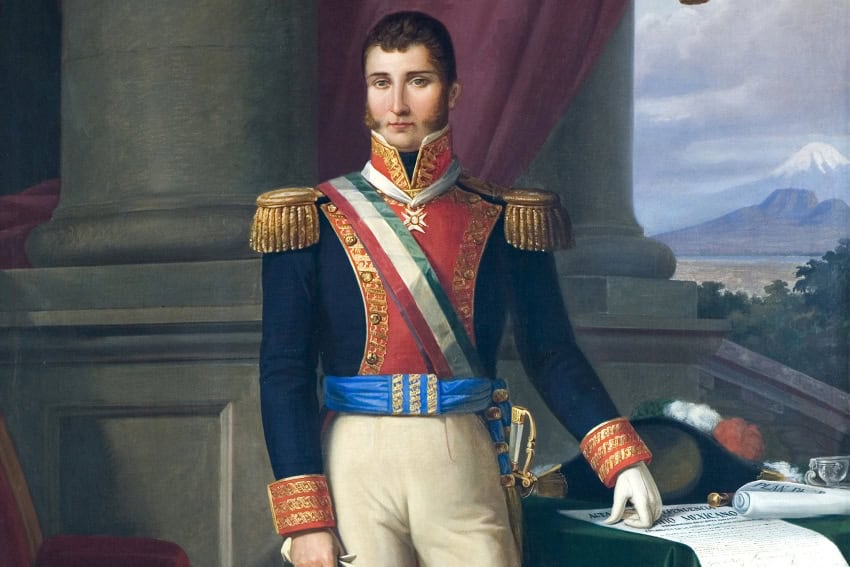
Agustín de Iturbide was born in Valladolid (now Morelia) in 1783, the fifth child of the marriage, but the first boy to survive. His father, Joaquín de Iturbide, had come from a family of Basque gentry, but as a second son had not been in line to inherit the family lands. He followed the path of many young Spanish boys of the time and sailed to seek his fortune in New Spain. Here, he married María Josefa Arambúru Carrillo de Figueroa, Mexican-born but of pure Spanish blood, a criolla as this ethnic group was known at the time. In Spanish colonial society, your bloodline was vital for advancement, and thanks to this Spanish pedigree, their children would be free to seek careers in government or the military.
Early historians tended to present positive views of Agustín de Iturbide and were overgenerous in their praise. The story that the birth left María Josefa Arambúru Carrillo de Figueroa and her newborn son on the verge of death, and they were saved by a priest running to the local church to bring the cloak of a saint to throw over them, is worth repeating, but only if we do so with a degree of scepticism.
Agustín de Iturbide in Spain
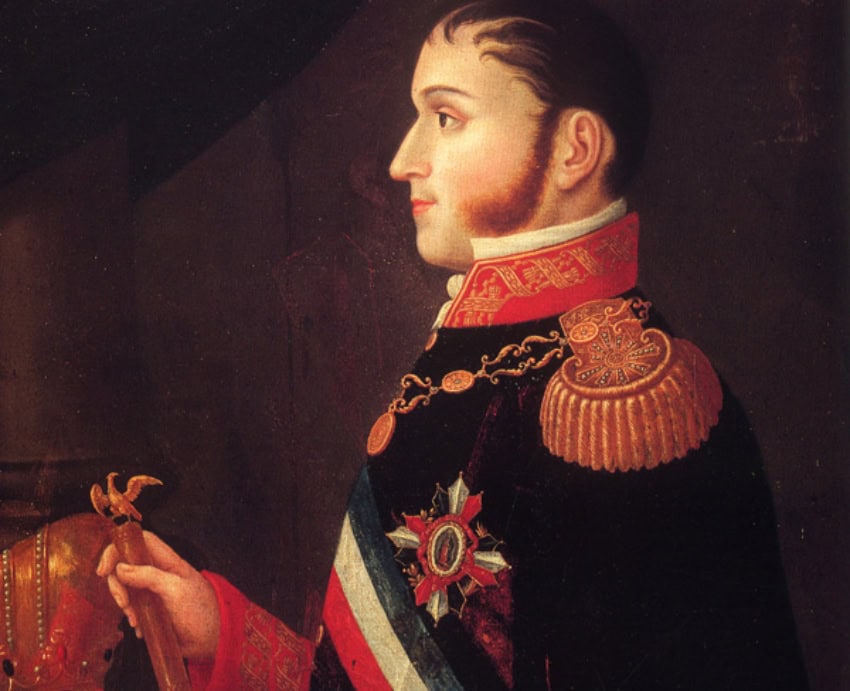
As a youth, Agustín de Iturbide was most noted for his excellent horsemanship, and given this background, it was hardly surprising that he entered the royal army. He also married well. Doña Ana María Josefa Ramona de Huarte y Muñiz was beautiful and well-connected; her father was a district governor. Her dowry paid for the hacienda of San José de Apeo that became their home. When not riding around his lands, Agustín de Iturbide was off fighting the rebellions that seemed as regular as the seasonal rains.
It was a time of turmoil in Spain, which had become a battleground in the Napoleonic Wars, and for five years Napoleon’s brother Joseph sat on the Spanish throne. By 1813, Napoleon had been defeated, and Ferdinand VII returned to the Spanish throne, but he was forced to accept liberal concessions. This had an impact on Mexican politics, which were already divided along the fault line of whether to remain a colony of Spain or to seek independence.
Independence, of course, meant Mexico under the rule of the Spanish-born families now living in the colony. There might be some negotiation on the status of people of mixed mestizo heritage, but the Indigenous population was not included. It was a fluid and divisive issue, and Agustín de Iturbide was courted by the independent movement. However, he believed in monarchy and remained a loyal servant of Spain, the King and the Royal Army.
The fight for independence in Mexico
In 1810, the priest, Miguel Hidalgo y Costilla, raised a great mob and attacked the cities of Guanajuato and Valladolid. As they marched through the mountains towards Mexico City, they were halted by a royal army under the command of General Trujillo. The young Iturbide had come away from the battle with his military reputation greatly enhanced and by 1813 had been promoted to the rank of colonel with command of his own regiment based in Celaya. In 1814, he fought under General Llano, a man history has judged as quite incompetent, as government forces defeated the rebels at Puruarán. With this victory, the greatest period of danger had passed, but small rebel groups fought on as troublesome bandits, and it was 1816 before the important province of Guanajuato, with its rich farmland and mines, was totally secure.
Agustín de Iturbide had made enemies along the way and, with the war fading into the background, his rivals struck out at him. He was criticized for his harshness, having put the wives and children of the rebels into prison. There seems to be little defense for this behavior, beyond the fact that it had been, in his opinion, a necessity at the time. Further claims of corruption were never proven, but these accusations stuck with him, and he resigned his commission and settled in Mexico City. Young, handsome and now a war hero, at least in the eyes of the Spanish, these years were not wasted but saw him build up contacts and a considerable personal fortune. As he approached his 40th birthday, Agustín de Iturbide had done well in life.

The war concludes
By 1820, the Mexican War for Independence was flaring up again in the south, this time under a new and capable leader, Vicente Guerrero. Short of competent officers, the Spanish viceroy recalled Agustín de Iturbide to the army. This year of 1820 also brought the threat of revolution in Spain, and although Ferdinand stayed on the throne, he had to agree to accepting reforms.
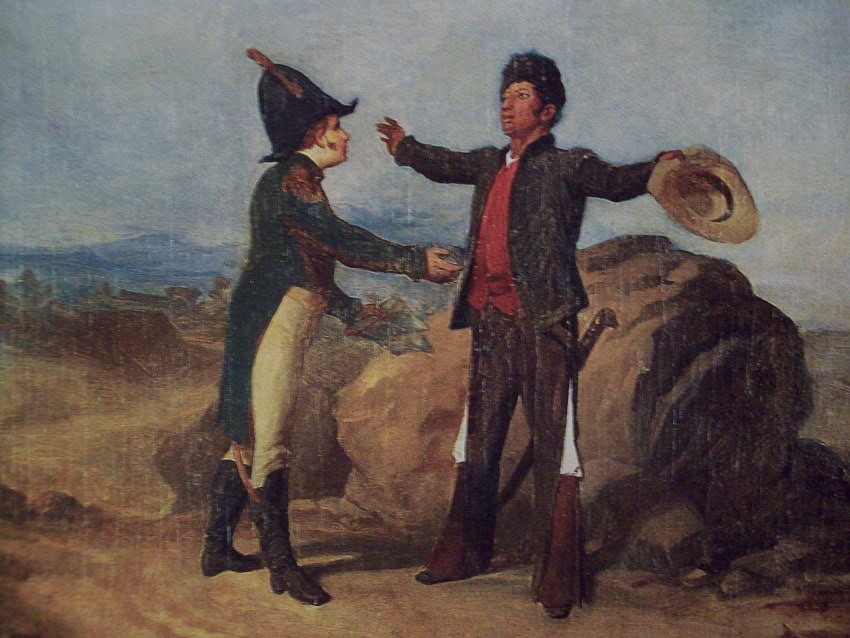
For Agustín de Iturbide, this was a turning point. Liberal reforms in Spain endangered the wealth of the landed gentry, and he was adamant that no such thing should be allowed in Mexico. In February 1821, Agustín de Iturbide met with the rebel Guerrero and presented his Plan of Iguala. The vision was an independent Mexico under the title of Imperio Mexicano. Catholicism would be the only religion, and all people of Spanish blood would be welcomed as citizens of the new country. This government would be a monarchy, and if Ferdinand VII would not forsake troublesome Spain and take the throne for himself, he should nominate another European prince.
The rebel Guerrero joined him, but the initial enthusiasm faded amongst de Iturbide’s own officers, and many marched back to Mexico City. When the Spanish Viceroy, Ruiz de Apodaca, rejected the proposal, Iturbide started for Mexico City with whatever men remained loyal to him. Valladolid was besieged, but there was no fighting, only a series of meetings after which the city elders joined the rebellion. Pueblo was taken and Mexico City was surrounded. Viceroy Ruiz de Apodaca had been removed from office by frustrated army officers and when the newly appointed viceroy, O’Donojú, arrived in Mexico, Iturbide left the siege to meet with him.
The Treaty of Córdoba
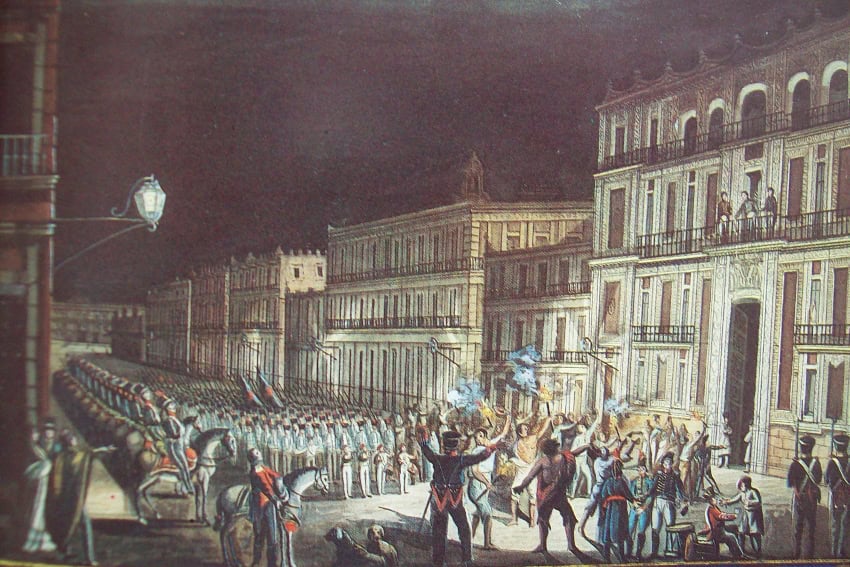
On Aug. 24, 1821, O’Donojú and Agustín de Iturbide signed the Treaty of Córdoba, declaring Mexican independence. Whether the two men had the authority to make such a decision was debatable, but by this point, Iturbide commanded the only effective military force in the country. On Sept. 27, 1821, he marched into Mexico City with the Army of the Three Guarantees, leaving what remained of the royalist forces to flee to Veracruz.
Iturbide was now the man of the moment, and his years of courting important people in the clergy and amongst the landowners paid off. He became President of the Provisional Governing Junta, a body tasked with selecting the five-person Regency that would temporarily govern newly independent Mexico. Iturbide made sure the Regency consisted of his allies, who duly elected him as President of the Regency. This political appointment, combined with command of the army, left him as the major political force in the country as they waited on news from Spain.
Emperor of Mexico
Their wish was still for the beleaguered Ferdinand VII to sail to Mexico and take the throne himself. However, back in Spain, Ferdinand was gaining the upper hand against the liberal movement and felt he could rein in the troublesome colonies. He denounced the Treaty of Córdoba and forbade any of his family from accepting the Mexican throne. If Spain could not provide an emperor, Mexico would find one for itself. Agustín de Iturbide was virtually doing the job anyway, and in May, a crowd, encouraged by men of his own regiment, gathered outside his home, insisting he take the throne with cries of “Viva Iturbide!”
After some political manoeuvring and behind-the-scenes deals, a tame Mexican Congress declared him emperor. On July 21, 1822, with the capital decked out in flowers, banners, streamers and flags, Agustín de Iturbide entered Mexico City’s great cathedral for an elaborate coronation ceremony.
He inherited a nearly bankrupt Mexico and the expense of the coronation, as well as the lavish court he established, upset many people. His reign would last less than a year, but it has left one important legacy: the red, white, and green of the Mexican flag were originally chosen to represent the three guarantees of the Plan of Iguala: freedom, religion and union.
Bob Pateman lived in Mexico for six years. He is a librarian and teacher with a Master’s Degree in History.