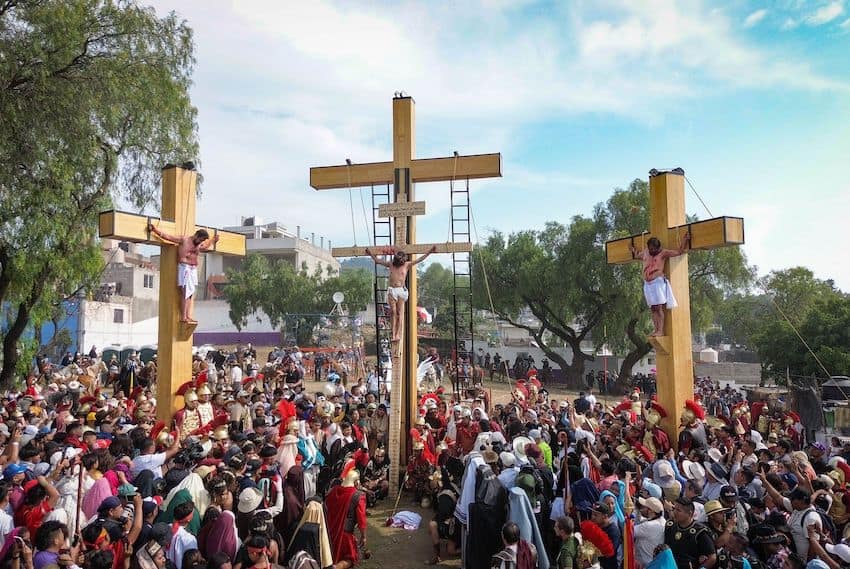
The United Nations Educational, Scientific and Cultural Organization (UNESCO) has added the Passion Play of Christ in the Iztapalapa borough of Mexico City to its Representative List of Intangible Cultural Heritage of Humanity.
The Intergovernmental Committee for the Safeguarding of the Intangible Cultural Heritage selected the tradition from a pool of 788 practices from 150 countries. The Committee announced its decision on Wednesday during its 20th session, held in New Delhi, India.
🔴 BREAKING
New inscription on the #IntangibleHeritage List: Representation of the Passion, Death and Resurrection of Christ in Iztapalapa, #Mexico🇲🇽.
Congratulations!https://t.co/xoL14QjPPR #LivingHeritage pic.twitter.com/BnKi5XvNDi
— UNESCO 🏛️ #Education #Sciences #Culture 🇺🇳 (@UNESCO) December 10, 2025
The recognition acknowledges the Passion of Christ’s exceptional value as a living, community-based tradition.

“The reenactment of the Passion, Death and Resurrection of Christ is a community tradition that brings together local residents in an expression of faith, identity and culture,” UNESCO said. “Beyond its religious roots, the [intergenerational exchange] promotes community cohesion, fosters solidarity and preserves cultural heritage thanks to its connection with traditional arts and crafts.”
Culture Minister Claudia Curiel de Icaza said that it is “a historic recognition that honors nearly two centuries of tradition, faith, identity and community organization.”
Meanwhile, President Claudia Sheinbaum celebrated the announcement and congratulated everyone involved.
“The practice has been going on for many years and is developed by an organizing committee of Holy Week — a community, social committee,” Sheinbaum said during her Dec. 10 press conference. “We congratulate [the committee] because they put a lot of effort into this celebration.”
What’s the tradition about?
Iztapalapa’s annual reenactment of the Passion of Christ is one of Mexico’s most significant and sacred rituals during Holy Week. It is also one of the world’s largest representations of the Stations of the Cross.
Iztapalapa’s renowned Passion Play celebrates its 181st year
The practice began when the community vowed to organize a religious procession in gratitude for surviving a cholera epidemic in 1843. Over time, this reenactment has evolved into a major cultural event that attracts millions of visitors each year, making it one of the largest Catholic events of the season.
Although the performance takes place for a week, preparation for the event happens nearly year-round. Casting calls for actors begin in December, followed by the selection process and rehearsals, which start in January. Meanwhile, members of the community make arrangements for the processions, security, transportation, sets and sound systems.
Due to the holy nature of the roles actors play, those chosen to portray Jesus, the Virgin Mary, apostles, Roman soldiers and other relevant roles during the event must adhere to certain community guidelines stipulating conduct and commitment, as well as local residency.
With reports from La Jornada, Sin Embargo and ABC