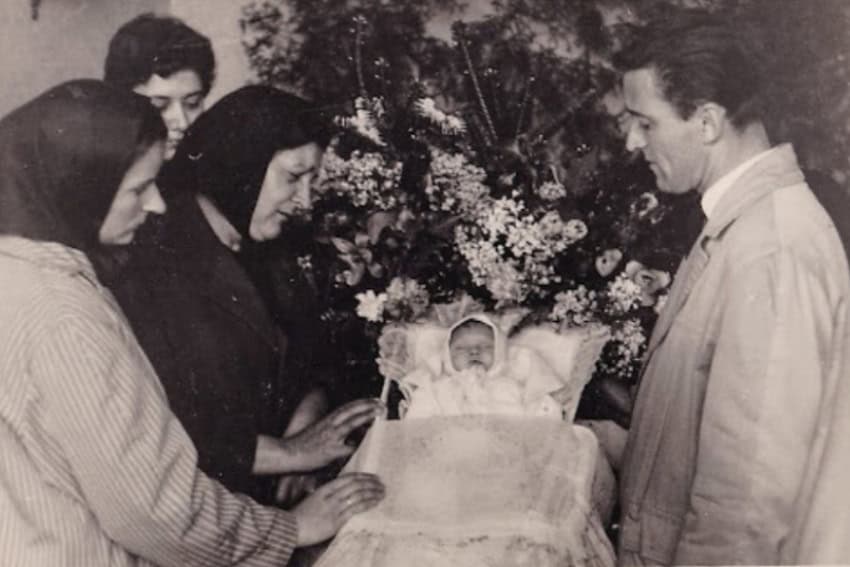
At first glance, it’s difficult to avoid a feeling of rejection by the images. There’s something about the staging, the freshly cut flowers, the grief of the mothers (surely younger than I am) cradling their lifeless babies.
However, after reading the 15th edition of “Artes de México” (1992), a seed of compassion sprouts. While these are undeniably posed images — taking a photograph in the 19th century was an event in itself — the mark of mourning is indelible.
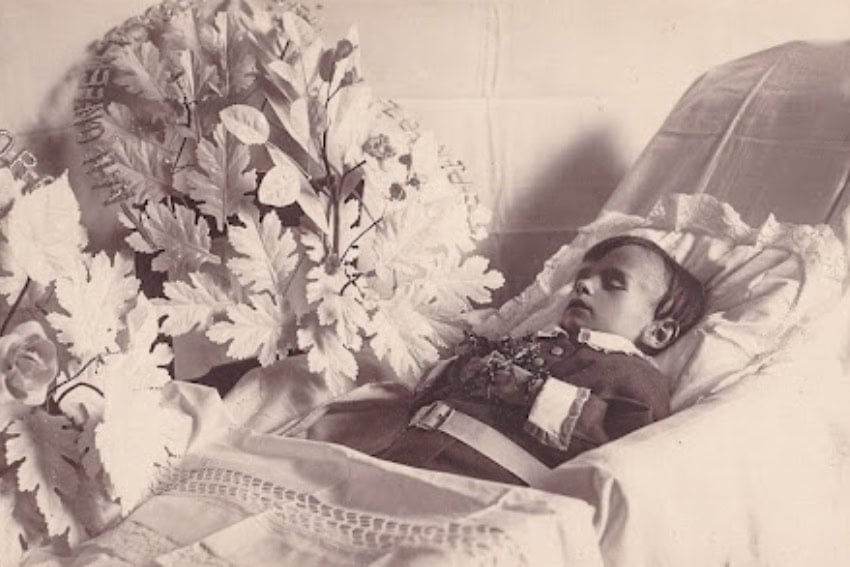
Although the babies’ bodies — so tiny, so fragile — are surrounded by flowers and dressed in festive clothing, the faces of their families tell a different story. The question, however, is legitimate: what would lead a family to photograph their newborn babies, so recently deceased? This is how the La Muerte Niña ritual was experienced in Mexico.
A misunderstood farewell ritual
Unlike today, the death of a young child was not a cause for mourning for 19th-century Mexican families. On the contrary, according to the research of anthropologist Sara Bringas Cramer, “newly deceased children were considered ‘little angels’ and, therefore, were celebrated, not mourned.”
According to Brigas Cramer, infant mortality in the 19th century reached up to 30% in Mexico. Specifically, among children aged 0 to 5, deaths were attributed to “smallpox, diarrhea, fever and pneumonia,” per her article in Arqueología Mexicana. Therefore, it was common for families to want to keep a memento of their recently departed “little angel.”
“In many photographs of dead children, it is common to see them dressed in white, wearing christening gowns or a saint’s outfit,” she wrote. The similarity between the ropones — a traditional baby gown in Mexico — used to dress the Baby Jesus in the Bajío region and those used for deceased children is striking.
La Muerte Niña
And this is no coincidence. On the contrary, the headdresses, floral arrangements and gowns sewn with gold thread were intended as festive attire. According to the belief, explains poet Alberto Ruy Sánchez Lacy, these babies shed their earthly garments to become, literally, cherubs.

The entire town participated in the event. They brought flowers, food, fragrant herbs, blankets for the body: anything that would contribute to the scene of the child-turned-angel. Since children were “without sin” at the time of death, Sánchez Lacy explains, they immediately became angels. Therefore, “Child Death is that which is seen and experienced with joy … it is not death, but a festive birth into another life.”
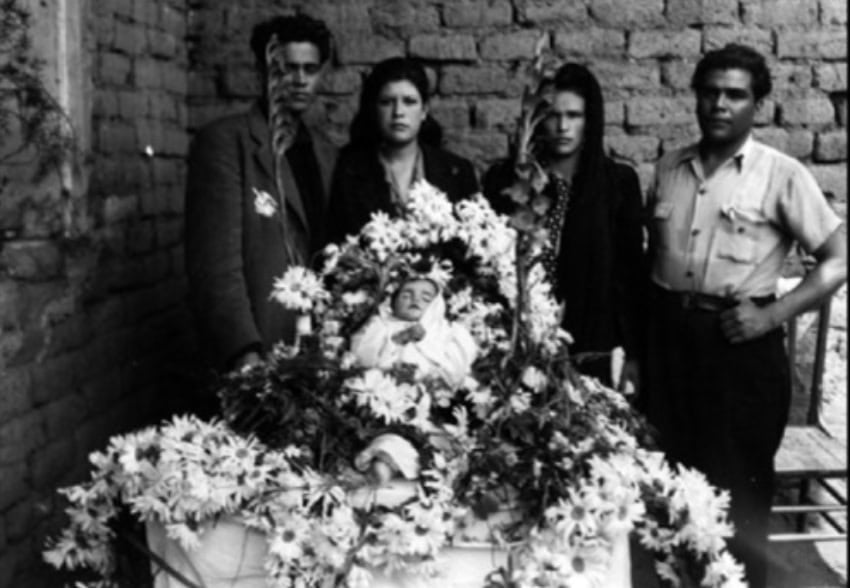
This collective effort crystallizes in an instant: the moment the photographer presses the shutter and takes a picture. This entire ritual of funerary preparation was known as La Muerte Niña: the definitive rite of passage dedicated to babies transformed into “little angels.”
Free from guilt and sin — an odd Mexican aesthetic
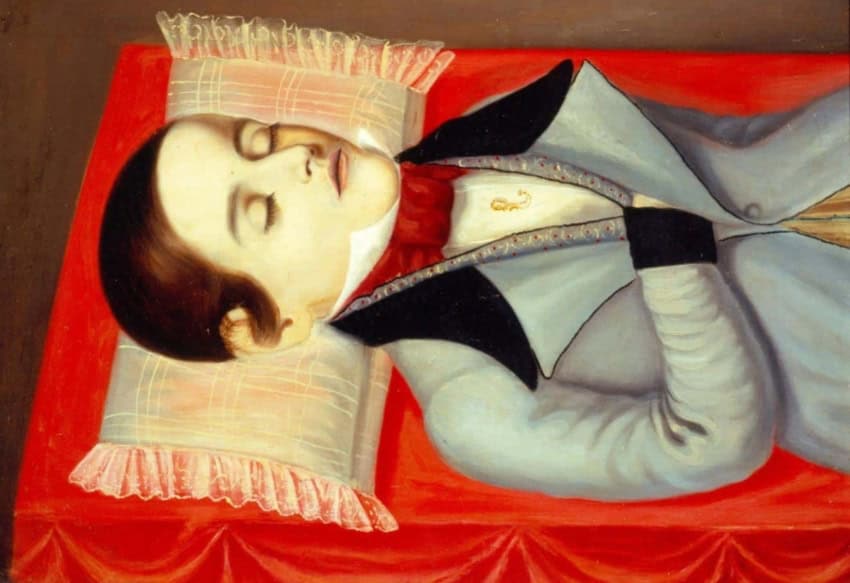
The custom, however, did not begin in 19th-century Mexico. On the contrary, according to art historian Gutierre Aceves, traces of the practice can be found dating back to the colonial era in New Spain. These oil paintings depicted children as if they were asleep, but dressed in garments befitting the highest-ranking officials in the heavenly hosts.
It seems that the practice of portraying dead people is not new in Mexico. A similar practice was common among Catholic nuns, who commissioned portraits of women who dedicated themselves to the service of the Church. They are called “crowned nuns” precisely because of the headdresses made with native flowers, which often grew in convent gardens.
The flower crowns were a direct defiance of death: after a life of cloistered conventual purity, the nuns had conquered death and been resurrected in paradise. This custom spread from religious contexts and migrated to wealthy families who, even then, commissioned oil paintings of their deceased sons and daughters. Sometimes, Aceves explains, they even asked portrait artists to depict them as they would have looked years later — at 6 or 7 years old — had death not intervened.
Mourning mothers
Given all of the above, it is not surprising that, with the introduction of photography into everyday Mexican life, grieving families wanted to replicate this centuries-old custom in a different format. Families wanted to give their deceased babies a sense of permanence. By creating an imaginary garden around the body, they were alluding to rebirth in eternal life.
The publication contains a particularly heartbreaking photograph. A mother holds her baby in a very long, white robe that almost resembles a shroud. The comparison is unavoidable: it is as if she were Mary holding Jesus after his sacrifice. The mother is bidding farewell to her child.
And as is often the case in funerary contexts, the ritual wasn’t actually for the recently deceased babies. Images like this show that, perhaps, it was more for the mothers who, after months of gestation, welcomed their daughters and sons only to bid them farewell prematurely.
Andrea Fischer contributes to the features desk at Mexico News Daily. She has edited and written for National Geographic en Español and Muy Interesante México, and continues to be an advocate for anything that screams science. Or yoga. Or both.