Amigos, music is far more than a matter of taste or aesthetic pleasure. Science reminds us that it shapes our mood, sharpens our memory and even strengthens our immune system. Yet for many of us, its influence lives in realms beyond scientific description — in the way a familiar melody can open a door to the past and flood us with emotion.
For Mexicans, few genres hold that power like the bolero. Its chords are interlaced with memory itself, woven through family stories, love and loss.
The power of bolero

After losing both my maternal grandparents in the same year, I began to hear boleros differently. They became more than love songs; they were vessels of remembrance. I think often of their home, filled with the aroma of morning coffee and my grandmother’s voice humming as she pretended to ready me for kindergarten — the school she never quite took me to. Now, the sound of boleros revives the ache of knowing that their house sits quiet, the old vinyls of Guty Cárdenas long stilled, their duets consigned to memory.
As the years have passed, those lyrics — once little more than background melodies — have transformed. The love songs our parents and grandparents sang now read as rich social documents, refracting shifting ideas of passion, duty and gender. Bolero’s old-world notions of romance collide with today’s evolving understandings of equality and affection. Yet for new generations, those same lyrics remain intoxicating reminders of love’s first sting.
Cuban bolero
Born in Cuba in the late nineteenth century, the bolero soon anchored itself deep in Mexican culture. It grew out of a marriage between danzón and son rhythms; its earliest recognized composition, “Tristezas,” came from the guitar of Pepe Sánchez in 1883. From the start, the bolero invited intimacy — its rhythm slow and swaying, perfect for dancing cheek to cheek, de cachetito pegado.
Its spread followed the sea routes of the Ward Line shipping company, linking Havana with New Orleans, Veracruz and Yucatán. These maritime arteries carried not only goods but ideas and melodies. Through Yucatán — long steeped in Cuban cultural exchange — the bolero crossed into Mexico’s heart. Legend holds that the singer and actor Arquímides Pous introduced it to Yucatecan audiences around 1918, where it mingled with son yucateco traditions and quickly became a local obsession.

The Mexican transformation
From Yucatán, the bolero journeyed north to Mexico City during a time when corridos — epic ballads of revolution and rural struggle — dominated popular song. Amid those tales of rifles and rebellion, bolero offered something more intimate: not war, but longing; not countryside ballads, but urban sighs.
The first Mexican bolero, “Madrigal,” appeared in 1918. What followed was a renaissance of romantic composition, with gatherings where sones and boleros conversed across guitars and voices. Mexico’s interpretation infused the genre with a distinct cosmopolitan charm: a hint of jazz, a whisper of contradanza, the emotive storytelling of local tradition.
Recognizing bolero
Recognizing a bolero is easy once you feel its pulse: a slow 4/4 rhythm tracing the fine line between yearning and heartbreak. It is the song of the yo cantante — the self who sings — to a distant or lost tú.
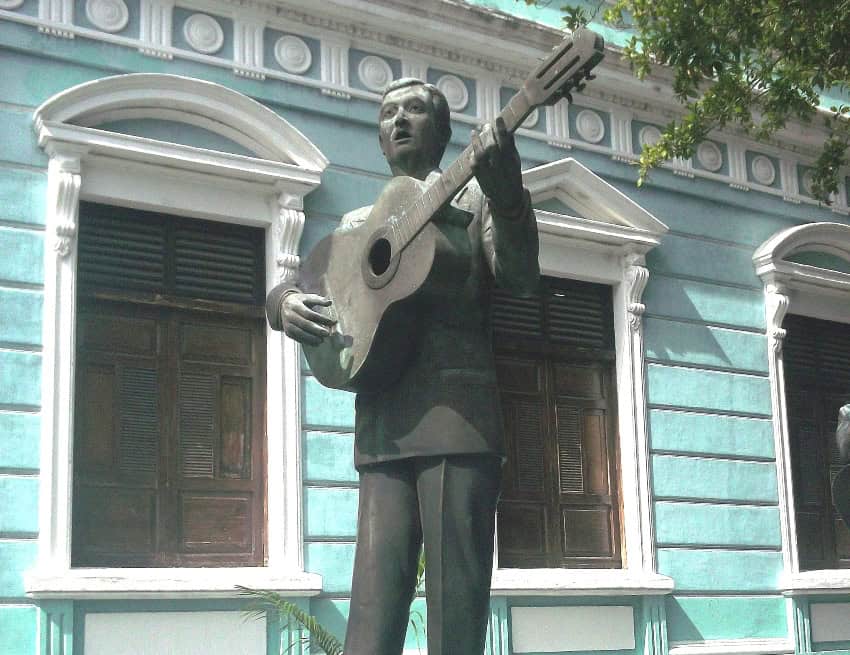
At its core lies the guitar, elevated into the requinto, a smaller, sharper-voiced cousin that answers the singer’s lament with delicate flurries of melody.
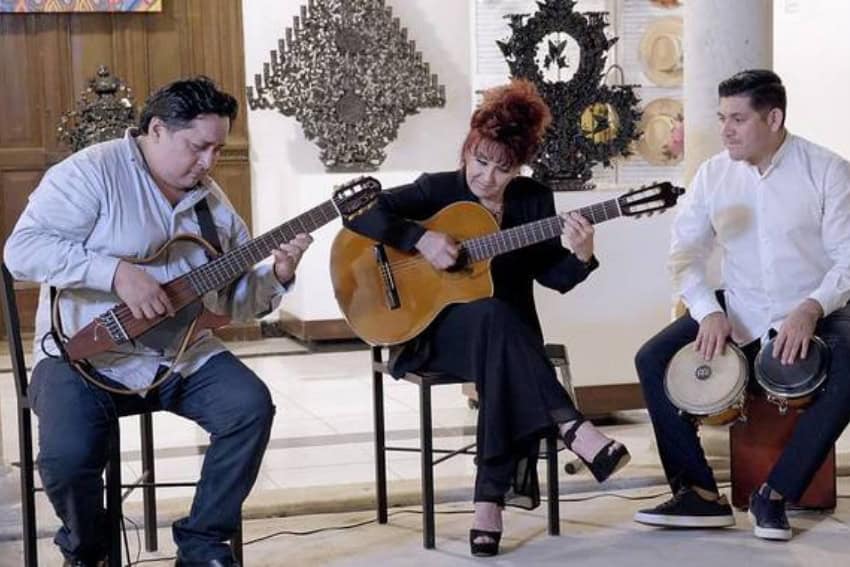
In Mexico, boleros typically found their voice in guitar trios or, occasionally, lush tropical big bands with bongos and congas. The genre splintered into variations: the elegant bolero de cabaret, with its big-band sophistication; the bolero ranchero, reimagined through the mariachi’s brass and strings; and the bolero yucateco, truest to its Cuban lineage — simple, tender and unabashedly romantic.
The greatest boleristas
It’s impossible to appreciate the Mexican bolero without knowing the composers who defined it. This is just a mini guide to get you started.
Guty Cárdenas: Regarded as Mexico’s first great bolerista, his songs are anthems among us. One of my favorites, though now less known, is “Nunca,” because it captures the beautiful futility of love unreturned: “I know that I love you in vain, that my heart uselessly calls you, but despite everything, I love you.” Can heartache sound more romantic?
Agustín Lara: The “Flaco de Oro” is our Mexican Cole Porter. His timeless compositions, such as “Piensa en mí,” “Solamente una vez,” and “María Bonita,” continue to resonate at gatherings.
Consuelo Velázquez: At just 16, she penned what is arguably the most famous Mexican bolero worldwide, “Bésame mucho.” This beautiful melody has been covered by artists from Frank Sinatra to Dua Lipa.

Álvaro Carrillo: Hailing from Oaxaca, he composed around 300 songs that continue to resonate and are frequently covered, including the beloved “Sabor a mí.”
María Grever: A truly remarkable composer deserving of a “Made in Mexico” article. She crafted around 800 songs, including “What a Difference a Day Makes?” originally titled “Cuando vuelva a tu lado.” Hired by Paramount and 20th Century Fox to create music for films and documentaries, her work has been performed by legends like Dean Martin, Bobby Darin, Sarah Vaughn and Tony Bennett, among many others.
Each of them caught something enduring about love’s grammar — the unspoken pauses between devotion and despair.
Keeping the spirit alive
On Dec. 4, 2023, UNESCO declared the bolero part of the Intangible Cultural Heritage of Humanity. For those of us raised with its melodies, the recognition felt inevitable: Bolero has always been more than music; it is memory’s soundtrack.
When I hear those familiar chords, I see my grandparents again — my itos — their distant gazes softening as a record played. I wonder who they imagined as they sang along, whose absence made their voices tremble. I see my father, half-mocking the genre’s sentimentality, yet still knowing every lyric. I hear my mother moving through the house, her voice wrapping itself around melodies she’s known since girlhood.
During the isolation of the pandemic, bolero became my family’s lifeline. On Friday nights, my sister and I would pour tequila and sing those old songs, laughing and crying in equal measure, reaching for warmth across the void of distance. Even now, it fills quiet afternoons at home — my boyfriend, my dog, the soft crackle of an old speaker. In those moments, bolero collapses time.
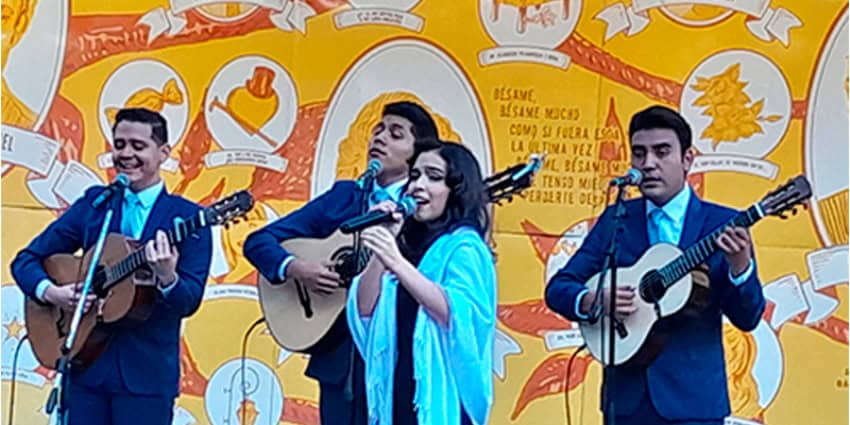
Listening to it is like stepping into memory’s photograph full of life.
The songs that hold us together
In a world that fragments daily — our attention splintered by screens and algorithms — bolero reminds us of our elemental need for connection. Its melodies invite us to sit still, to listen, to remember that even heartache has its beauty. Through its tender excess, it teaches emotional courage: to love deeply, to grieve openly and to keep singing anyway.
For me, returning to bolero is an act of revival — a way to bring back my itos for a few stolen minutes, to hear their laughter between verses.
Turn up the volume. Let the guitars and velvet voices fill your home. Whether you dance alone in the kitchen or croon off-key with your siblings, you join a tradition that stretches across oceans and generations. Each note carries the pulse of a shared past, each lyric a whisper of belonging.
In the end, bolero doesn’t just tell love stories — it keeps them alive.
Maria Meléndez writes for Mexico News Daily in Mexico City.