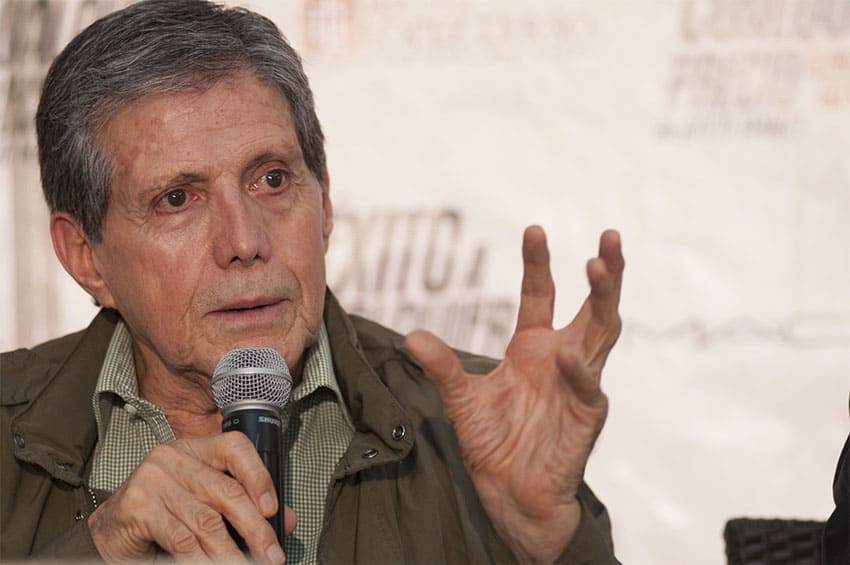
Highly acclaimed in Mexico and Latin American, the Mexican actor Héctor Bonilla died on Friday of kidney cancer at age 83. The Ministry of Culture has recognized him as one of the best actors the country has produced in recent decades.
“He died at home, peacefully, without pain and surrounded by his closest circle,” his youngest son, Fernando Bonilla, shared on social media.
Born on March 14, 1939, in Tetela de Ocampo, Puebla, Bonilla studied at the National School of Theater of Mexico’s National Institute of Fine Arts and Literature (INBAL). His first acting debut was in the movie “Jóvenes y Bellas” (“The Young and Beautiful Ones”). Several other films and theater productions followed during the 1960s and ‘70s.
But it wasn’t until 1989 that he got international recognition with the movie “Rojo Amanecer” (“Red Sunrise”). In the film, he plays the role of a father of two university students who participated in Mexico’s student movement of 1968.
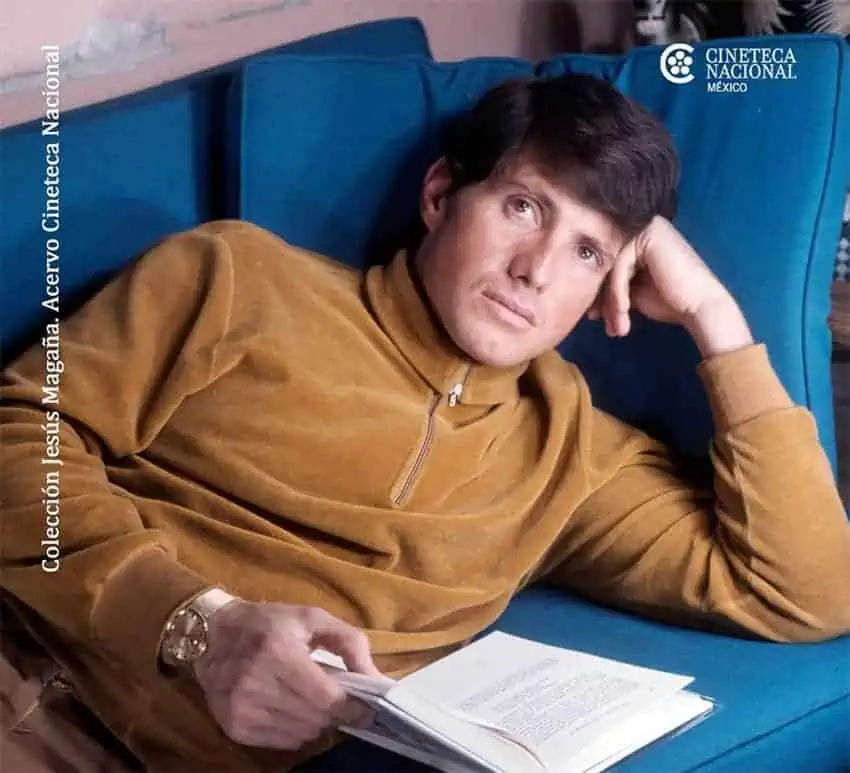
Rojo Amanecer, which he also co-produced, was the first film to openly address the student’s massacre at the Tlatelolco Square in Mexico City (the massacre took place just ten days before the Olympics).
In 2003, he made his directorial debut with the feature film “Mónica y el profesor,” starring his son Sergio Bonilla.
Other film credits include “Patsy, mi amor” (1969), “Yo amo, tu amas, nosotros” (1974), “La leyenda de la máscara” (1990), “El bulto” (1992), “Serpientes y escaleras” (1992), “Ámbar” (1994) and “Crónica de un desayuno” (2000).

Finally, in 2016 he starred as Don Servando in the popular comedy film “Un padre no tan padre” (“A not-so-great father”) and later reprised his character for the sequel “Una Navidad no tan padre 2″ (“A not-so-great Christmas”), which was his last film.
In 2019, INBAL recognized him with the Remarkable Trajectories of the Arts in Mexico award for having participated in more than 140 productions over his 50-year career in theater, film and television. That same year he also received the Golden Ariel, the highest award given to an individual in the Mexican film industry by the Mexican Academy of Cinematographic Arts and Sciences.
In an epitaph Bonilla wrote for himself several years prior to his death, and that his family shared with the news, he said: “Se acabó la función, no estén chingando. El que me vio, me vio. No queda nada,” meaning, “The show is over, no BS. He who saw me, saw me. Nothing’s left.”
With reports from El País and CNN en Español