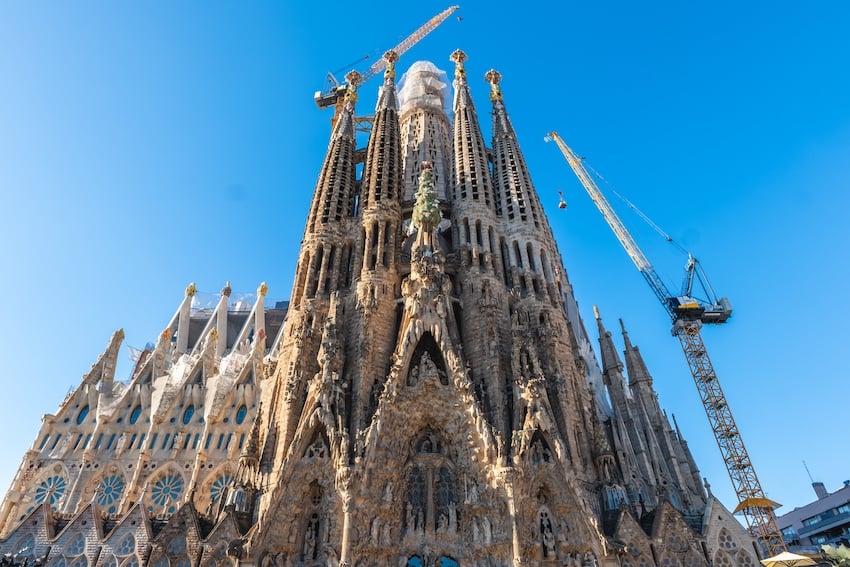
More than 140 years after construction began, Barcelona’s iconic Sagrada Familia is reaching its final stage — and Mexican sculptor Javier Marín may help bring Antoni Gaudí’s unfinished vision to fruition.
Designed by Gaudí as a vast theological “Bible in stone,” the basilica is the crown jewel of Catalan Modernism and part of a UNESCO World Heritage ensemble that recognizes his experimental, highly sculptural approach to sacred architecture.
Begun in 1882, it is distinguished by three immense façades symbolizing the life of Christ: Nativity, Passion and Glory.
The Glory Façade — the main entrance and final section — will depict humanity’s journey from sin to salvation, including scenes of the Last Judgement, hell and glory.
It is the most complex and ambitious section, as Gaudí left few directions before his death in 1926, compelling today’s curators to balance tradition and innovation.
That challenge now involves Marín, a 63-year-old artist from Uruapan, Michoacán.
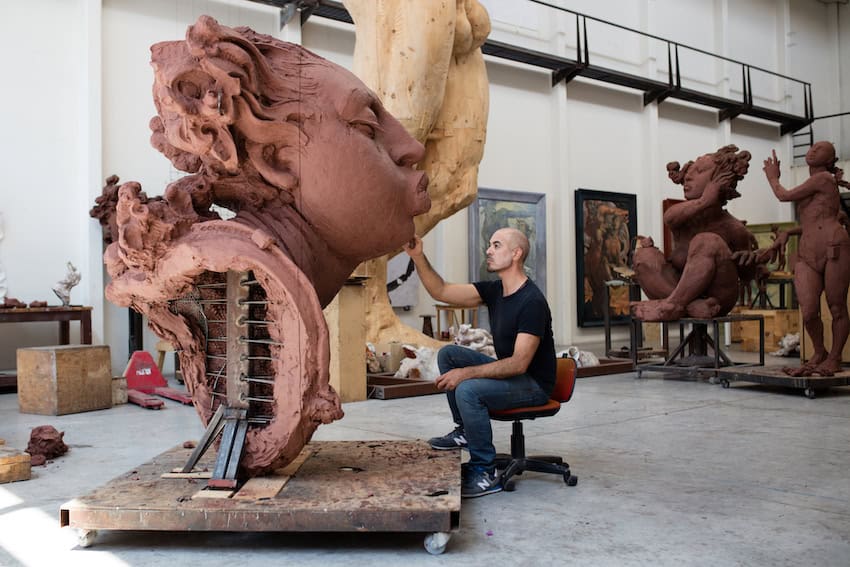
He is one of three contemporary sculptors invited to propose designs for the façade, along with Spaniards Miquel Barceló and Cristina Iglesias. The board of trustees of the Sagrada Familia is expected to choose a final plan in April.

Over the past months, Marín has immersed himself in Gaudí’s world.
“I was captivated by his boundless imagination,” Marín told the newspaper La Jornada. “After all this research, I was impressed by how you can conceive such a large work, knowing that it will have to be completed by other people in the future with new technologies.”
Marín blends classical expression and contemporary technique in monumental sculptures installed across Mexico and abroad.
His public works include “Cabeza Vainilla” in Mexico City’s Historic Center; “Retablo,” an altarpiece in the UNESCO-listed Cathedral Basilica of Zacatecas; and “Hoy es hoy,” a large bronze head now on loan to the Jacksonville Jaguars NFL team after standing in Florida’s Jacksonville International Airport from 2006 to 2023.
Internationally, his pieces have been shown at the Venice Biennale and in major European institutions such as the Palazzo delle Esposizioni in Rome.
His proposal for Barcelona combines handcrafted models with artificial intelligence and robotics.
“It has to be,” he told the newspaper El Sol de México. “It should be possible to read there that we did it at this time and with all these [new] tools.”
Coinciding with his selection, Mexican architect Mauricio Cortés Sierra recently completed Gaudí’s cross atop the Tower of Jesus Christ, now the basilica’s highest point at 172.5 meters.
The Mexico City–born architect has spent years embedded in the Sagrada Familia’s design team, overseeing the terminals of the six central towers that define the basilica’s new skyline.
His work on the cross literally crowns the same Barcelona church where Marín could soon sign the main entrance.
With reports from La Jornada, El Sol de México, La Crónica and Architectural Digest México y Latinoamérica