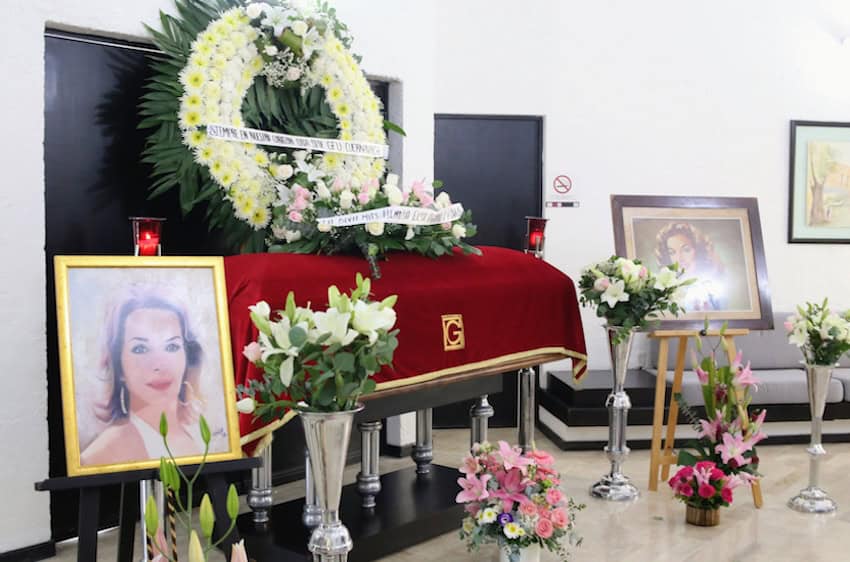
Film icon Elsa Aguirre, known for her striking beauty and acting talent during the Golden Age of Mexican Cinema in the 1940s and 1950s, has died at 95.
The National Association of Actors (ANDA) confirmed her death, calling her “one of the most iconic and emblematic actresses” of her era. No cause of death was disclosed.
She starred in more than 40 films, often sharing the screen with legends such as Pedro Infante and Jorge Negrete, and is often highlighted alongside other female luminaries of the era such as María Félix, Dolores del Río and Silvia Pinal.
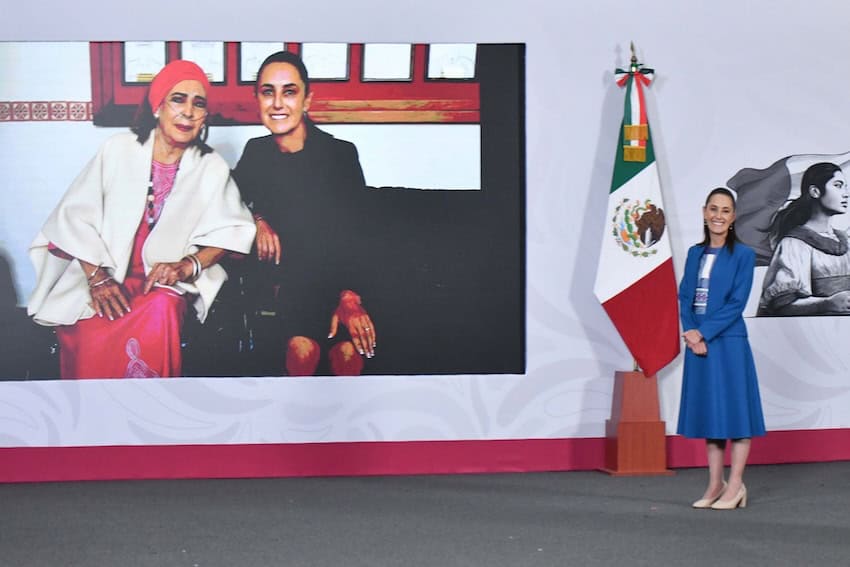
President Claudia Sheinbaum paid tribute during her Wednesday morning press conference, describing Aguirre as “a symbol” for Mexico.
“Our condolences to her family,” Sheinbaum said. “A woman, a symbol of Mexico’s Golden Age of Cinema and a joyful woman. And with a voice … one of those deep, very beautiful voices.”
Born Elsa Irma Aguirre Juárez in 1930 in the city of Chihuahua, Aguirre began her career after winning a beauty contest at age 14 organized by Clasa Films Mundiales.
She made her debut in 1945 and went on to appear in dozens of films across genres.

Known for her versatility, she portrayed both ingénues and complex leading women in films such as 1949’s “La mujer que perdí” (“The Woman I Lost”) and 1954’s “Cuidado con el amor” (“Beware of Love”).
Aguirre worked alongside many of the era’s biggest stars, including Infante, Negrete, Luis Aguilar, Pedro Armendáriz and “Cantinflas” (Mario Moreno).
After deciding to gradually withdraw from movie sets to pursue holistic well-being, she appeared occasionally on Mexican television. Her most notable recurring roles were in the 1990s in the telenovelas “Acapulco, cuerpo y alma” (“Acapulco, Body and Soul”) and “Mujeres engañadas” (“Deceived Women”).
#LoVisteEnVentaneando ✨ Elsa Aguirre: Una estrella que brillará por siempre. Despedimos a una de las máximas leyendas de la Época de Oro del cine nacional. Más allá de su innegable talento y belleza, Elsa Aguirre nos deja un legado de pasión, disciplina e historias que seguirán… pic.twitter.com/XAjjZX0tAD
— Ventaneando (@VentaneandoUno) July 15, 2026
Aguirre said she had followed a vegetarian diet since the age of 33, and later became a fervent practitioner of yoga. After overcoming bronchopneumonia in 2023, she said in subsequent interviews that her health had improved and that she took daily walks.
Her personal life brought both high-profile relationships and hardships, among them a brief romance with Negrete and the death of her only child, a son named Hugo, in 1996. She was married three times.
In later years, Aguirre withdrew from public life, settling in Cuernavaca, Morelos. She retired from television acting in the early 2000s; her final film appearance came earlier, in 1980’s “Albur de amor” (“Love’s Gamble”).
Aguirre’s death comes about a year after the death of her sister, actress Alma Rosa Aguirre, with whom she sometimes collaborated.
The Golden Age of Mexican Cinema roughly spanned the 1930s to 1950s and produced many of the country’s most enduring films and stars.
With reports from Vanguardia, El Universal and López-Dóriga Digital