Mexican sports slang is a wonderful thing: “Que pelmazo el portero, fue una vergeada! Cruzazuleamos de nuevo!”
Mexicans love their sport, and with the Euros and Copa America reaching their knockout stages, and the Olympics starting at the end of the month, there’s no better time to brush up on your vocabulary if you’re going to be watching with amigos.

The author of The Mexican Slang Dictionary, Alasdair Baverstock, gives us ten lesser-known Mexican expressions and phrases to take your sports knowledge to the next level.
A word of warning: While some of these expressions are perfect for the football stadium, they might be frowned upon if you use them in an everyday context, so consider who you are speaking to before using them.
Allí esta la papa – expression Signifying the weakest link in any system. Literally: There’s the potato. E.g. In sports, if one of the players on the side is clearly inferior to his teammates, then he is the “potato” and should be tactically targeted with additional pressure in order to increase the chances of victory.
Crack – noun Someone who is the best at what they do, and in the context of sport, the best player on the team.
e.g. Viste el gol de Ronaldo? Que crack es ese güey.

Did you see Ronaldo’s goal? What an amazing player he is.
Cruzazulear – verb To perform extremely well in any given activity, only to fall short at the final hurdle. To “bottle it,” to “snatch defeat from the jaws of victory.” Stems from the Mexico City football club Cruz Azul, which reached numerous finals over decades, but never managed to win.
Me carga la chingada! – exclam Expressive of frustration, Equivalent of “Godammit!” (except stronger). Extremely useful expression when your team concedes.
Me mama – expression Descriptive of something which a person greatly enjoys. Also used reflexively for any subject, i.e. Me mama, Te mama, Le mama, Nos mama, etc.
e.g. Me mama jugar futbol.
I love playing football.
Palero – noun An individual who is quick, or easily convinced, to change their allegiances. A “fairweather fan,” in the context of sport, but can also be used in any other context; i.e. politics, socially, etc. Also Piquetero.
Pelmazo – noun An incorrigable idiot.
e.g. Que pelmazo ese portero!
What an idiot that goalkeeper is!
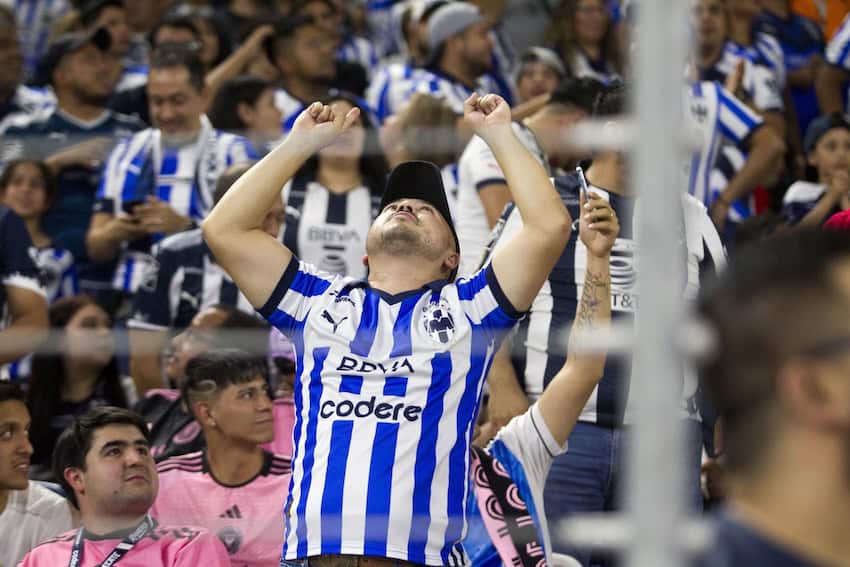
Porra – noun A chant, or cheer.
Different sporting institutions often have their own specific chants, sung by the crowd at their events, but the most common Mexican porra goes:
Chi-qui-ti-bom, a la bim-bom ba!
A la bio, a la bao, a la bim-bom-ba!
Person’s name! Person’s name!
Ra! Ra! Ra!
Tener la Estafeta – expression To be in charge. Literally, to be “holding the baton.” A team captain does so for his team.
Vergeada – noun A decisive victory, or pummeling. Literally, a “dicking.”
e.g. Nos metieron siete goles, fue una vergeada!
They scored seven goals, it was a thrashing!
If you want to brush up on more than your sports, you can buy The Mexican Slang Dictionary on Amazon in the U.S., Canada, and Mexico.
Alisdair Baverstock is the Mexico City based author of The Mexican Slang Dictionary.