Mexico and China have agreed to an international research and cooperation initiative that aims to expand knowledge and contribute to the preservation of Maya archaeological heritage.
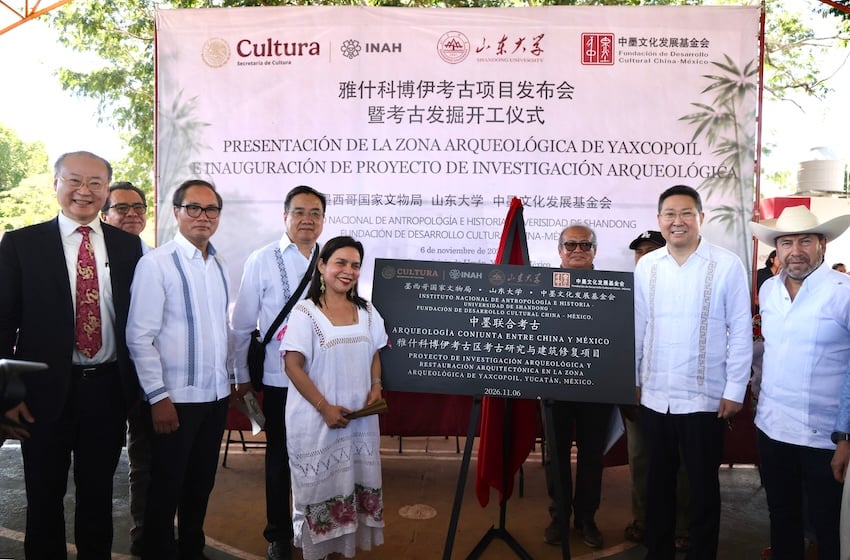
On Nov. 6, Mexico’s Culture Ministry and the National Institute of Anthropology and History (INAH) formalized the Yaxcopoil-Tanmul Archaeological Project, a collaborative research initiative involving Mexican specialists and those from Shandong University in China.
The initiative was presented in Yaxcopoil, a small community in the state of Yucatán located within the southern inner ring of the massive Chicxulub impact crater.
In attendance were the Chinese ambassador to Mexico, Chen Daojiang, INAH’s technical secretary José Luis Perea González and Yucatán Culture Minister Silvia Patricia Martín, as well as researchers and students from Shandong University, ejido (communally-owned land) authorities and representatives of nearby communities.
A day later, Yucatán Governor Joaquín Díaz Mena presented details of the project proposal to the Chinese Embassy with the goal of expanding bilateral cooperation and strengthening historical ties that date back to the 19th century when Chinese families began migrating to the peninsula. More than 200,000 people in Yucatán have Chinese ancestry.
Díaz Mena said he hopes to expand exchange programs between universities in Yucatán and China, and promote joint research and technological development projects.

Another objective is to diversify exports and expand the presence of Yucatecan products in the Chinese market.
Ambassador Chen Daojiang expressed his government’s willingness to strengthen trade, tourism, cultural and educational ties with Yucatán, as well as explore opportunities for collaboration in technology, innovation and sustainability.
The Yaxcopoil-Tanmul project arose after local residents expressed misgivings about the opening of a quarry early this year, eventually calling on INAH to investigate the extractive venture.
INAH sided with the community and the quarry proposal was quashed, with INAH favoring the importance of preserving the links between cultural heritage and the communities that inhabit the neighboring territories.
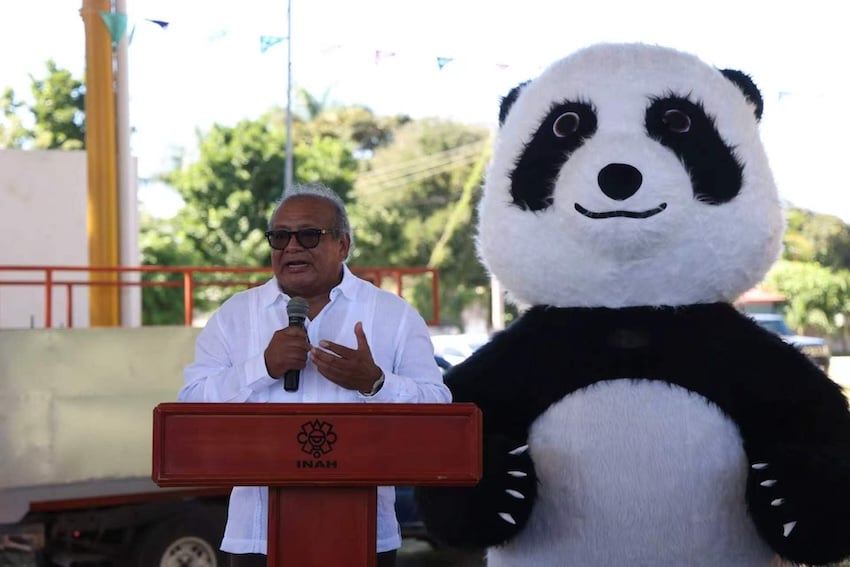
“Archaeological heritage is not separate from society; it belongs to a shared history and represents a collective responsibility,” Perea González said. “No project can be considered successful if its results remain locked away in specialized publications and do not return to the community that made its realization possible.”
The collaboration with Shandong University will allow researchers and students from both nations to share experiences and knowledge about Maya archaeology, and will strengthen academic ties between Mexico and China.
With reports from 24 Horas, Once Noticias and Reporte Indigo