A series of enormous lighting displays have been installed at iconic locations in Mexico City to celebrate the 213th anniversary of Mexico’s independence on Sept. 16.
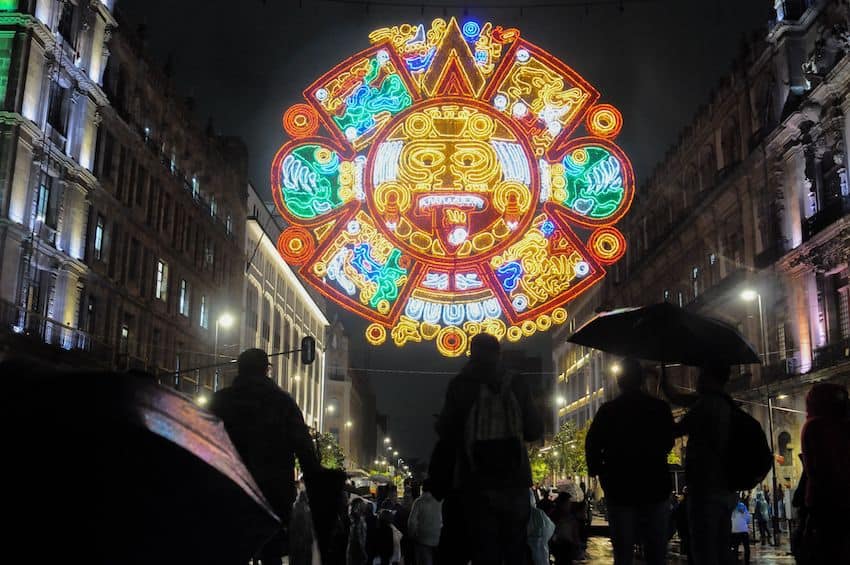
Two luminous mosaics adorn the Ángel de la Independencia while a gigantic design of the Sun Stone — better known as the Aztec Calendar — stands over Calle 20 de Noviembre.
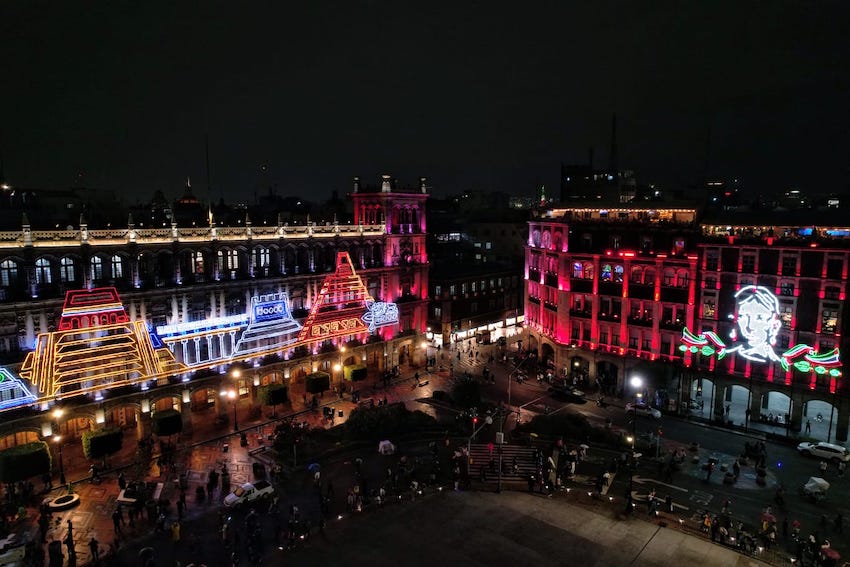
In Mexico City’s Historic Center, over 20,000 LED lights cover the facades of the Mayor’s office, the Viceroyalty Building and the Jewelry and Merchant centers.
To mark the occasion, U.S. norteño band Grupo Frontera will perform a free concert in the Zócalo after the traditional grito by President Andrés Manuel López Obrador on the night of Sept. 15. The grito, or “cry” of independence commemorates the Cry of Dolores, the call to take up arms against the Spanish issued by Catholic priest Miguel Hidalgo y Costilla on Sept. 16, 1810.
According to lighting designer Alberto González, the luminescent decorations in the Historic Center show a timeline of Mexican history from the pre-Columbian era to independence.
“The design is inspired by models and illustrations from the pre-Columbian era, with the ball game as a central part,” he told online magazine Chilango in an interview. Some of the mosaics weigh up to 7 tonnes, he said.
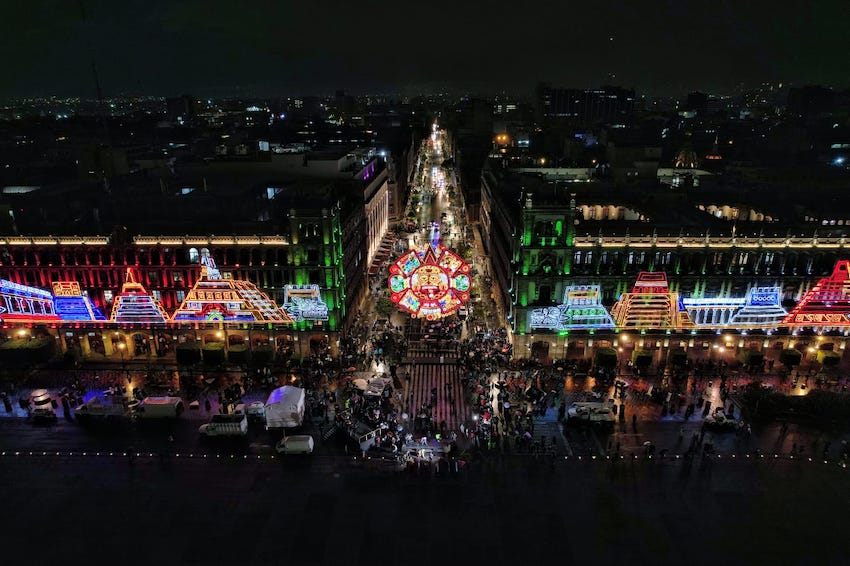
Images also include the Templo Mayor, the Temple of Quetzalcoatl and independence heroes like Josefa Ortiz de Domínguez, Leona Vicario and José María Morelos y Pavón.

The structures required five tonnes of rods, three tonnes of wire rod and 10,000 meters of power cables and were assembled by a team of 110 workers.
To appreciate the timeline and design of this year’s decorations, González recommends standing in the center of the Zócalo, “so that all the pyramids can be seen, because everything has a meaning and an order.”