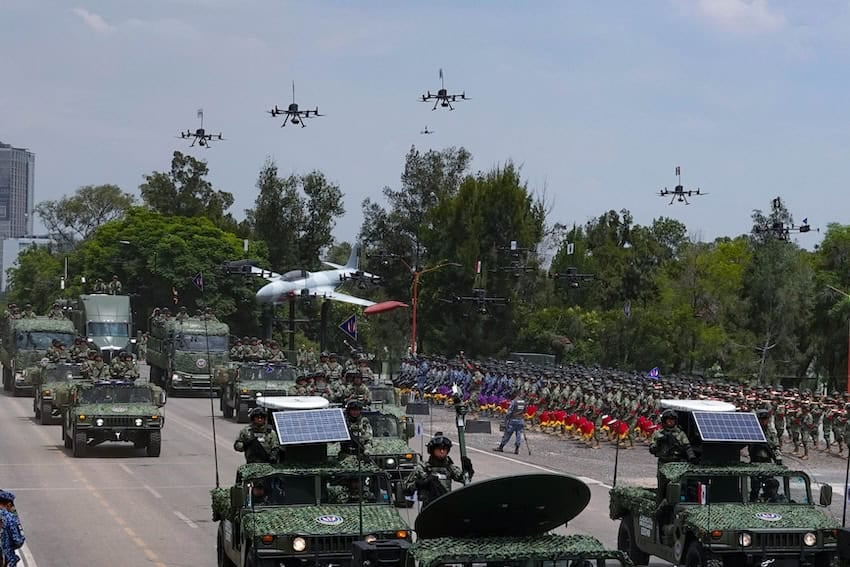
More than 18,000 members of Mexico’s armed forces are preparing to march, fly and roll out new equipment in Mexico City next week as the country marks the 216th anniversary of its independence.
On Wednesday, Defense Secretary Gen. Ricardo Trevilla Trejo reviewed the logistics for the capital’s Sept. 16 Independence Day parade.
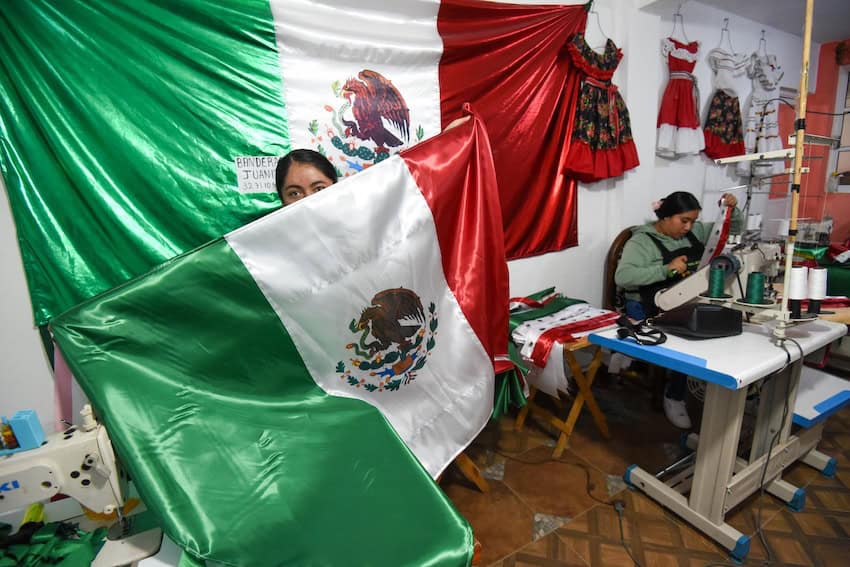
In Mexico, Día de la Independencia commemorates the start of the rebellion against Spanish rule in 1810, although the nation’s War of Independence didn’t end until 1821.
The parade will include Army, Navy, Air Force and National Guard personnel, cadets, pilots, military engineers, medical workers, communications specialists, military police and special forces. It also will include horses, dogs and even eagles, according to El Heraldo de México.
Contingents will be designated “Justice and Peace,” “Sentinels of the Nation,” “Crucible of Patriots” and “Roots of Honor,” among other names, Trevilla Trejo said during his briefing on a military base in Naucalpan, México state.
The roughly 5-kilometer parade is scheduled to begin at 10 a.m. Sept. 16 with a flyover of nearly 100 Air Force and National Guard airplanes and helicopters above the Zócalo, Mexico City’s central plaza — including F-5 fighters performing a fleur-de-lis maneuver.
The ground procession will start near the Zócalo, pass the Palacio de Bellas Artes, continue along Juárez Avenue and Paseo de la Reforma, and end at the Campo Marte military complex near Chapultepec Park.

The capital’s celebrations begin the night before, when President Claudia Sheinbaum leads the traditional Grito de Independencia (“Shout” or “Cry” of Independence) from the National Palace balcony.
In conjunction, the Grammy-winning Texas-based band Intocable, whose Norteño-Tejano sound has landed them 21 No. 1 songs on Billboard’s Regional Mexican Airplay chart, will headline a free concert in the Zócalo.
Free concerts, food fairs and municipal Grito ceremonies are also planned across Mexico City’s 16 boroughs. The musical lineup includes norteño-banda group Calibre 50 (a record 27 No. 1 hits on Billboard’s regional Mexican chart) and Sinaloan balladeer Pancho Barraza (a headliner since the 1990s).
The observances will reach beyond the capital, as well, as the Grito tradition is replicated by governors and mayors nationwide.
In present-day Dolores Hidalgo, Guanajuato — then known simply as Dolores, where priest Miguel Hidalgo y Costilla called on residents to rise against Spanish rule in the early hours of Sept. 16, 1810 — Independence Day festivities are running nearly all month.
In nearby San Miguel de Allende, Sept. 16 observances include a reenactment of the start of the independence movement in 1810.
This year, the Sept. 16 national holiday falls on a Wednesday, meaning there will be no three-day weekend. Public schools and banks will close, as will many government offices and private workplaces, as it is a mandatory day of rest under federal labor law. Employees required to work are entitled to premium holiday pay. Sept. 15 remains a regular work and school day.
With reports from Milenio, Infobae, El Informador, El Heraldo de México, N+, El Sol de Bajío and ADN Noticias