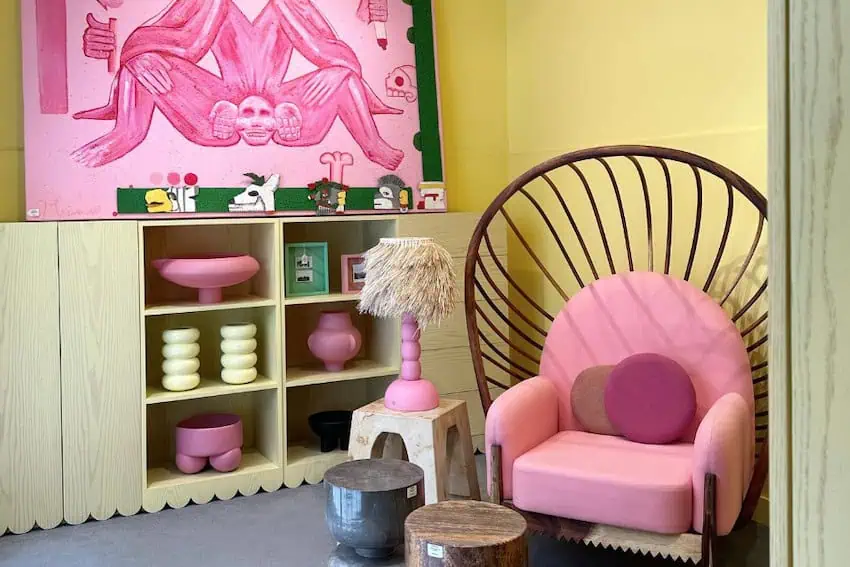
When the Originario interior design concept was born, its creator, Andrés Gutiérrez, a native of Guanajuato, Mexico, already had a recognized career as an interior designer. At just 33 years old in 2020, his work was being reviewed by prestigious media outlets such as Architectural Digest, thanks to the unique style he developed at his A-G Studio, which has been dedicated to residential and commercial interior design since its founding in 2012.
Andrés’ personal style is characterized by allusions to pre-Hispanic culture infused with a modern abstract touch. He has created a personal line of furniture design, primarily inspired by pre-Hispanic mythology, gods, and mysticism, called Los Trece Cielos (The Thirteen Skies). Perhaps this is why the charm of his style, enriched with elements of Mexican culture, has transformed into one of the most original and sophisticated proposals in Mexico’s interior design landscape: Originario, which debuted in February 2022.
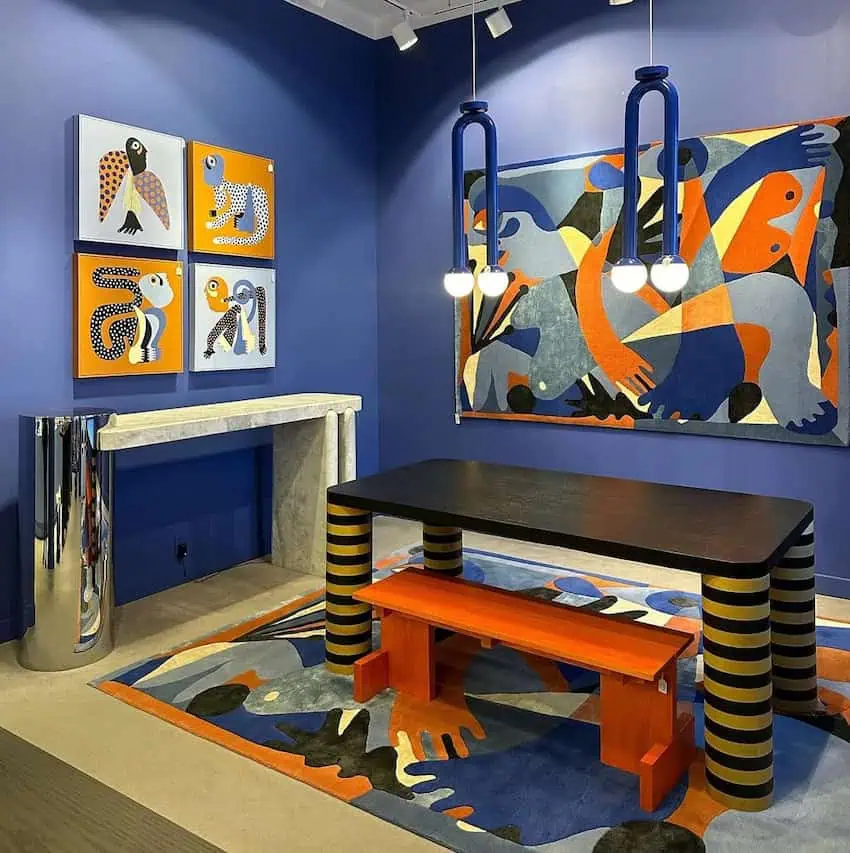
Originario is not just a showroom; it is a stage that creates a world of its own — a “countercultural platform to the normative artistic proposal,” according to its own description. It is an interior design store that showcases Mexican designers and emerging talents, curated by Andrés himself. “Originario was born first and foremost as an alternative platform for the Mexican design industry, offering a space for experimentation and the exhibition of new ideas by national talent,” reads the project overview on its website.
Additionally, this project “becomes a fun and unique place for everyone to appreciate and purchase furniture, objects, and art made in the country, presenting a new perspective on the aesthetics and panorama of Mexican design,” the statement continues. Today, this proposal exudes a futuristic neo-pre-Hispanic style with nods to abstraction and the digital age.
Echoes of the Past
Visiting the Originario concept is an experience in itself. Located in the heart of Colonia Roma, at 249-B Colima St. in Mexico City, within a classic French-style house from the early 20th century, this showroom feels like entering a fantastic new world — full of colors, with echoes of both the past and the future.
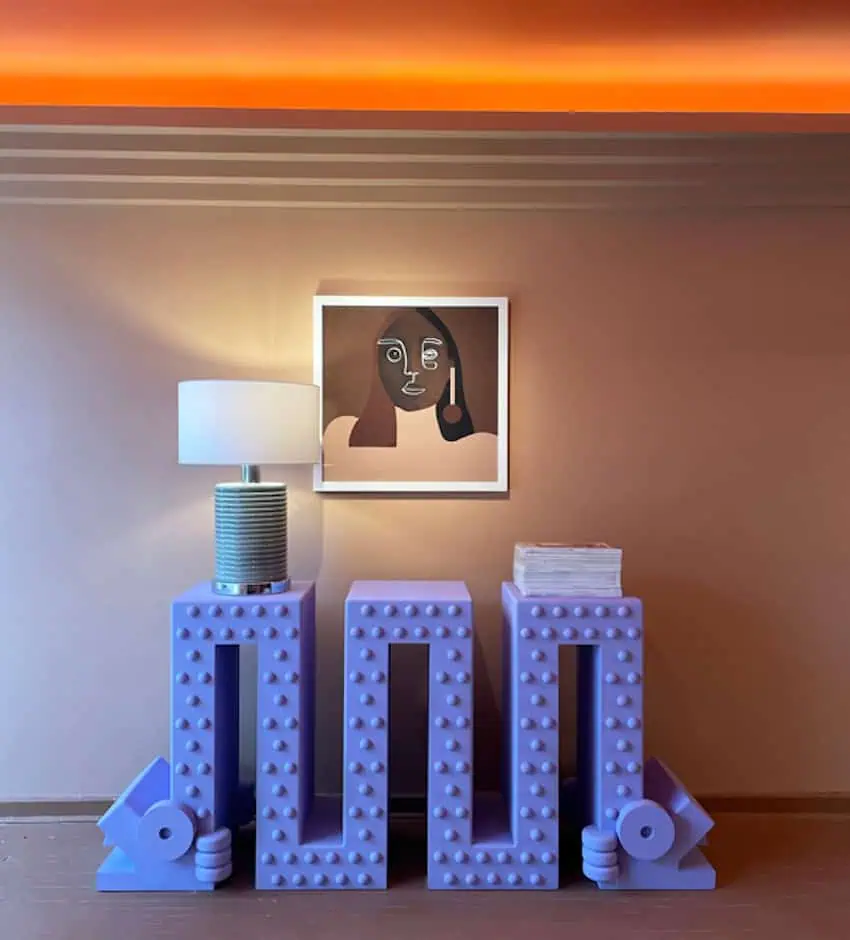
This space consists of five rooms that are constantly being redesigned. “Each area is transformed independently, paying careful attention to balance, color, and an eclectic, maximalist aesthetic.” Originario serves as a stage for Mexican talents in the contemporary scene: “The intention is collaborative; it seeks to discover and showcase alternative, young, emerging, and hidden Mexican talent, as well as to work with established artists and designers from the local scene,” claims the project statement.
From the beginning, talents such as Comité de Proyectos, Sustancia, CHUCH, Bestia, Piedra de Fuego, Mely Ávila, Raúl de la Cerda, Editora Nacional, Flama, and A-G Studio, among others, have been part of this proposal. Numerous artists have contributed to the visual composition of Originario.

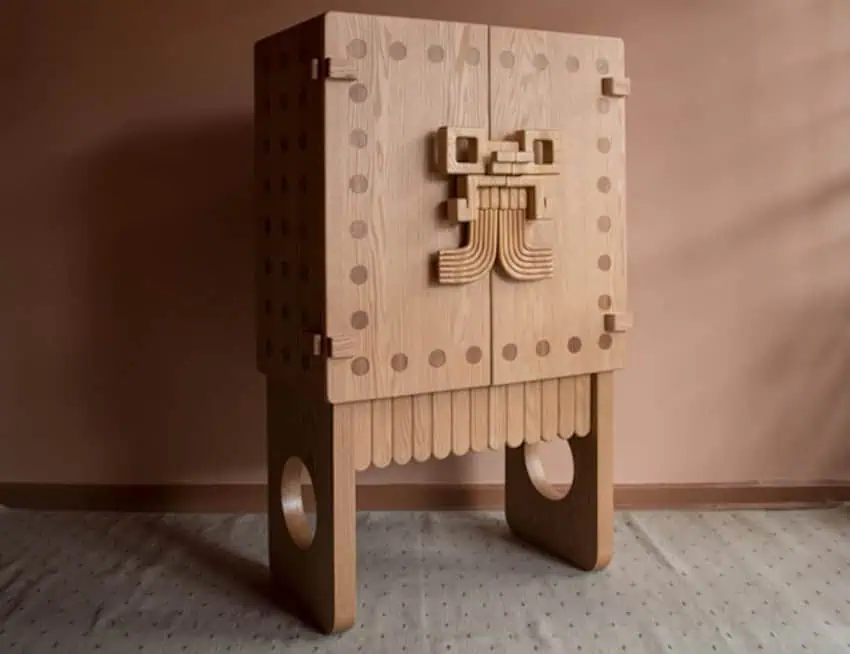
Echoes of the past permeate the atmosphere, with a pre-colonial aesthetic throughout. Iconic ritual figures, such as the Mixtec jade snake known as the Two-Headed Serpent and the Mexica ceramic Tláloc pot, coexist with unique pieces like the Maquizcoatl Credenza and the Tláloc Cabinet.
Both pieces are part of Andrés’ personal furniture line, Los Trece Cielos. The Maquizcoatl Credenza is inspired by Maquizcóatl, the two-headed serpent, a symbol of justice and karma in Mexica culture, while the Tláloc Cabinet draws inspiration from Tláloc, “he who gives birth to life.” Los Trece Cielos explores Mexican cosmovision by “redefining the significance of Mexico’s emotional and mythological identity,” according to its description.
A proposal that makes a scene
What Originario has achieved is exciting because it has created an integrated aesthetic proposal, incorporating the projects of many artists. This manifestation is continually evolving with new talents. In essence, it’s a stage for the Mexican interior design scene.
Today, Andrés has brought together painters like Victor Torres, artists like Rocca Luis César and Ricardo Luévanos, photographers like Mariana Figueiredo, and mobile designers like Ad Hoc Mx. Indeed, Originario is a window to Mexican talent, and a historical Mexican touch is palpable in the air.
“I have a very strong bond with my country; I love being Mexican, and I recognize the enormous privilege I have to have been born in this country,” he says. “We have a very rich culture from which to draw inspiration. This is the opportunity to be free and to lead,” Andrés told the Expansión Group.
“From my point of view, if there is a well-executed conceptual work that manages to create a dialogue in which the user interacts with the space and tells a story, then that is a successful design,” he told Milenio. And indeed, he has achieved this goal in Originario through the collaboration of many artists, which is truly extraordinary.
Ana Paula de la Torre is a Mexican journalist and collaborator for various outlets including Milenio, Animal Político, Vice, Newsweek en Español, Televisa and Mexico News Daily.